


On the morning of April 30, 2025, law enforcement officers executed a search warrant at a residence in McLendon-Chisholm.
Hours later, discussion about the incident began appearing on social media. Comments identified the residence, associated the law enforcement activity with the occupants of the home, and prompted questions from residents seeking to understand what had occurred.
More than a year later, Erin Easter joined The Adrienne Balkum Show to discuss the events for the first time. During the interview, she described waking to loud noises, encountering armed officers outside her home, and the lasting impact the experience had on her family.
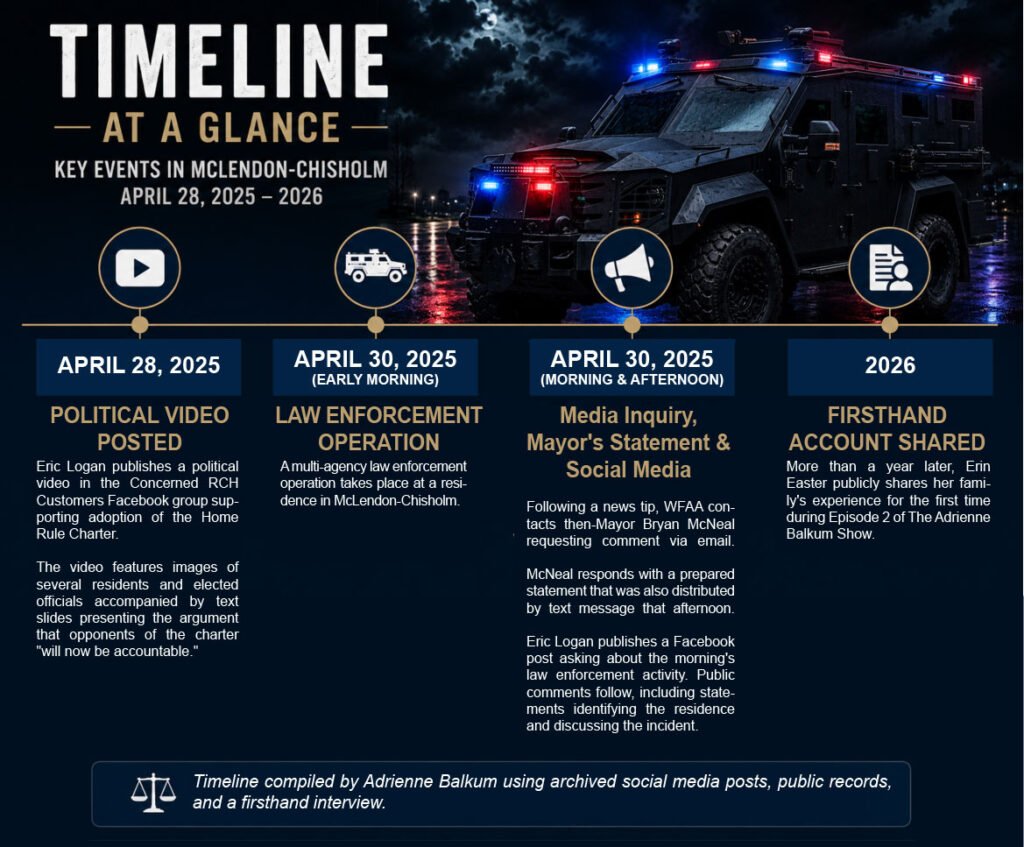
For readers who prefer to explore the chronology first, the timeline below highlights the key events covered in this article.
The Political Video That Preceded the Events
On April 28, 2025, Eric Logan published a political video in the Concerned RCH Customers Facebook group. The video included photographs of Erin Easter, me, and several other current and former elected officials, community members, and residents.
Shared during the May 2025 Home Rule Charter election campaign, the video presented a narrative about community division, taxpayer costs, and accountability surrounding the proposed charter.
Throughout the video, accountability was presented as a central theme through a series of text slides. One slide stated that certain community members opposed the charter because they “will now be accountable.”
Two days later, the public conversation shifted from the charter campaign to an early morning law enforcement operation in McLendon-Chisholm and the questions that followed.
Although the original Facebook post was removed from the group in early 2026, a copy of the video and is embedded below for reference.
An Unpublished Statement from the Mayor
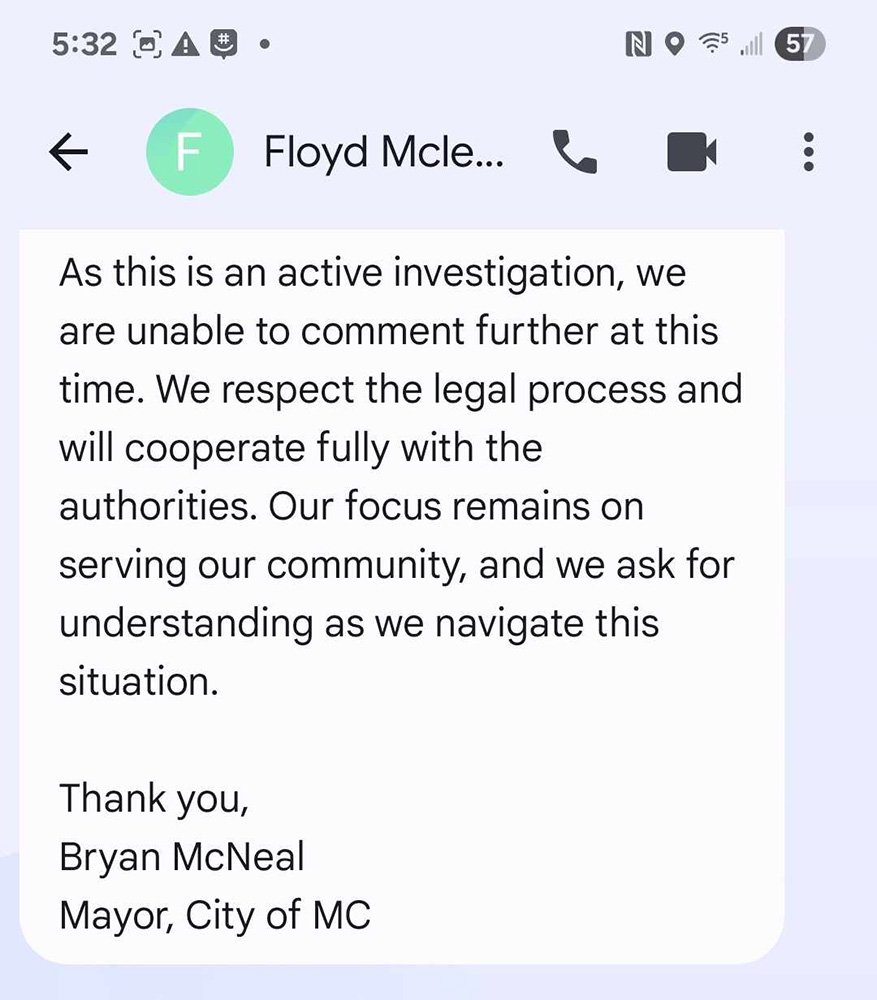
On April 30, 2025, then-Mayor Bryan McNeal distributed a prepared statement regarding the law enforcement operation by text message. A copy of the message, shared with this publication and stated that multiple media outlets had contacted the City.
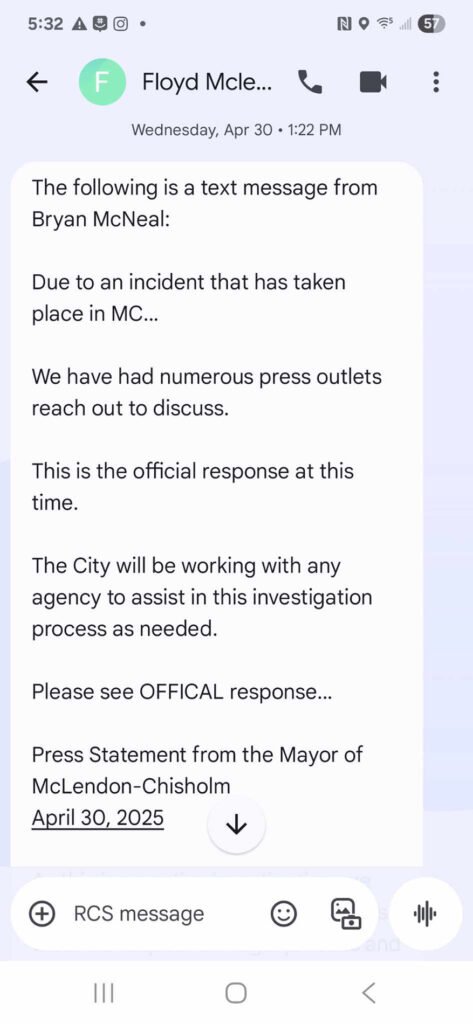
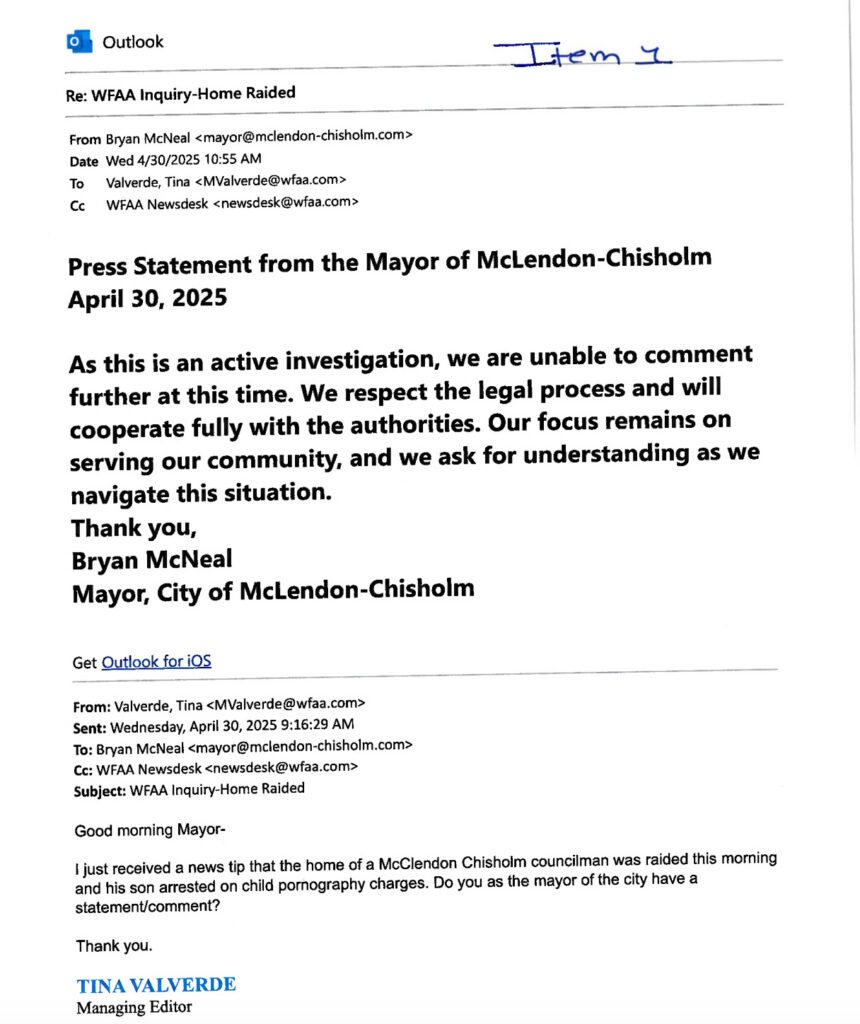
To better understand that claim, I later submitted a Public Information Request seeking records of media inquiries related to the April 30 incident.
The records produced by the City included an email from the WFAA news desk asking whether the mayor wished to comment on a news tip that “the home of a councilman was raided this morning and his son arrested.”
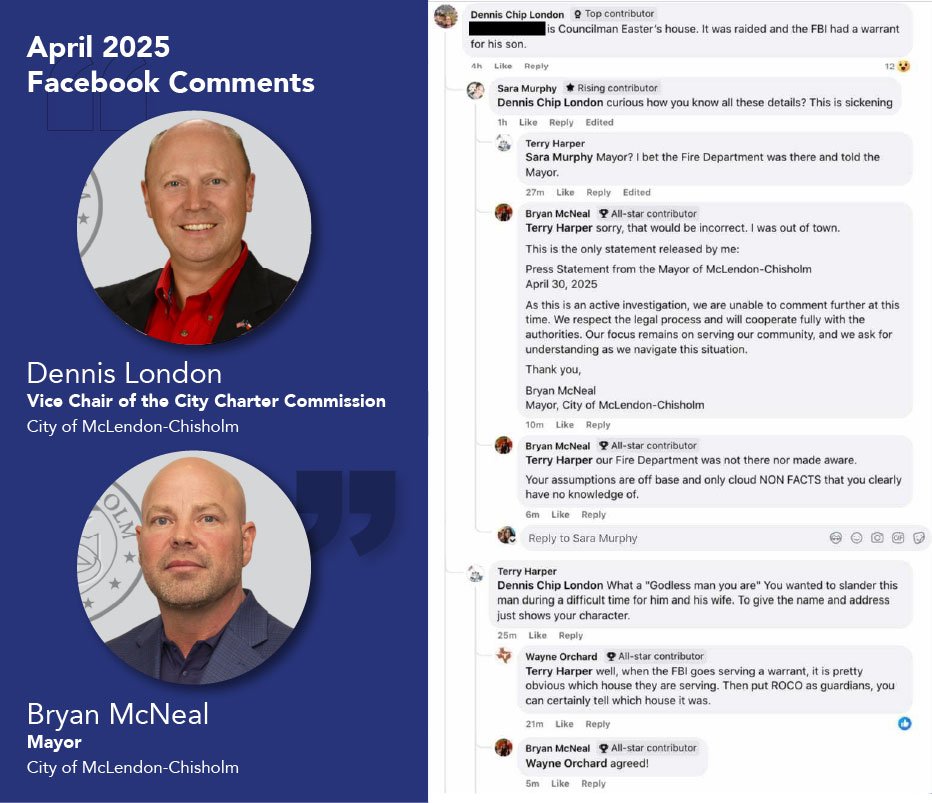
Mayor McNeal responded by providing the same prepared statement that had been distributed by text message earlier that day:
“As this is an active investigation, we are unable to comment further at this time. We respect the legal process and will cooperate fully with the authorities. Our focus remains on serving our community, and we ask for understanding as we navigate this situation.”
A review by this publication did not locate the statement on the City’s official website, official Facebook page, or other official public communication channels. Likewise, no matching statement was identified on the official websites or social media accounts of the Rockwall County Sheriff’s Office or Rockwall County.
The Social Media Timeline
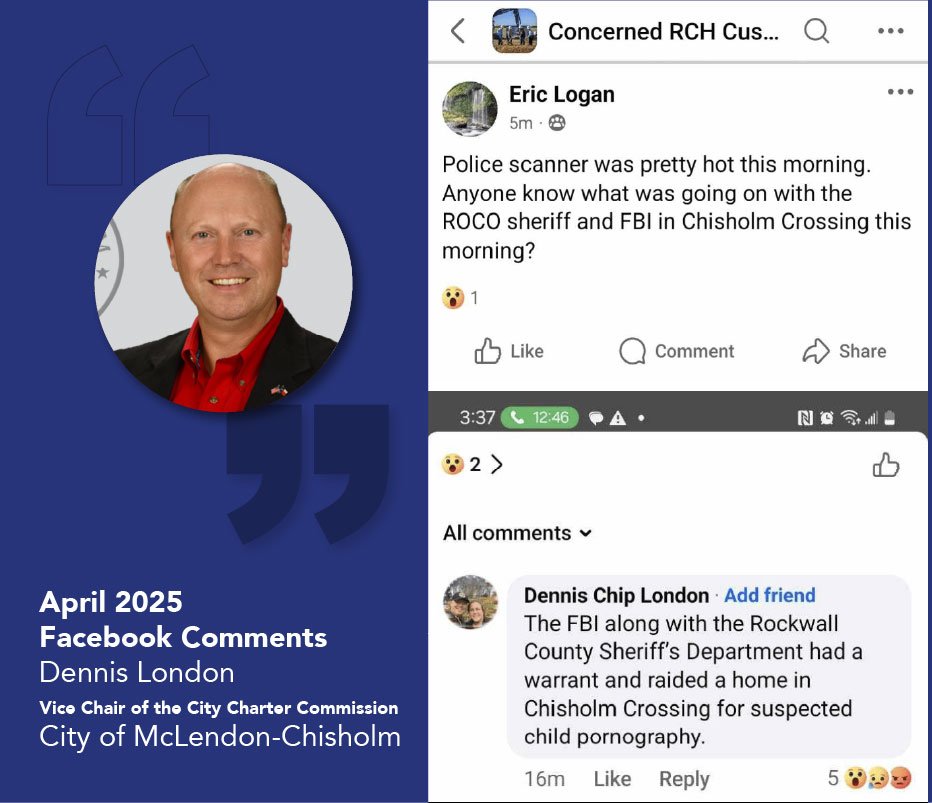
On April 30, 2025, discussion shifted from the law enforcement activity itself to social media. Beginning at approximately 2:30 p.m., community members posted questions, comments, and observations as they attempted to determine what had occurred that morning.
The following archived screenshots document the sequence of public posts and comments as they appeared throughout the afternoon. Although some of the original content has since been removed, the preserved screenshots provide context for the public discussion that followed the law enforcement operation.
The Human Impact
More than a year after the events of April 30, 2025, Erin Easter shared her family’s experience for the first time during Episode 2 of The Adrienne Balkum Show.
Erin recalled being awakened shortly after 6 a.m. by what initially sounded like a vehicle crashing into her home. Instead, she found herself surrounded by bright spotlights, armed law enforcement officers, and an armored BearCat vehicle positioned outside her residence. Recovering from recent hip replacement surgery, she said she was instructed to walk barefoot across the lawn as officers secured the scene.
As the situation unfolded, her thoughts immediately turned to her family. She worried about her children and the family’s dogs amid the confusion and uncertainty. At the time, she said she had little understanding of why officers were there or what was happening inside or outside her home.
What began as a frightening morning did not end when law enforcement left. Later that afternoon, Erin learned that information about her family’s home was already being discussed on social media. Posts identified the residence and fueled speculation while her family was still trying to process the events of the day.
More than a year later, Erin said the experience continues to affect her. She described feeling anxious when unexpected lights shine toward her home at night, explaining that the memories of that morning remain vivid.
Rather than focusing solely on the law enforcement operation itself, she spoke about the emotional toll the incident took on her family and the lasting effects of becoming the subject of public speculation.
For Erin, the interview was not simply about revisiting a difficult day. It was an opportunity to document her family’s experience, explain the personal impact behind the public discussion, and encourage a broader conversation about responsibility, accuracy, and accountability when information involving members of the community is shared.
Questions That Remain
More than a year later, important questions remain unanswered. What evidence was presented to establish probable cause? What information supported the warrant or law enforcement operation, and how did the legal process unfold? What information was known, by whom, and when? Were corrections ever made when inaccurate information circulated? What responsibility exists to correct inaccurate information once it enters the public conversation? What public records, if any, might help answer questions about whether political considerations influenced the public discussion surrounding these events? And what can communities learn from incidents like these to help preserve public trust in the future?
While this article does not attempt to answer every question, it documents the chronology of events, preserves the available public record, and provides a firsthand account from one of the individuals directly affected.
Accountability and Public Trust
As with any issue of public interest, readers are encouraged to review the timeline, the documents, and the interview for themselves.
For readers interested in additional background, previous reporting and related articles examine the Rule 202 petition, court filings, affidavits, and other documents connected to the broader public discussion surrounding these events.
I welcome respectful comments and additional information related to this story. Readers with relevant documents, records, or firsthand knowledge are encouraged to contact me via email.
While opinions may differ about the events themselves, the importance of maintaining an accurate public record remains.
Perhaps the most important question is not simply what happened on April 30, 2025, but what accountability should look like when public information affects the lives of real people.



2 comments
Holy moly! What in the world is going on in our county?! Did the Sheriff dept get hard evidence for the raid or did someone just say they “heard” something bad was going on at the Easter home and took their word for it? Tax payer money was used for this raid and there should be someone’s signature that “ok’d” the raid. Where’s the accountability?
Trudy that’s a good point about these types of operations have costs.