
Editor’s Note: This is the first installment of The Water Chronicles, an investigative series examining water rates, infrastructure, governance and accountability affecting customers in Rockwall County and neighboring communities.
Most of us receive our monthly water bill, glance at the total, pay it and move on.
But what if you discovered your neighbors in another community were paying something completely different for the same basic service?
Across Rockwall and Kaufman counties, residents receive water service from a mix of city-owned utilities, special utility districts and nonprofit water supply corporations. Each provider sets its own rates, fees and billing practices.
Every utility has legitimate operating costs. Maintaining infrastructure, repairing water lines, employing licensed operators, testing drinking water and meeting state regulations all cost money.
The question isn’t whether utilities should charge for those services. The question is why some customers pay significantly more than others—and whether they understand why.
To begin answering that question, I reviewed the published residential rate schedules for 11 local water providers serving Rockwall and Kaufman counties.
What I found surprised me.
How Does Your Utility Compare?
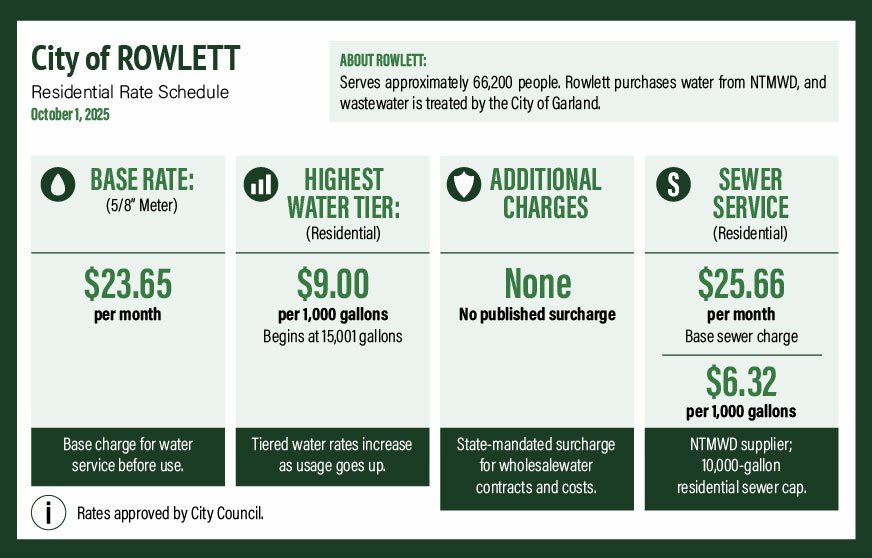
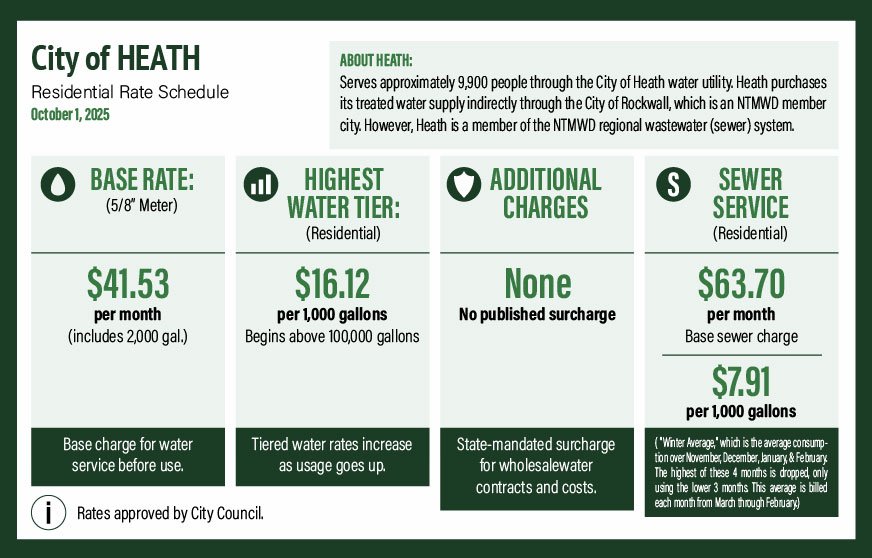
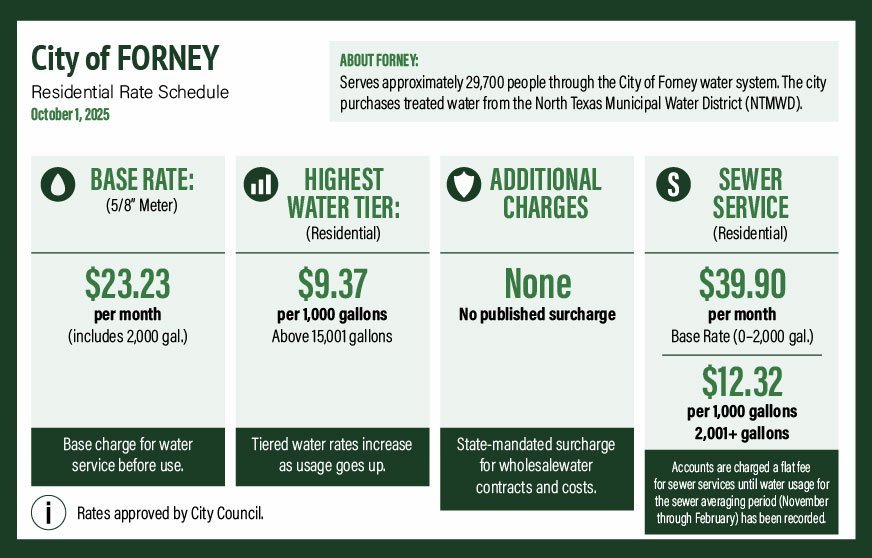
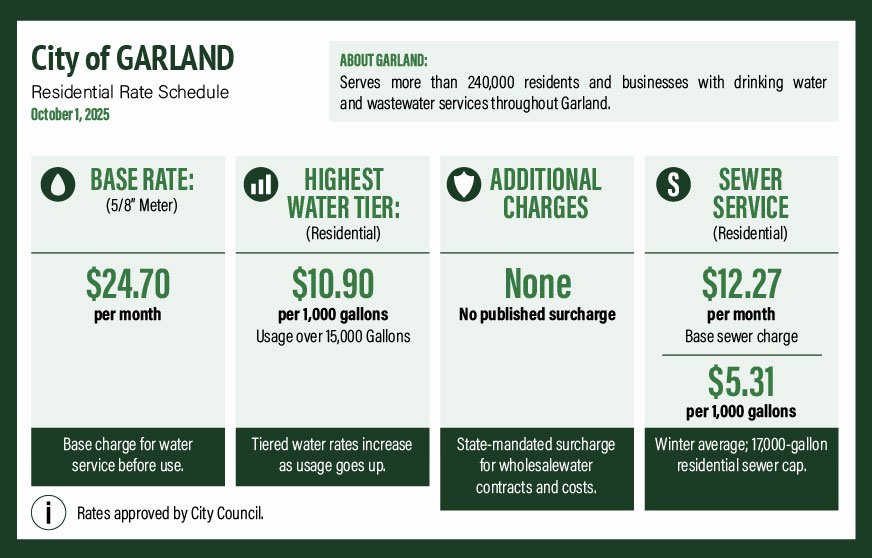
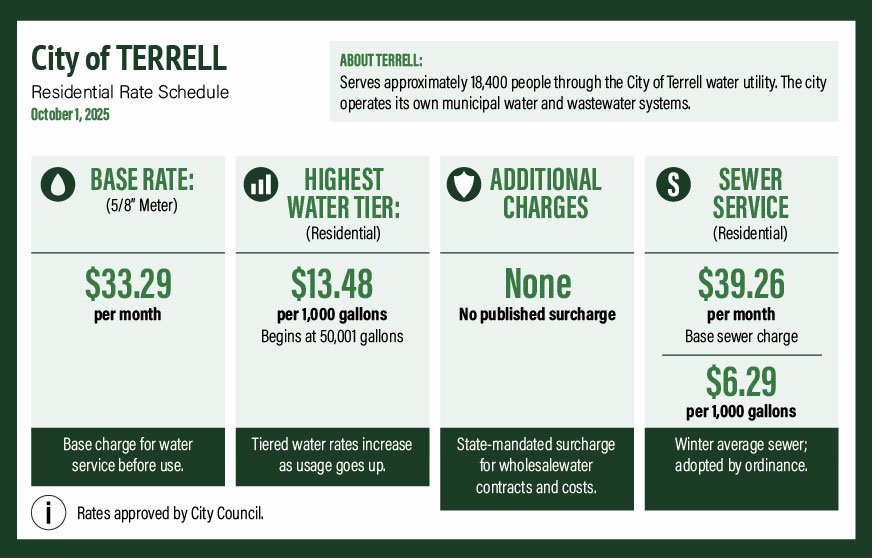
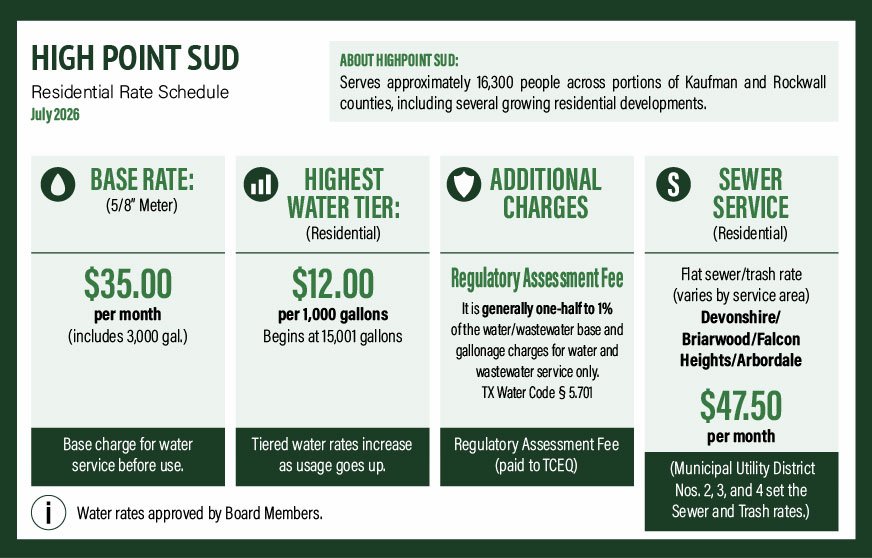
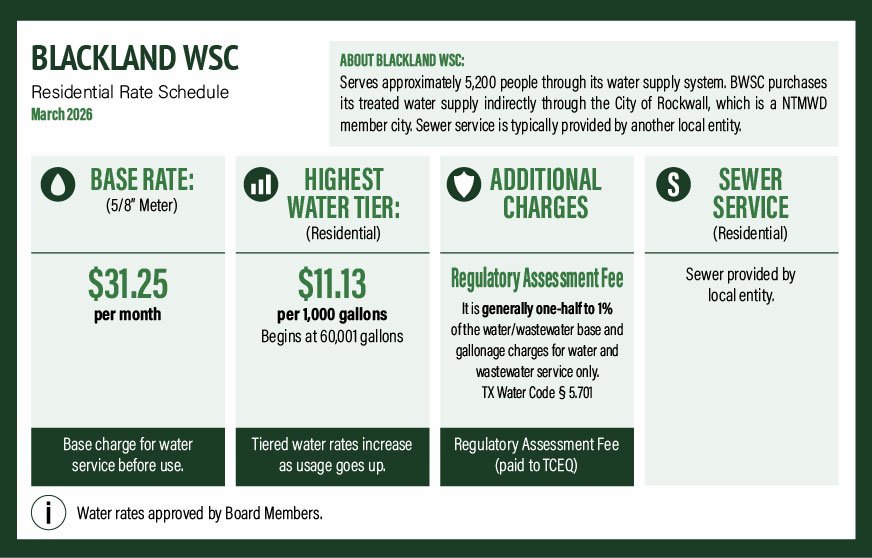
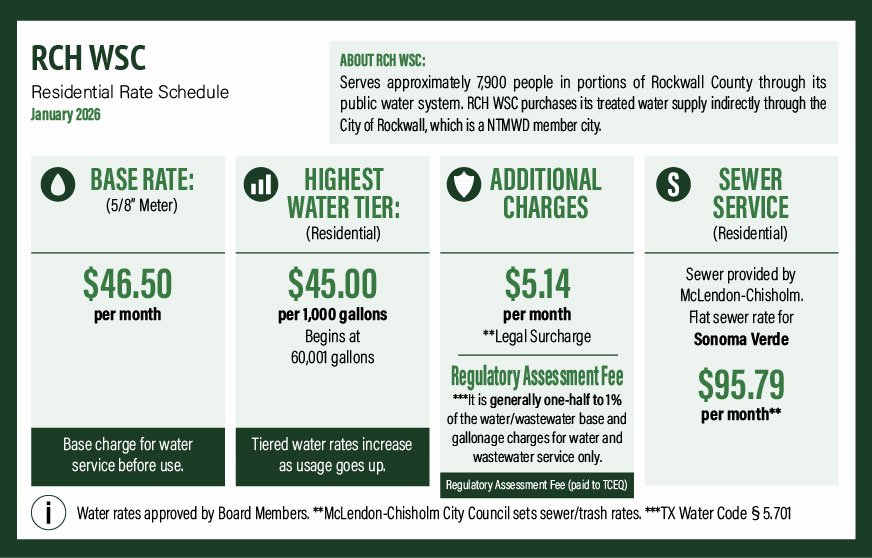
The comparison slides below summarize published residential rate schedules for 11 local providers. Because utilities calculate sewer charges, winter averaging and other fees differently, your monthly bill may not match these examples exactly. Readers should review their utility’s complete rate schedule for account-specific details.

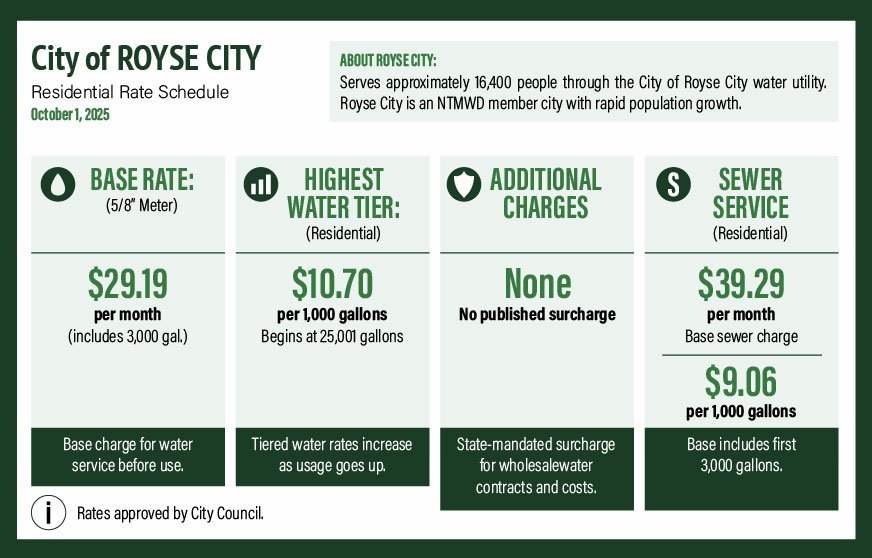
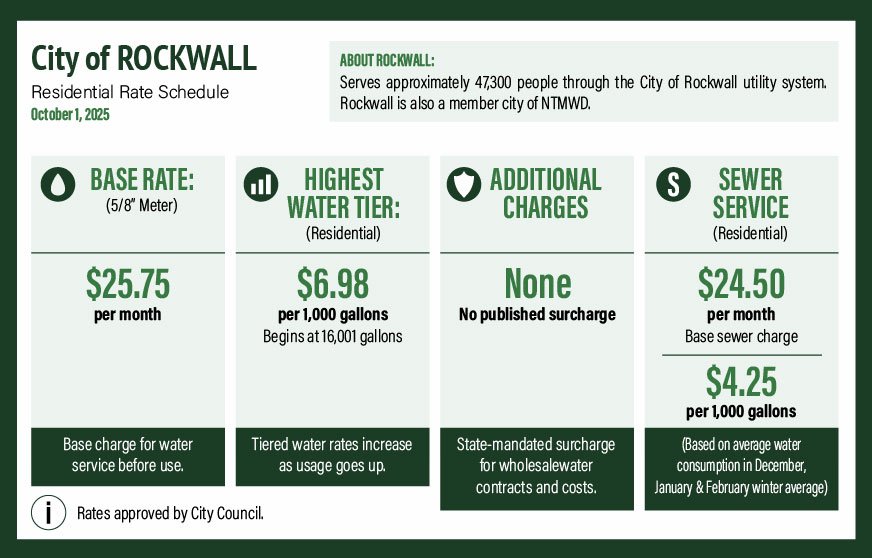
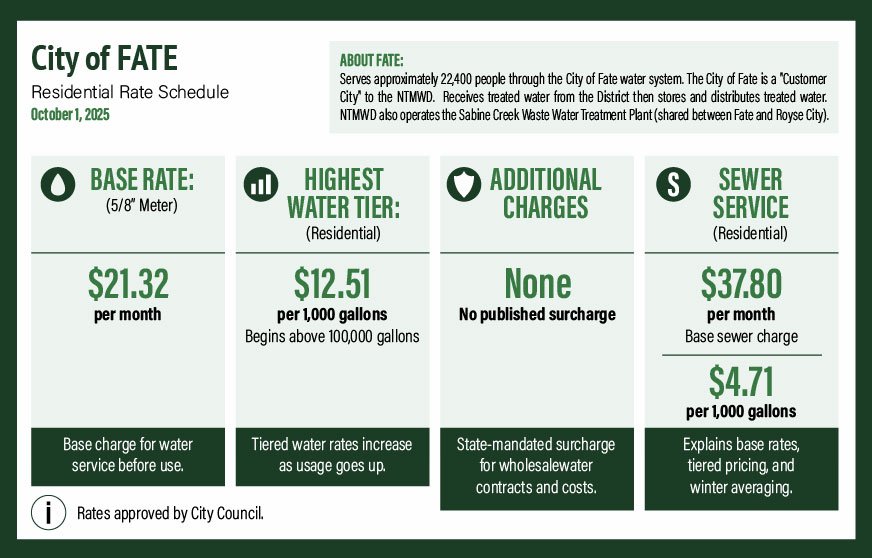
What Do the Numbers Tell Us?
After comparing all 11 utilities side by side, one thing became obvious.
Not all water bills are built the same way.
Some utilities begin with a relatively low monthly base charge before a customer uses any water. Others start much higher. Sewer charges vary just as widely. Some providers include several thousand gallons before higher rates apply, while others begin charging immediately. Additional fees also differ from one utility to the next.
For most customers, those differences remain hidden because they only ever see one bill—their own.
Looking at the numbers side by side changes the conversation.
Instead of asking whether your bill seems expensive, you begin asking a different question: Why is it different?
That simple question became the starting point for everything that followed.
Comparing rate schedules doesn’t tell us whether one utility is better than another.
It doesn’t explain why prices vary or whether higher rates are justified.
But it does reveal something many customers never see: There is no single way water service is priced—even among neighboring communities. And once you recognize those differences, it’s difficult to stop asking questions.
Why does my utility charge this way? Who decided these rates? Where does the money go?
Those questions led me beyond the monthly bill.
To understand the rates, I first had to understand who was responsible for the system itself.
The Story Doesn’t End With the Bill
A rate schedule tells customers what they’re paying.
It doesn’t explain who owns the infrastructure, who makes the decisions, or who is ultimately accountable when customers have questions.
Those questions became the focus of the next stage of my investigation.
Source Documents
The comparison slides were prepared using publicly available residential rate schedules published by each utility.
Review the same source documents used throughout for the comparison slides. (PDF)
Join the Conversation
The more I compared water bills across Rockwall County, the more I realized the rates themselves weren’t the biggest story.
To understand why customers were paying what they were paying, I first had to answer a much more fundamental question:
Who actually owns the system behind the tap?
What questions would you like answered about your water provider?
Leave a comment below. Your perspective may help shape future investigations.