
The November 3 election gave Republican leaders plenty to reflect on. Yet within days, the familiar calls for rebuilding, recruiting volunteers, expanding outreach and preparing for 2028 were already making their rounds.
In Rockwall County, Republican Party Chair Alma McClintock sent an email titled Rockwall GOP – How You Can Make a Difference, acknowledging that politics and communities have changed while encouraging members to reconnect with neighbors, welcome new participants and strengthen the party.
Republican Party of Texas Chairwoman D’Rinda Randall announced the Texas Mandate Committee, an invitation-only group of statewide leaders tasked with examining the election results and developing a strategy moving forward.
Their messages focus on rebuilding. What I want to know is whether party leaders are willing to examine their own practices before asking voters to trust them again.
Grassroots or Political Theater?
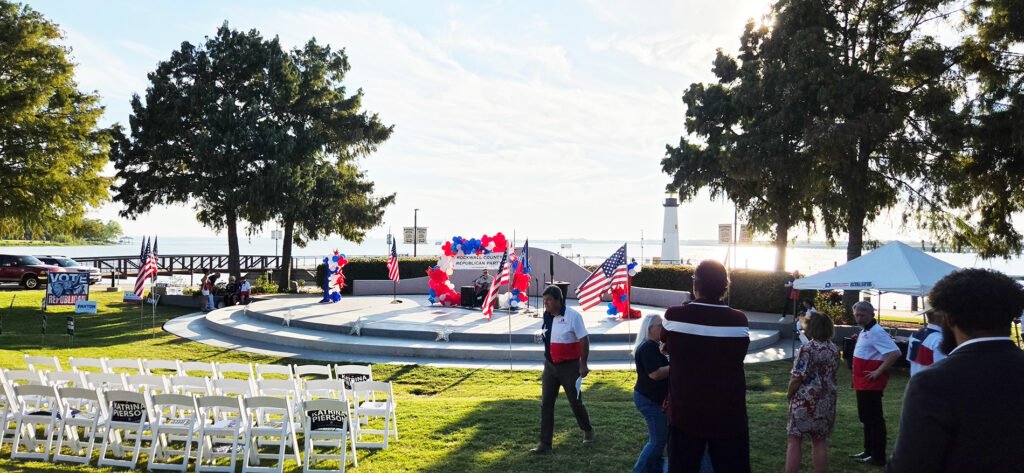
Throughout September and October, the Rockwall County Republican Party shared photographs from meet-and-greets, candidate appearances and rallies. There is nothing unusual about promoting political gatherings or celebrating volunteers. But photographs alone don’t tell us whether an organization is successfully reaching people beyond its existing supporters.
I noticed this during the September 25 Rockwall County Red Rally, where many chairs remained empty. I recorded the speeches and documented my observations in Rockwall County Red Rally: What Candidates, Incumbents and Local Leaders Told Voters.
The neighborhood gatherings that followed raised another question: Were these events attracting new participants and creating opportunities for residents to share their concerns?
The Rockwall County Republican Party’s website also identifies “informational events to educate voters” as an activity supported by fundraising proceeds. Meaningful voter education should go beyond culture-war rhetoric and party loyalty to examine candidates’ qualifications, constitutional principles, policy positions and, when applicable, their governing records.
When Campaign Promises Meet Political Reality
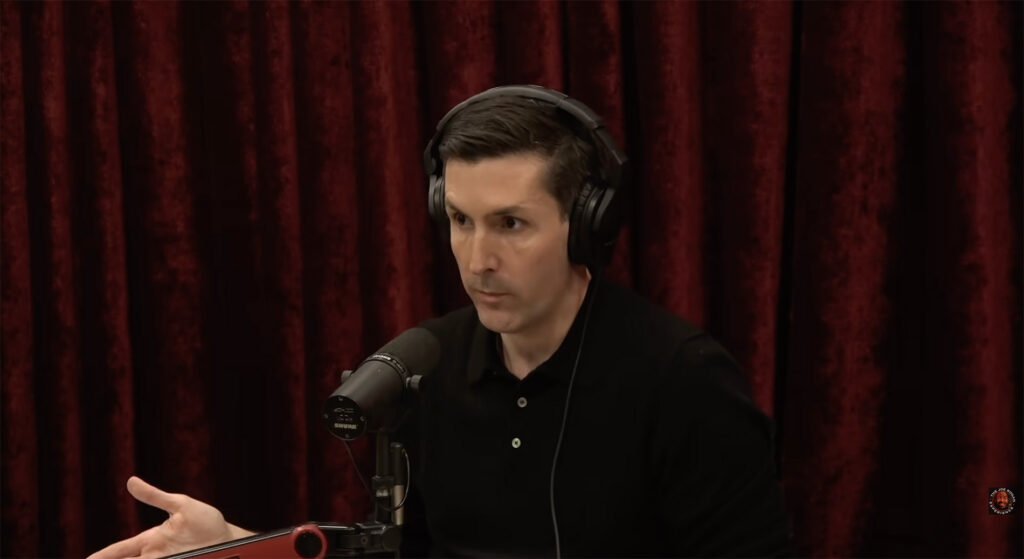
During a November 6 interview on The Joe Rogan Experience, former administration adviser Calley Means described what he characterized as the influence of lobbyists, political insiders and special interests within the Trump administration.
Means alleged that certain administration officials obstructed policy priorities despite President Trump’s campaign promises to challenge Washington’s entrenched interests. He also suggested that Trump was unaware of some decisions being made within his administration.
I’m not convinced that being unaware should end the discussion of accountability. A president cannot oversee every decision, but leadership comes with responsibility for the people entrusted to carry out an administration’s agenda.
The same standard of accountability should apply in Austin and our city halls, not just Washington. Means’ allegations still require independent verification, and I encourage readers to watch the full Joe Rogan interview with Calley Means and decide how persuasive they find his account.
Who Gets Invited Into the Room?
Back in Rockwall County, the question of political inclusion has also surfaced publicly.
Following the election, Brett Bushnell shared a Facebook statement calling for broader participation within the Republican Party.
“We as a party must invite more people to the conversation,” Bushnell wrote.
He went further, alleging that certain Rockwall County elected officials had asked him to exclude individuals from Rockwall Young Republicans events based on preferred political circles.
“I will never comply with that,” he stated.
His account has not been independently verified, but it raises questions about who is welcomed into local political organizations and who may be discouraged from participating.
Longtime Republican precinct chair Patti Muggeo responded by emphasizing the importance of respecting both younger Republicans and experienced party volunteers.
“We need new faces, fresh ideas, youthful energy, and the wisdom of those who have been in the trenches for decades,” she wrote.
However, Muggeo also cautioned that newcomers should have a sincere desire to serve the party’s shared goals rather than advance personal agendas. Her response did not directly address Bushnell’s allegation of exclusion.
Randall’s invitation-only Texas Mandate Committee brings that concern to the state level. Experienced party leaders may offer valuable insight, but it’s unclear how Republicans outside established leadership circles will be represented.
Campaign Promises Versus Governing
On October 27, State Senator Bob Hall publicly declared his opposition to the Fate recall, posting a video from a polling location after expressing concerns about signs he believed could mislead voters about his position.
One week later, Fate voters supported recalling Mayor Andrew Greenberg and Council Members Martha Huffman, Richard Maneval and Mark Hatley. According to the City of Fate’s unofficial election results, each recall received approximately 59% to 61% support.
At the November 9 City Council meeting, Greenberg, Maneval and Hatley left shortly after the invocation and pledges. The City of Fate confirmed that their departure left the council without a quorum, preventing it from conducting scheduled business, including matters involving future elections. The recall results had not yet been officially canvassed, meaning all three remained in office and were still responsible for carrying out their duties.
Whatever their reasons for leaving, the immediate consequence was that city business could not move forward.
Hall’s own reelection in Senate District 2 presents another opportunity to examine voter engagement. According to Texas Policy Research, the district had 633,413 registered voters in 2024. In the November 2026 election, 351,187 votes were cast in the Senate race. Hall received 180,363 votes to Democratic challenger Keenen Colbert’s 170,824—a margin of just 9,539 votes.
Were voters considering legislative accomplishments and campaign promises, or were party loyalty, name recognition and even racial prejudice influencing their decisions? These are questions worth examining, particularly when winning an election says little about whether an official has delivered meaningful results for constituents.
Conservative Values Should Be More Than Campaign Language

Throughout this election cycle, I heard plenty about cultural issues, political identity and conservative principles. I kept waiting to hear more specifics about what elected officials had actually accomplished for taxpayers, Texas families and public schools.
Education offers a timely example.
Texas introduced its Education Freedom Accounts program to help families pay for private education and other eligible expenses. Supporters promote parental choice, but the ability to choose public, private or homeschooling options already existed. What hasn’t always existed is the financial ability for every family to exercise those options.
Beyond the debate over school choice, public schools continue serving students with a wide range of academic, developmental and career needs.
At a November 10 Rockwall ISD meeting I attended, district representatives discussed how student services have increased by 176% over the past decade. Special education, dyslexia support, speech therapy and other learning assistance require qualified professionals, specialized resources and individualized attention.
These growing demands place considerable pressure on educators, particularly those working in special education. Recruiting, training and retaining qualified professionals is a challenge that cannot be solved through campaign slogans.
And then there is career and technical education (CTE).
Not every student will attend a four-year university, and not every family can afford college or additional training after high school. Programs like the Dr. Gene Burton College & Career Academy offer students opportunities to explore careers and earn professional credentials before graduation.
District representatives reported approximately 930 professional CTE certifications earned. Those credentials can give students a head start in the workforce or in further training after graduation.
Rockwall ISD also has accomplishments worth recognizing. Dr. Christina Bradford, principal of J.W. Williams Middle School, was named the 2027 Texas State Middle School Principal of the Year. That’s statewide recognition of leadership happening right here in our community.
District representatives also discussed approximately 100 students moving to private education or other arrangements out of a student population of roughly 19,000.
In 2025, Texas increased its basic student allotment by just $55 per student and revised its special education funding system. Rockwall ISD reported that these changes fell short of covering rising expenses and growing student needs. Although voters approved additional local school funding in November 2025, questions remain about whether state funding is keeping pace with the actual cost of public education.

Meanwhile, State Senators Bob Hall and Brent Hagenbuch’s proposed SB 188 would abolish the Texas Lottery, which contributed $1.82 billion to the Foundation School Fund in fiscal year 2026. The bill does not explain how the state would replace that revenue. With school districts already facing funding pressures, will lawmakers find another way to fund our schools, or will they be left with less money?
Public education is an investment in the future workforce, our neighborhoods and the next generation of community leaders.
Today’s students will become tomorrow’s mechanics, nurses, entrepreneurs, scientists, teachers, business owners and voters.
I would rather see lawmakers hear directly from parents who have navigated Admission, Review and Dismissal (ARD) meetings, classroom teachers, principals, special education professionals and district leaders before deciding what our schools need. Lobbyists and advocacy organizations may offer perspectives, but they shouldn’t be the only voices shaping education policy.
Accountability Begins at Home
The Republican Party has spent years championing conservative values, family principles, limited government and fiscal responsibility. Those ideals mean something only when the people campaigning on them are willing to live by them and demonstrate results.
I don’t believe political loyalty should become an excuse for overlooking personal misconduct, ethical concerns or broken promises. When credible evidence of infidelity, misrepresentations of military service or other misconduct emerges, it should not suddenly become irrelevant because a candidate belongs to the preferred political party. Nor should knowingly defending or enabling individuals who have misrepresented their military backgrounds escape scrutiny.
And let’s be clear. Delivering a clever zinger, wearing an expensive suit or giving a passionate speech does not establish whether someone is good for Texas.
The same scrutiny belongs on political money. Campaign contributions from utility-industry PACs may be lawful, but voters deserve to examine those financial relationships alongside legislative voting records and policy decisions. Foreign political influence raises additional concerns and deserves careful investigation through financial disclosures and other evidence.
We aren’t sending representatives to Austin or Washington to build personal fortunes, collect political favors or become celebrities. We are entrusting them with decisions that affect our families, businesses and communities.
And those decisions have real consequences.
Texas families continue facing economic pressures involving groceries, housing, insurance and utilities. In February 2026, President Trump expanded tariff-free imports of Argentine lean beef trimmings in an effort to lower consumer prices, a decision that drew concerns from American ranchers.
In a state that takes pride in its cattle industry and barbecue traditions, shouldn’t we be asking why our government is bringing in more foreign beef instead of finding ways to support American ranchers and make beef affordable for Texas families?
And what about the food we grow and buy? Questions about glyphosate, pesticide residues and processed-food ingredients deserve a health and safety review. Farmers need effective tools to protect their crops, while families deserve accurate information about the food on their tables. Government agencies should be able to explain how their safety standards protect both.
Political performance deserves greater scrutiny than political personalities. Set aside the campaign merchandise, slogans and applause lines. Examine the legislation, follow the money and ask whose interests are being served.
If the Republican Party intends to rebuild, it must look beyond winning elections and confront the standards it sets for its own candidates and leadership. Those standards should never change depending on which party holds office.
Before repairing its public image, the Republican Party has to be willing to examine its own foundation.
Show us the results.