
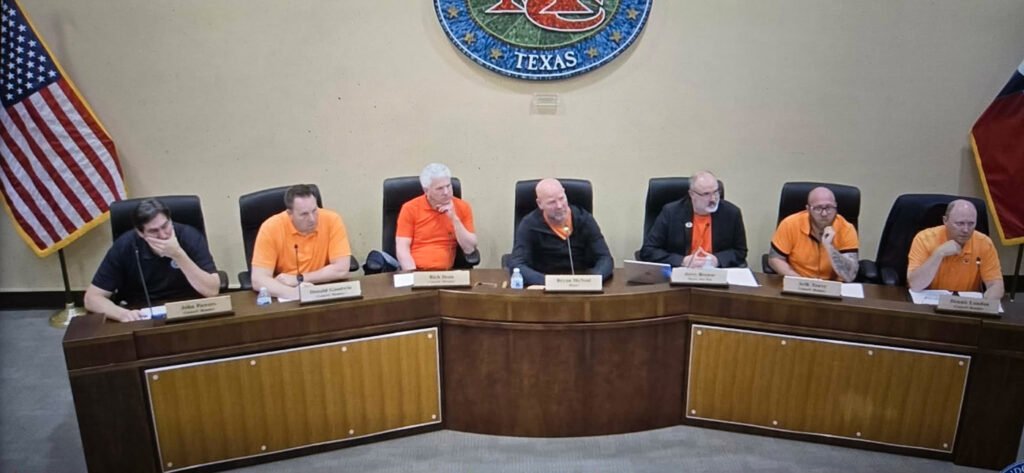
In a March 31, 2026 Facebook video, Mayor Bryan McNeal described it as “prudent” for the City to sell the Sonoma Verde water infrastructure—framing the pipes as a liability and suggesting the move would protect residents from future costs.
Days later, a Facebook post by the moderator for Concerned RCH Customers Facebook Group Page shared: “Ladies and gentlemen, the water pipes in Sonoma Verde belong to the city. Period. Hard Stop. They were not given to the city for safe keeping. They are not being paid for by the residents of Sonoma Verde. The city owns and operates the water pipes. The end.”
Those statements present a simplified narrative. The public record shows a more complex reality.

What Was Said vs. What the Record Shows

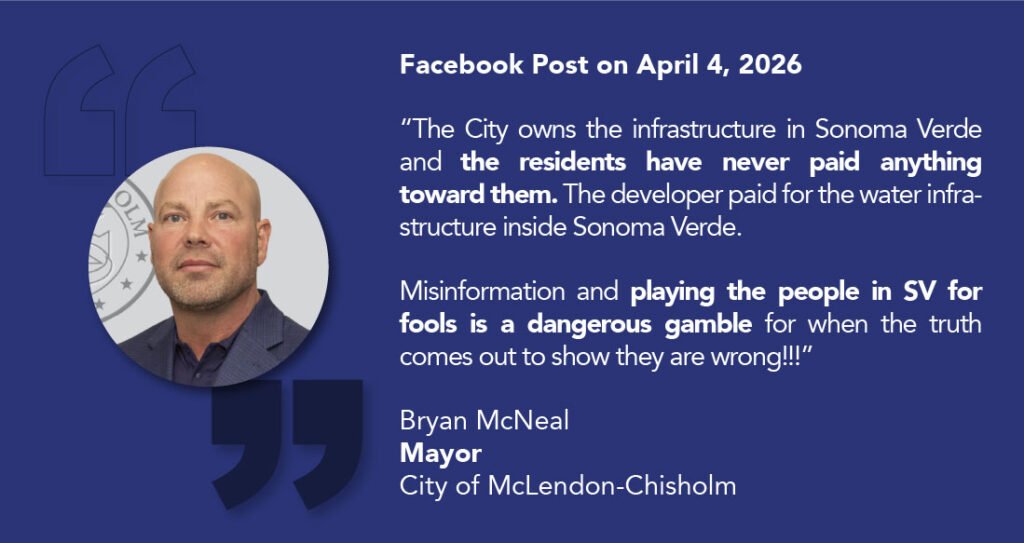
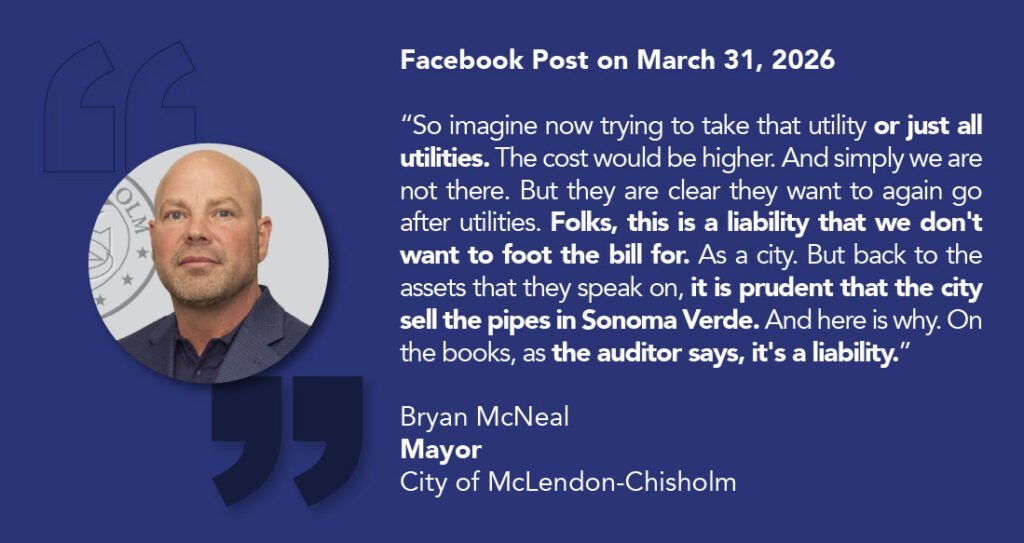
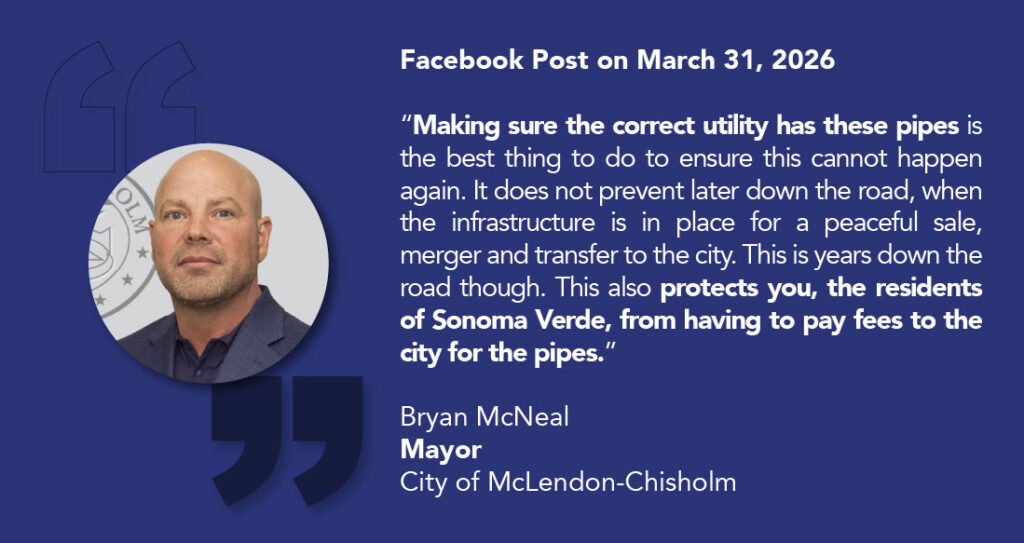
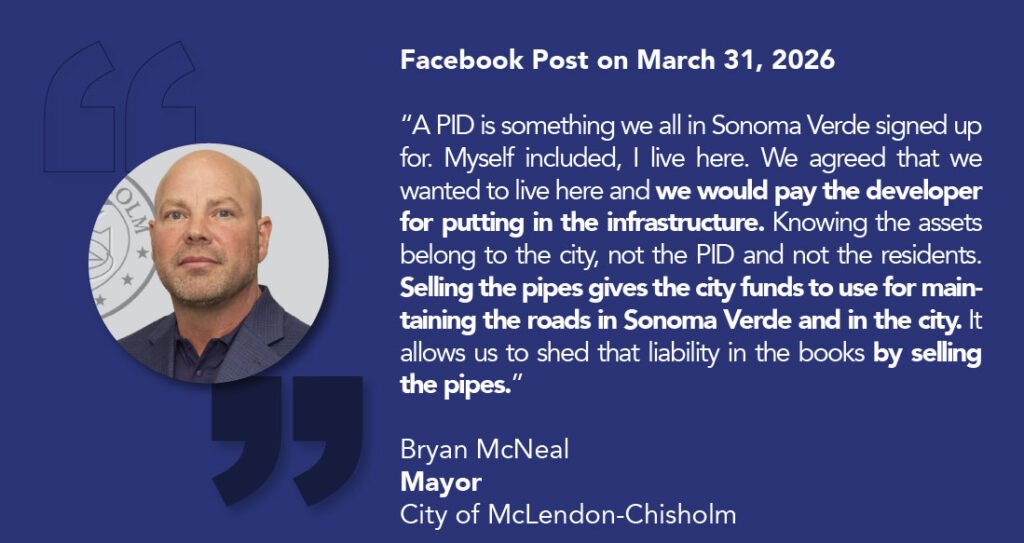

Recent public messaging has reduced a complex system into two claims:
- that the City owns the infrastructure
- and that residents are not paying for it
But the underlying documents—development agreements, financial disclosures, audit findings, and council discussions—show something more layered.
The documents show a system where:
- infrastructure was financed through multiple mechanisms
- service responsibilities were divided
- and revenue does not flow to the entity responsible for maintenance
That distinction is where the public narrative begins to break down. Not because the facts are unclear—but because they have been reduced.
No Sale Has Occurred—But That’s Not the Full Story
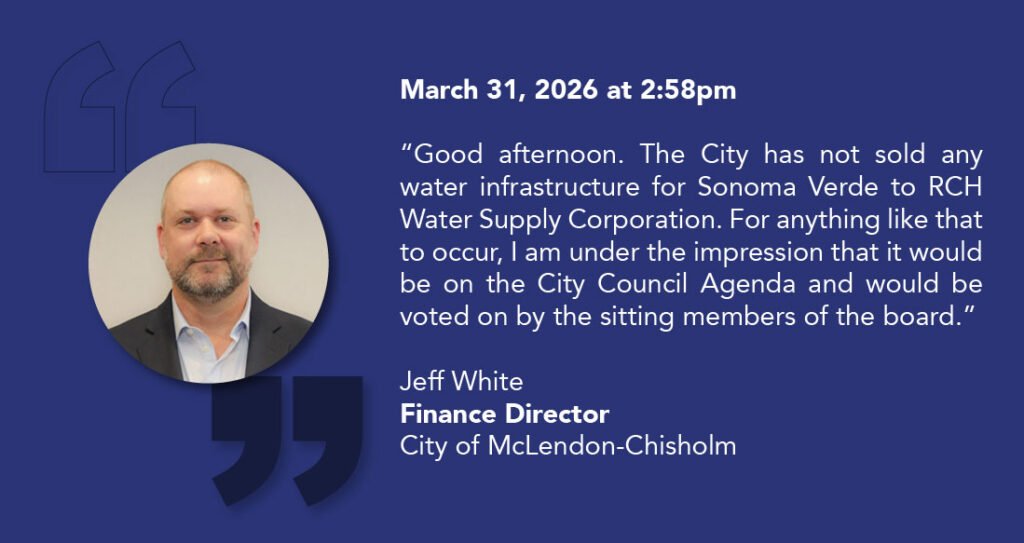
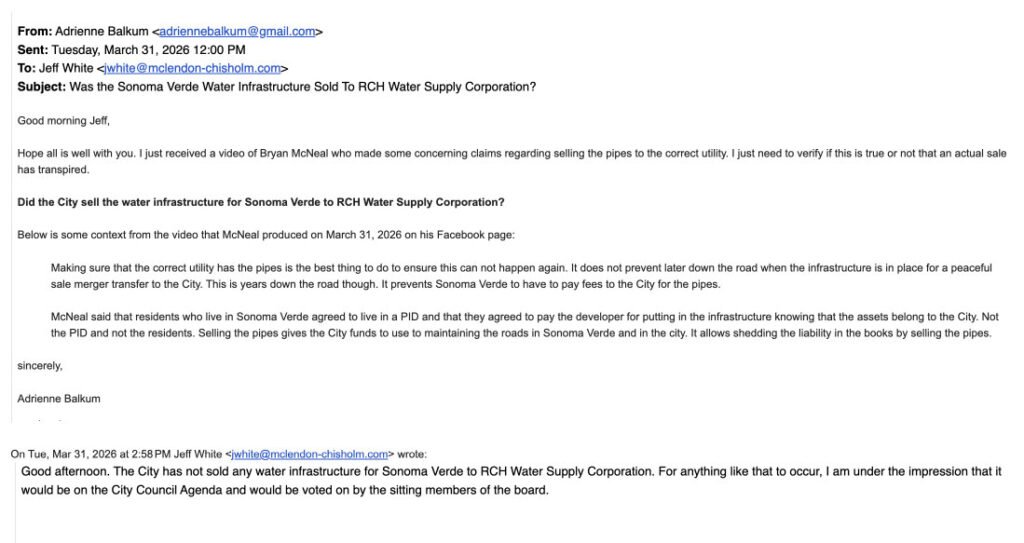
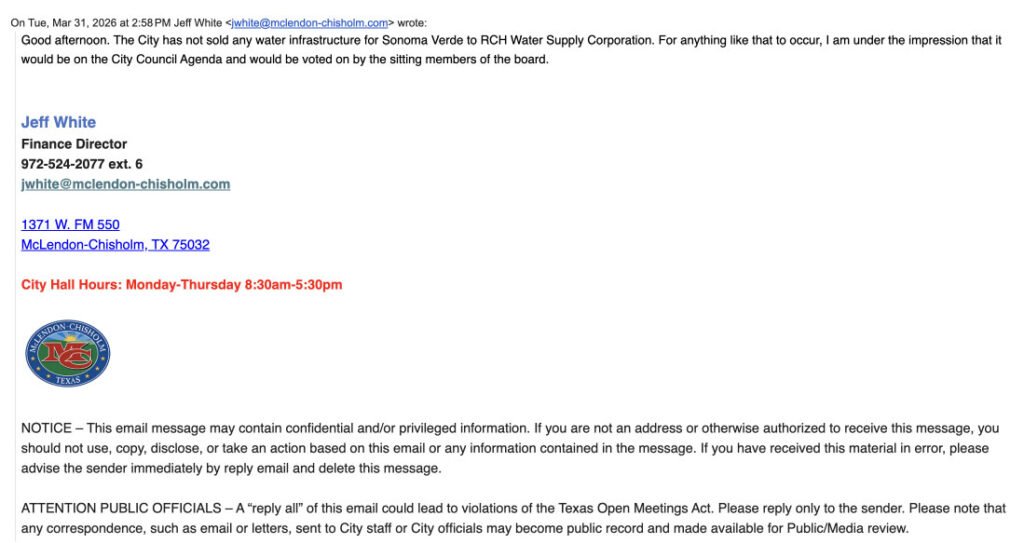
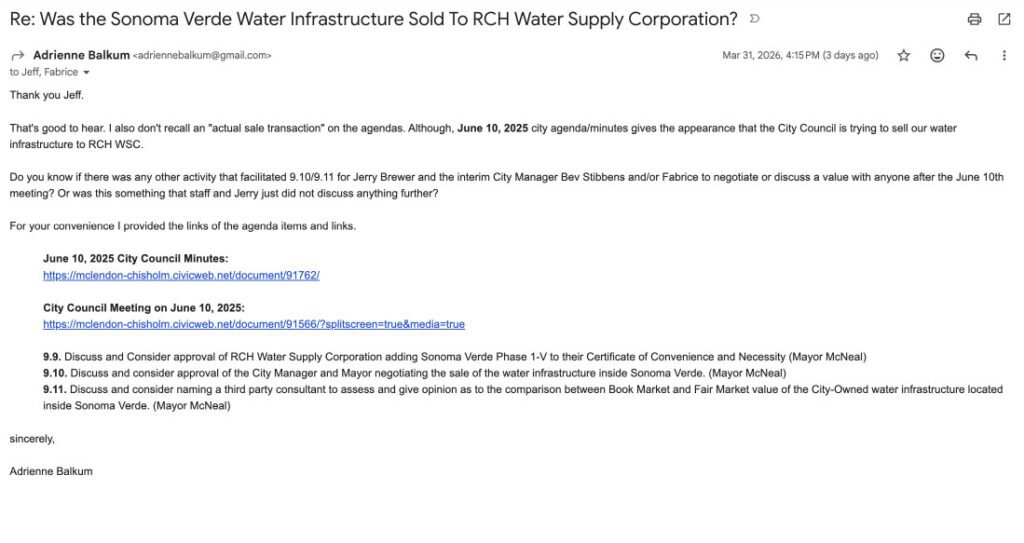
The City’s Finance Director, Jeff White, confirmed on March 31, 2026 that the City of McLendon-Chisholm has not sold any water infrastructure for Sonoma Verde to RCH Water Supply Corporation. He also noted that any such transaction would be expected to appear on a City Council agenda and require a vote.
That point is not in dispute.
What remains in dispute is everything surrounding it—how the infrastructure was intended to function, how it is financed, and why it is now being framed as a liability.
The Sonoma Verde Public Improvement District (PID) framework funds infrastructure—it doesn’t contemplate selling it. That’s what makes the City’s later exploration of a sale, despite known bond-related constraints, stand out.
Planned Infrastructure That Was Never Delivered

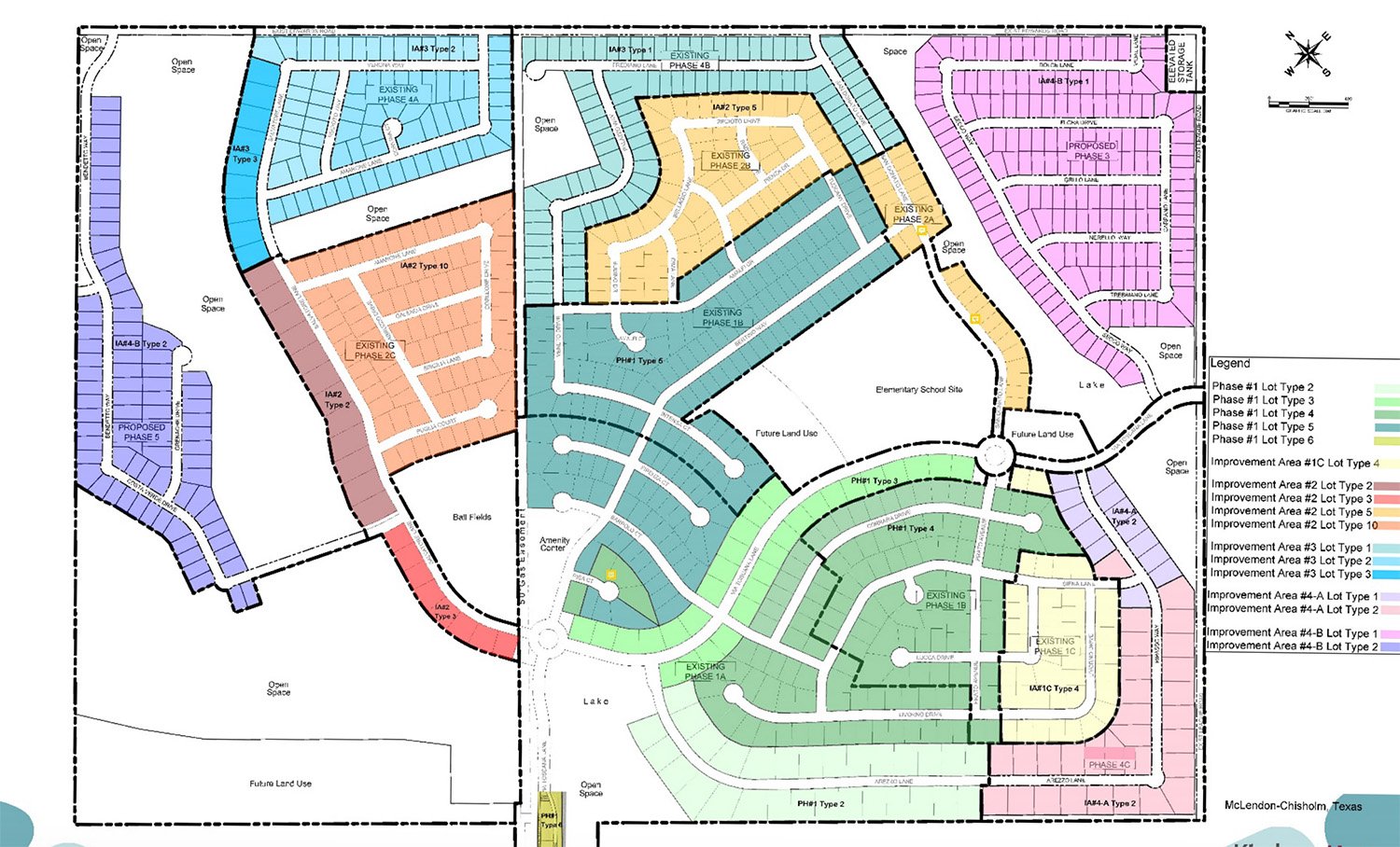
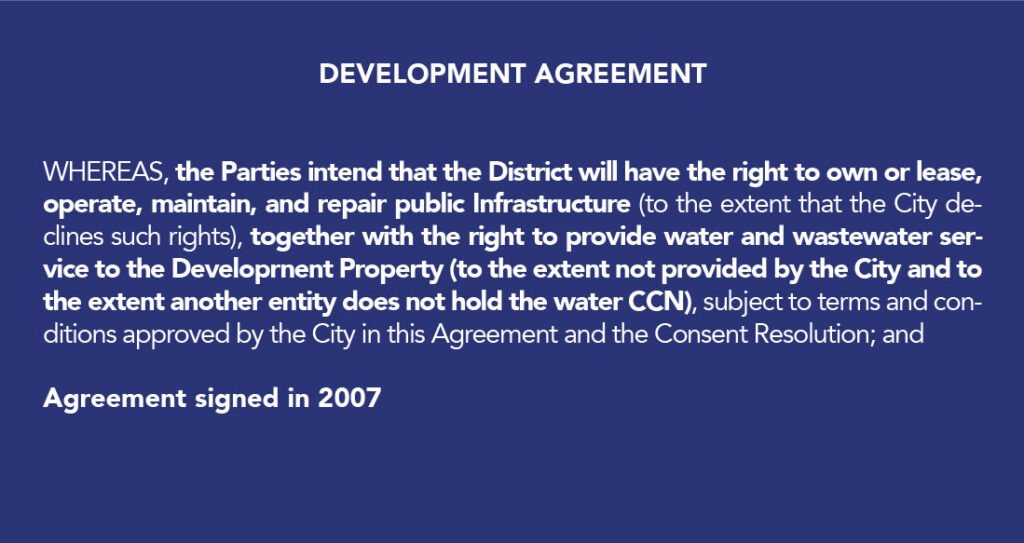
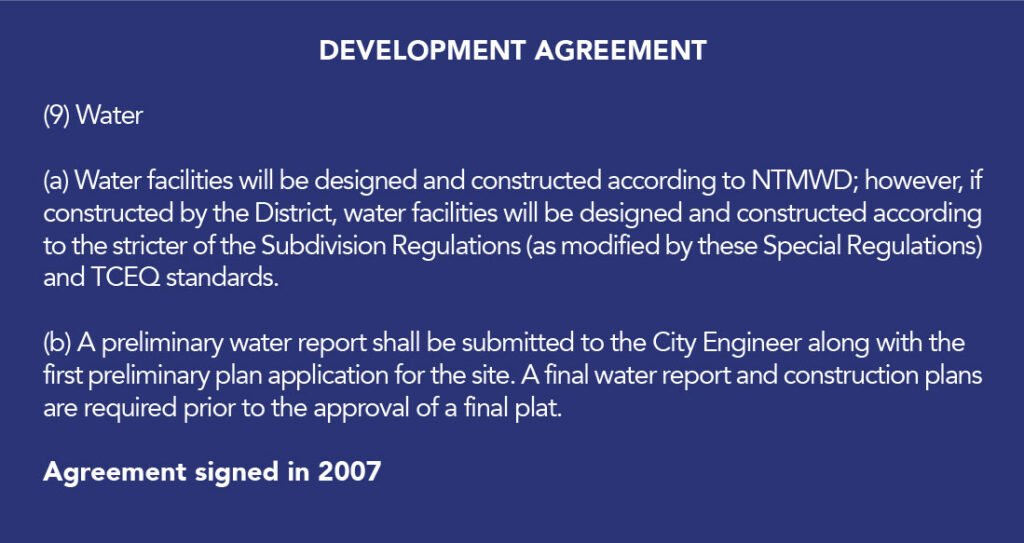
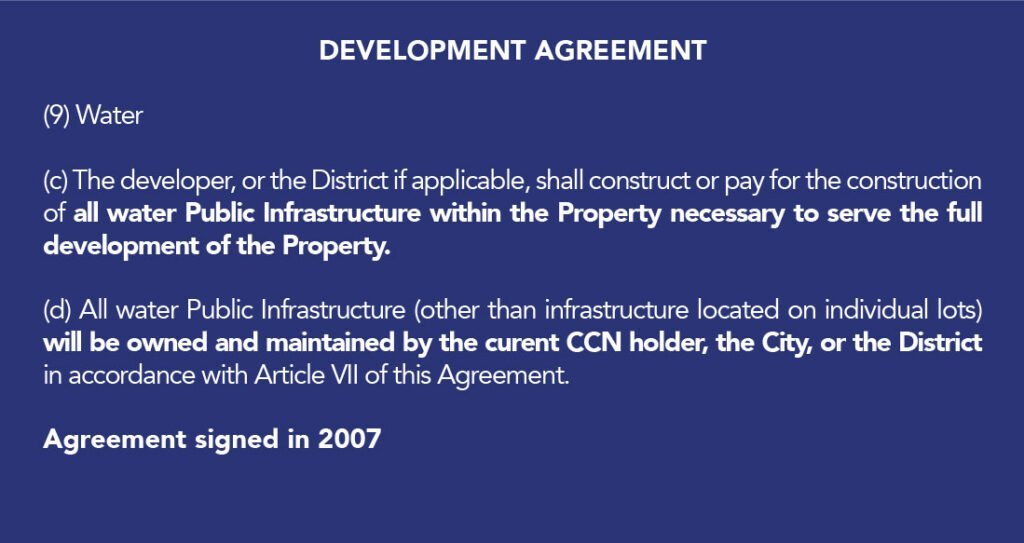
The Sonoma Verde Development Agreement provides critical context often missing from recent discussions.
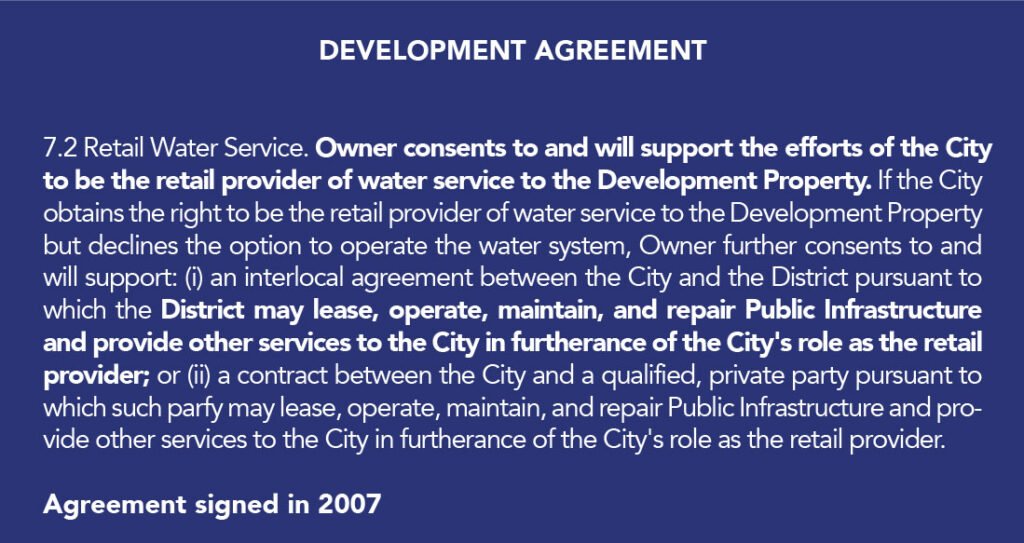
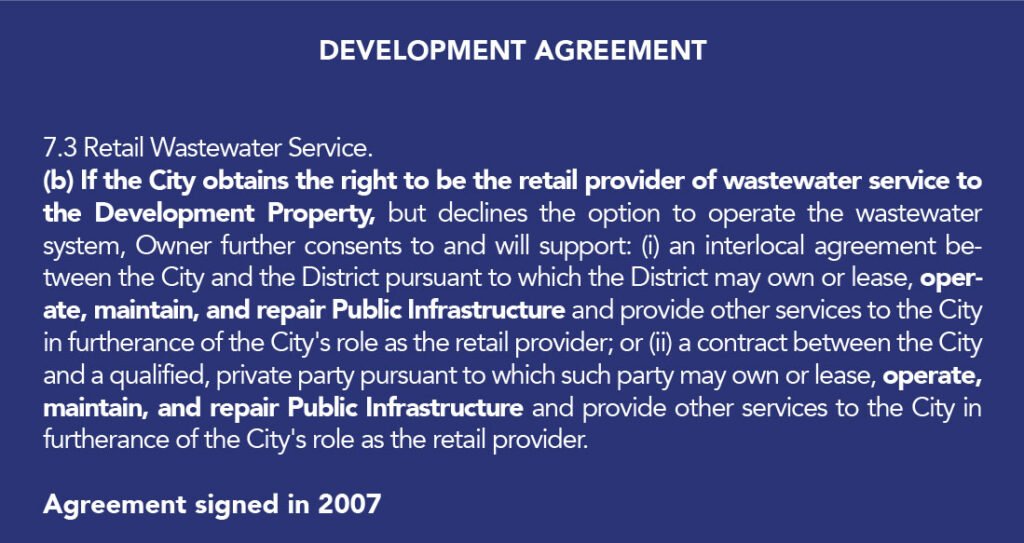
It anticipated that the City would serve as the retail provider of water and wastewater service to the development—an arrangement that would have aligned infrastructure, service, and revenue.
Under that model:
- Water service → billed by the City, creating a direct revenue stream
- Infrastructure → maintained by the City as part of its utility operations
- Revenue → reinvested into maintenance, operations, and long-term system costs
In that structure, infrastructure is not simply a liability—it is part of a system designed to support long-term city growth.
The agreement also makes clear that public improvements may be “owned, operated, maintained, and repaired by the District or other entity selected by the City,” reinforcing that ownership alone does not define how the system functions. That system depends on alignment. When that alignment breaks, so does the model.
Elevated Storage Tank + Developer Contribution

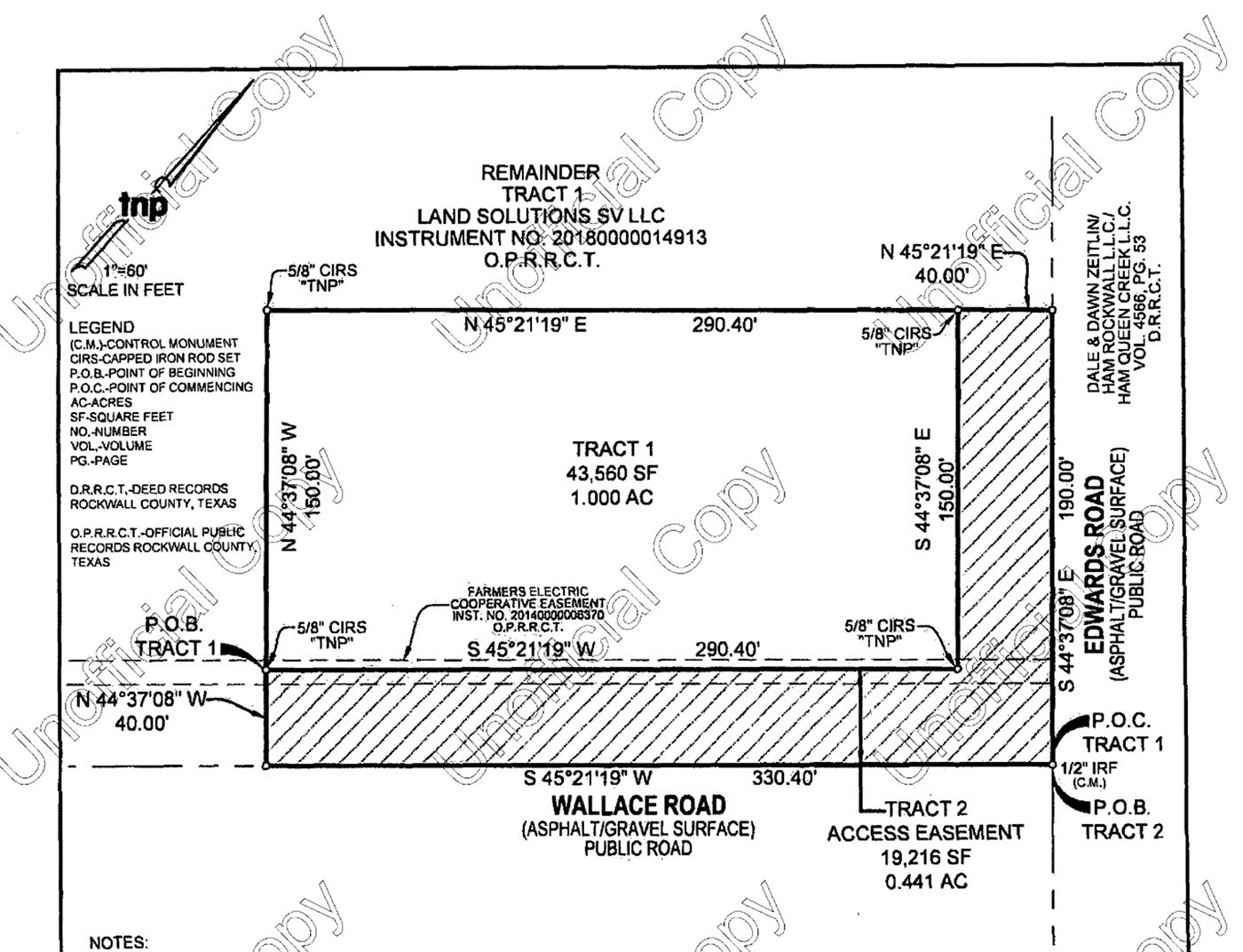
The original plans included critical infrastructure to support long-term water service, including a designated site for an elevated storage tank—identified in the Service and Assessment Plan map (p. 58).
That infrastructure was never built.
On August 26, 2019, the developer conveyed that tract of land to RCH Water Supply Corporation.
This transfer occurred alongside approximately $1.3 million in developer-funded water infrastructure—both land and capital intended to support system capacity and future service needs.
What the Agreements Actually Established
The governing agreements clarify how the system was structured.
The 2018 Water Service Agreement shows that the developer funded construction of the water system for integration into RCH’s network, including substantial financial commitments tied to future phases in Sonoma Verde.
The License Agreement further confirms that while infrastructure may be owned by the City, RCH was granted the right to use that infrastructure to provide water service.
Together, these documents establish a split structure:
- infrastructure may be tied to the City
- but service delivery and revenue collection are tied to RCH
This distinction is critical, because ownership alone does not determine how the system operates financially.
What the Financing Structure Actually Shows
The Service and Assessment Plan (SAP) confirms that infrastructure within Sonoma Verde was constructed through a structured financing system—not as standalone assets.
That system includes:
- developer contributions
- PID bond financing
- and long-term repayment obligations tied to the development
Public financing records filed through EMMA reinforce this structure, showing that infrastructure in developments like Sonoma Verde is typically tied to long-term debt and repayment mechanisms—not isolated ownership.
The Auditor Identifies the Core Problem

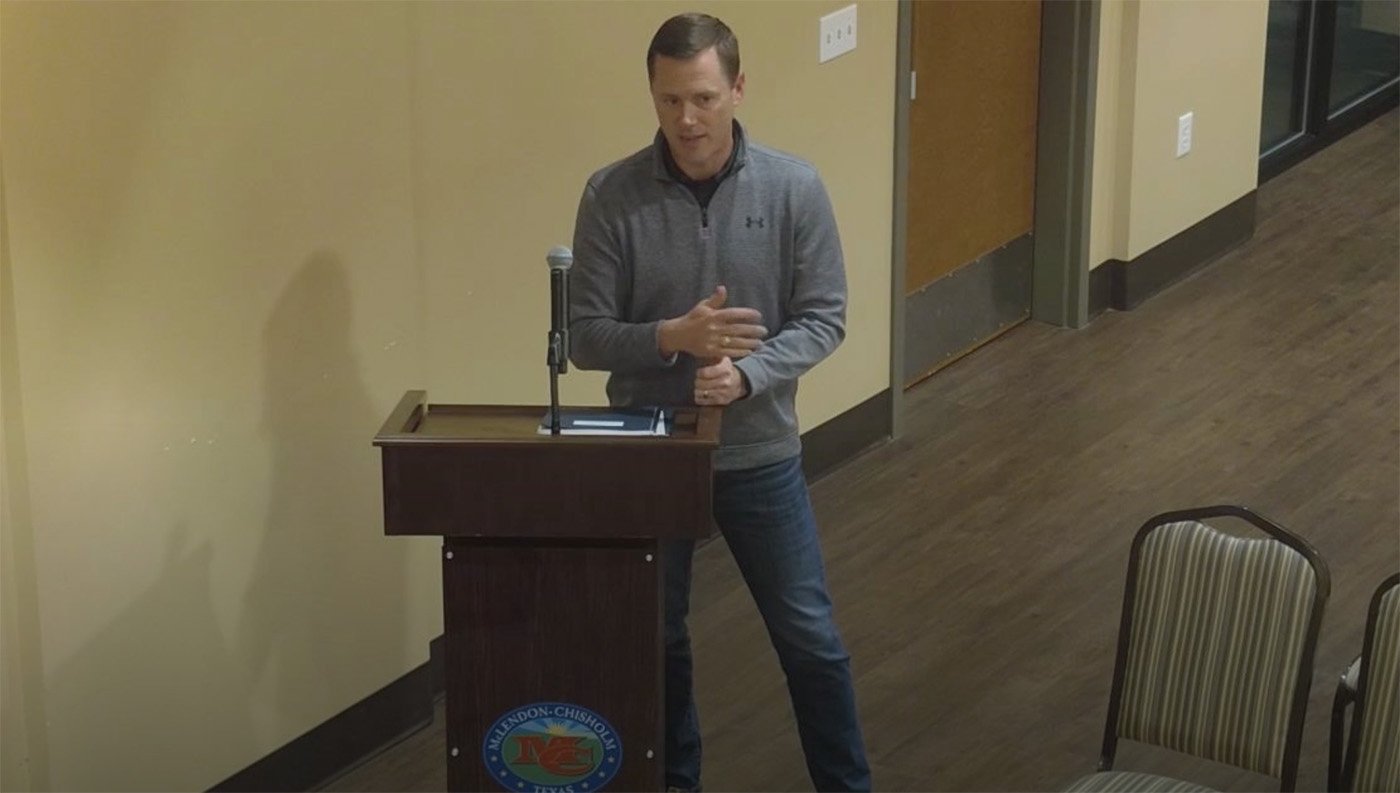
At the February 10, 2026 City Council meeting*, the City’s independent auditor, Kyle Caperton, MCPA, PC delivered a direct assessment during discussion with Mayor McNeal:
“You’ve got the roads. You’ve got the water lines. You’ve got the sewer lines and you don’t collect revenue on the water lines, but you are responsible for fixing them…How are you going to pay for those things?”
That question remains unanswered in the current structure.

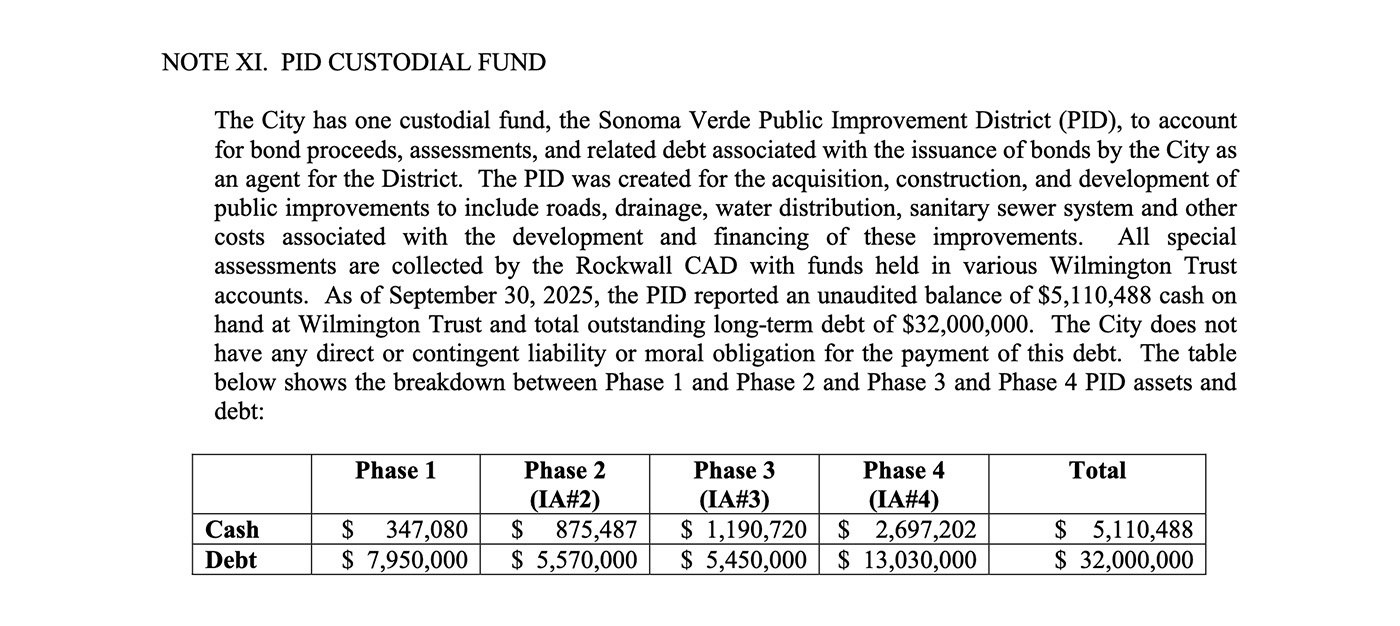
At the same time, the City’s 2025 audited financials show that Sonoma Verde infrastructure is funded through the Public Improvement District (PID), which carries approximately $32 million in debt. Those costs are paid by residents through PID assessments—but those funds do not go to the City.
The financial structure creates a clear separation between responsibility and revenue:
- residents are paying for infrastructure
- but the City is responsible for maintaining it
- without access to the revenue associated with it
This is the structural imbalance the auditor is pointing to.
Under the original framework—where the City would serve as the retail provider—those same assets would typically generate revenue to support long-term maintenance. Instead, responsibility and revenue are separated—leaving the City with the obligation, but not the income to support it.
This disconnect is not theoretical—it is documented.
It directly contradicts the claim that residents are not paying for the system.
*Video Timestamp for 9.2 Audit Resolution: 2:07:19
Who Pays When Infrastructure Needs Repair?
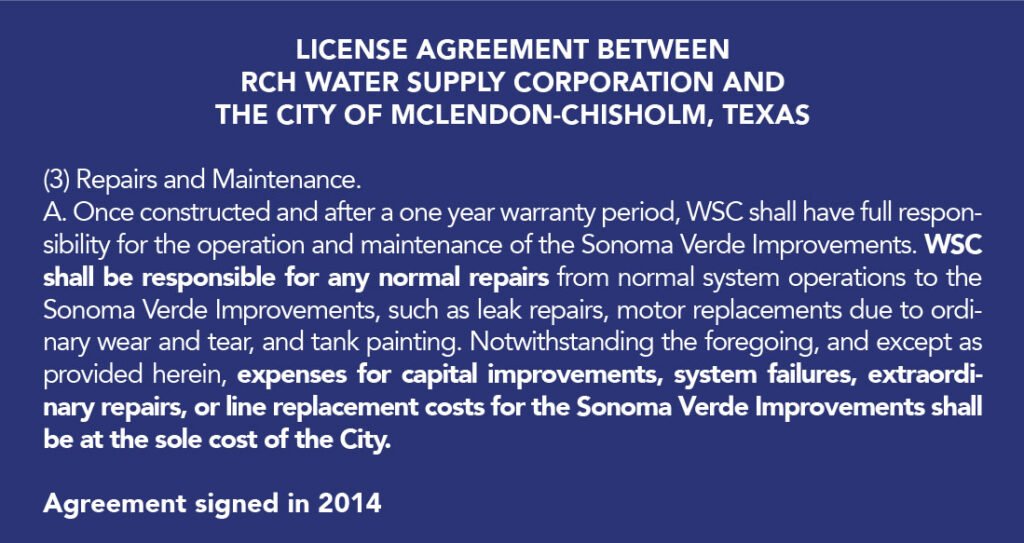
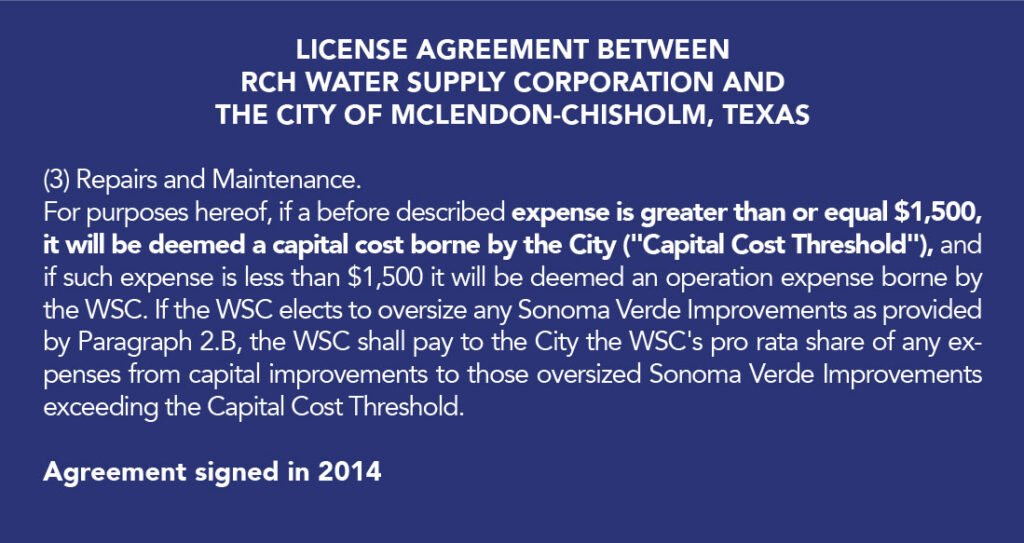
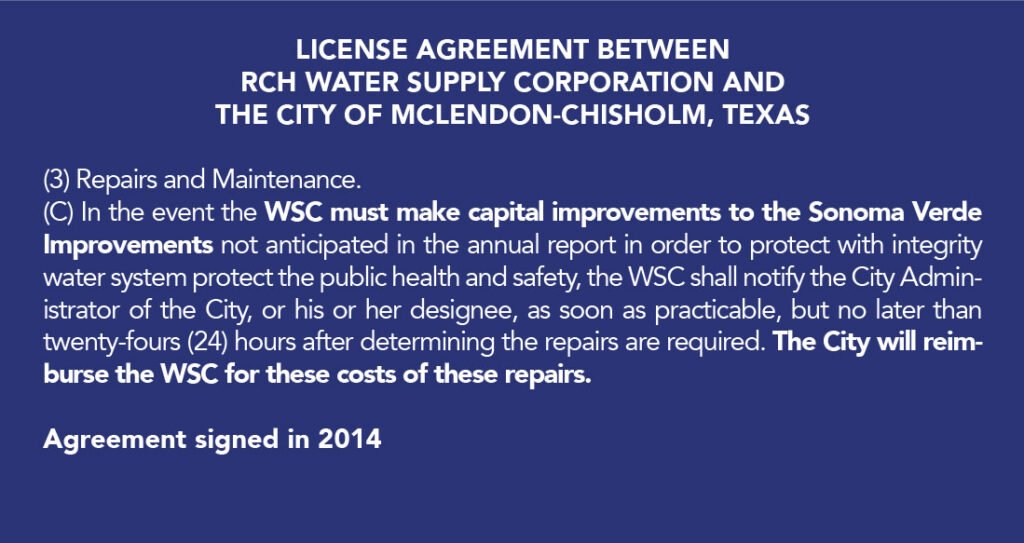
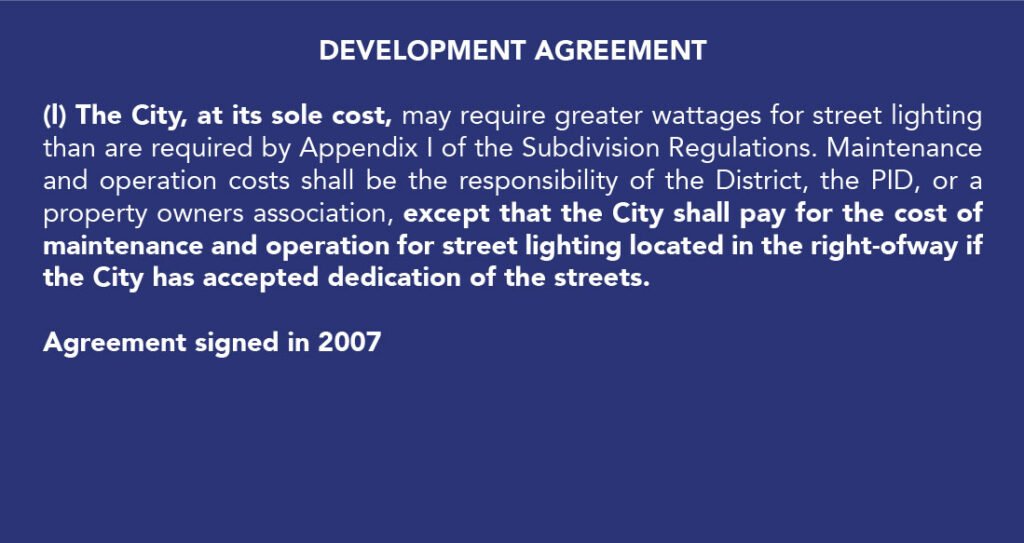
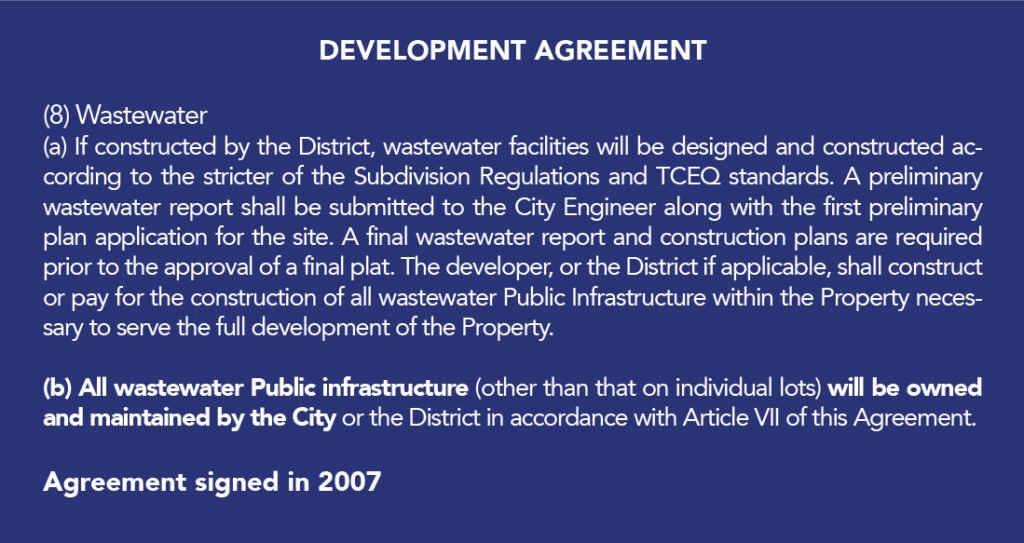
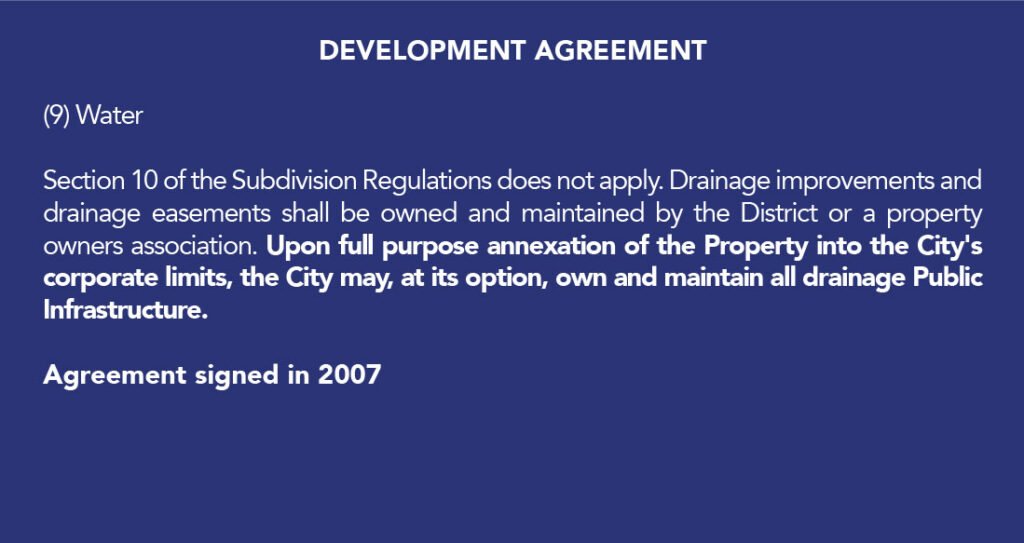
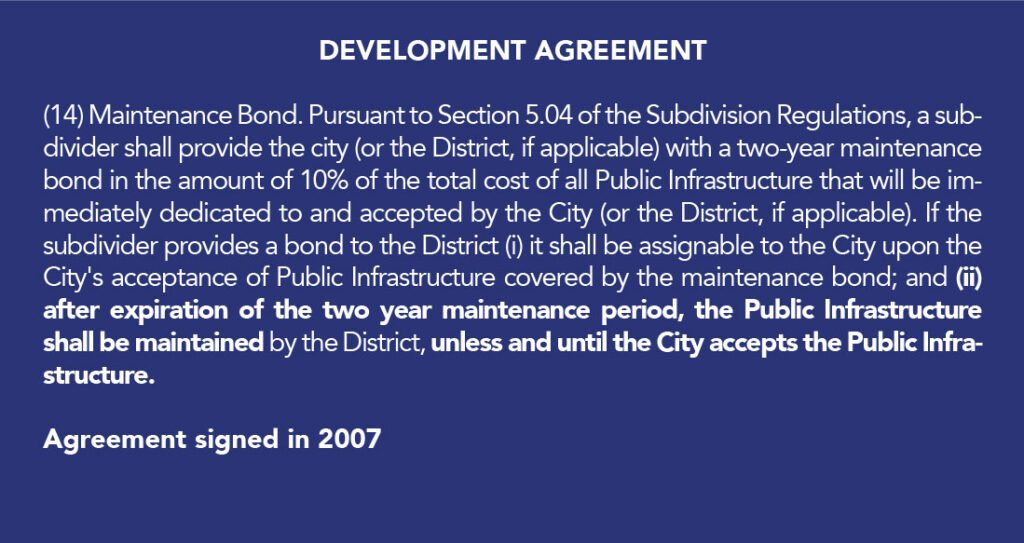
A practical question often gets lost in the broader discussion: what happens when infrastructure needs repair years after a development is built?
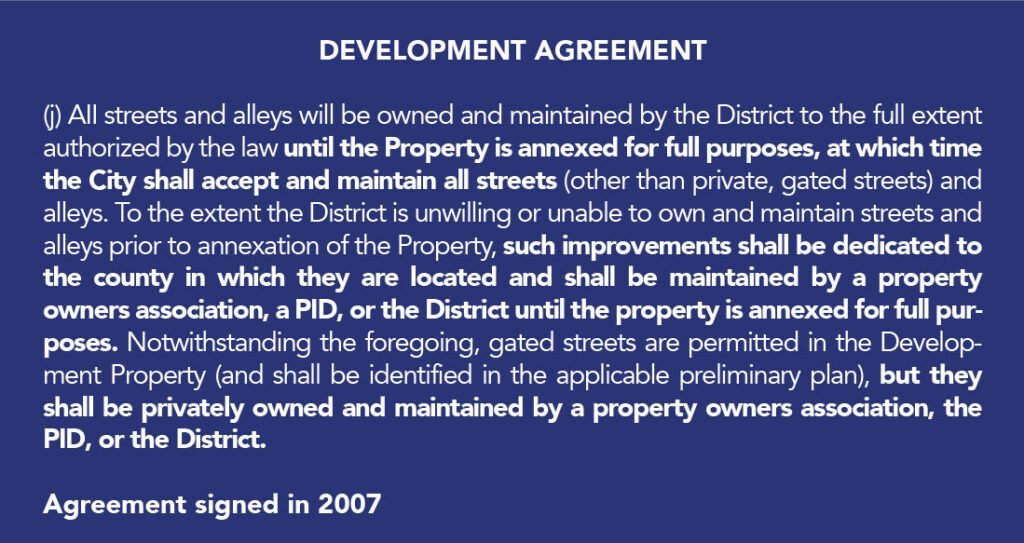
In developments like Sonoma Verde, roads and public improvements are initially funded through Public Improvement District (PID) bonds and developer contributions. Residents repay those costs over time through PID assessments tied to their property.
However, those payments are restricted to repaying the original construction debt—they are not available for future maintenance or repairs.
Once the infrastructure is in place, responsibility shifts.
If a system fails or requires replacement, the City is responsible for those costs—typically through its general fund or future budget allocations.
That distinction matters.
It means infrastructure can be fully funded and paid for through one mechanism, while the ongoing obligation to maintain it rests with the City.
The financial impact of that structure is not theoretical. As reflected in the City’s FY2025 audit, a major sewer line repair—approximately $1.3 million—was funded by the City, illustrating what that responsibility looks like in practice.
That experience sharpened the concerns raised in the audit. If additional failures were to occur, the City would remain financially exposed without a corresponding source of revenue to support those costs.
That moment clarified the core issue raised by the auditor.
While the City may receive limited revenue from certain utility functions, it does not receive the primary water service revenue tied to the infrastructure it is responsible for maintaining.
The City carries the obligation—but not the revenue stream to support it.
City Actions Show the Sale Was Actively Pursued
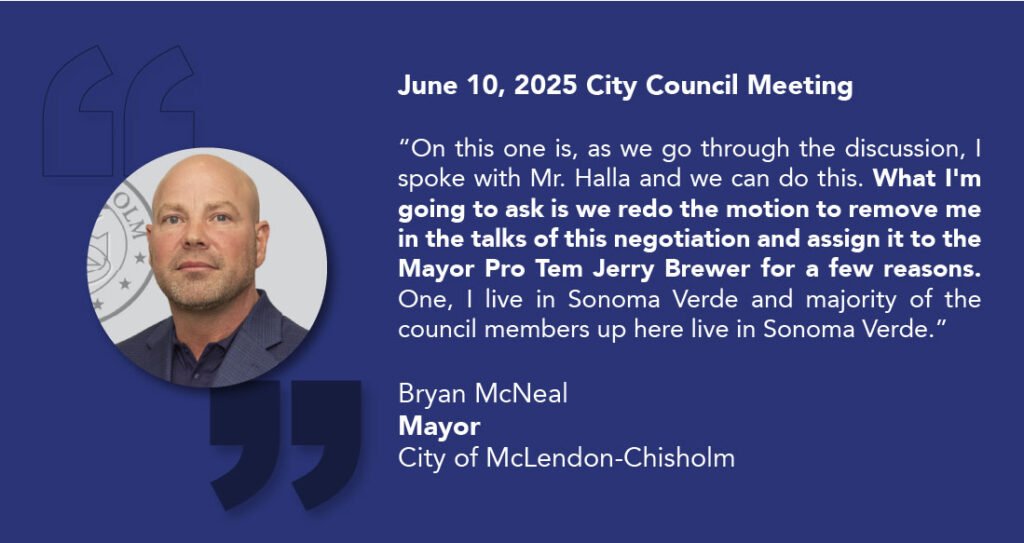
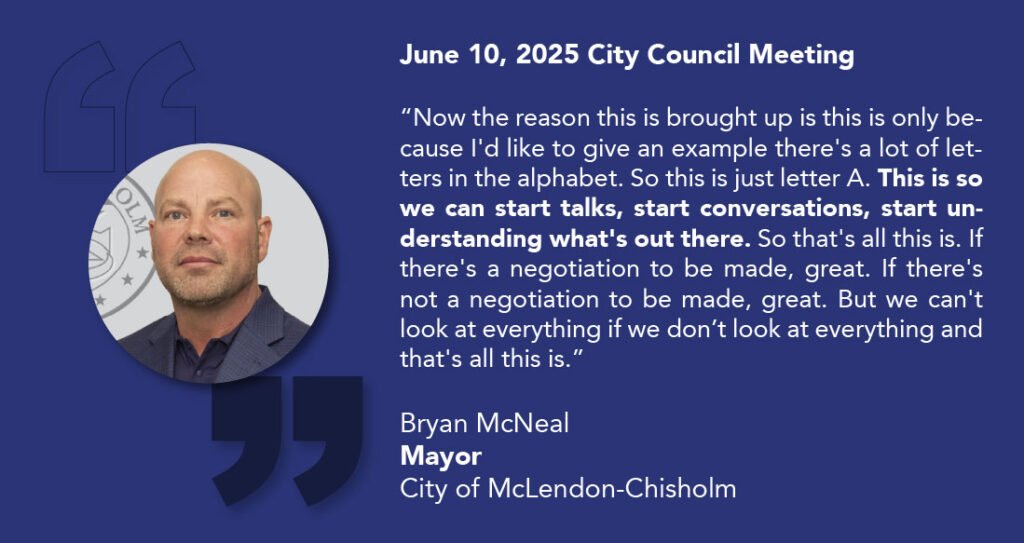
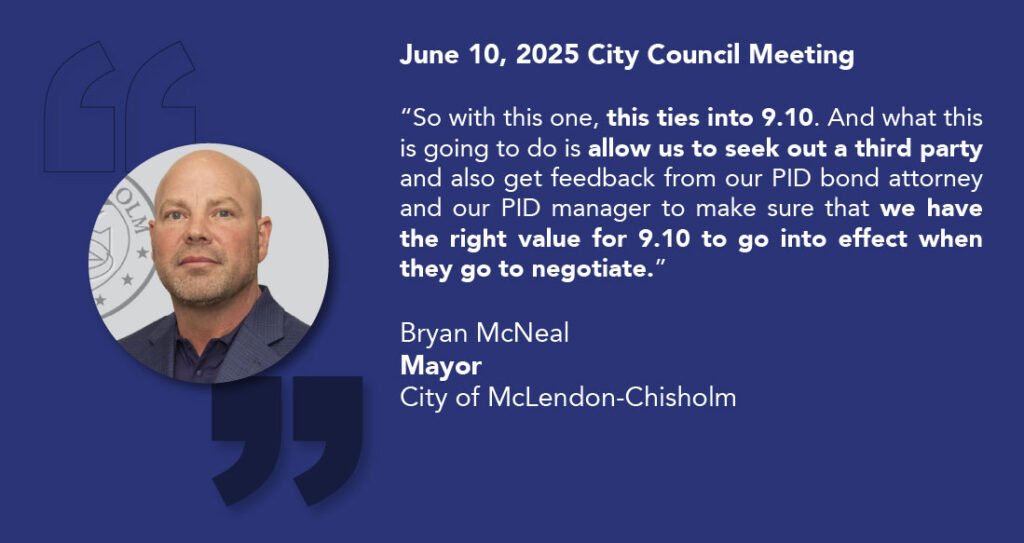
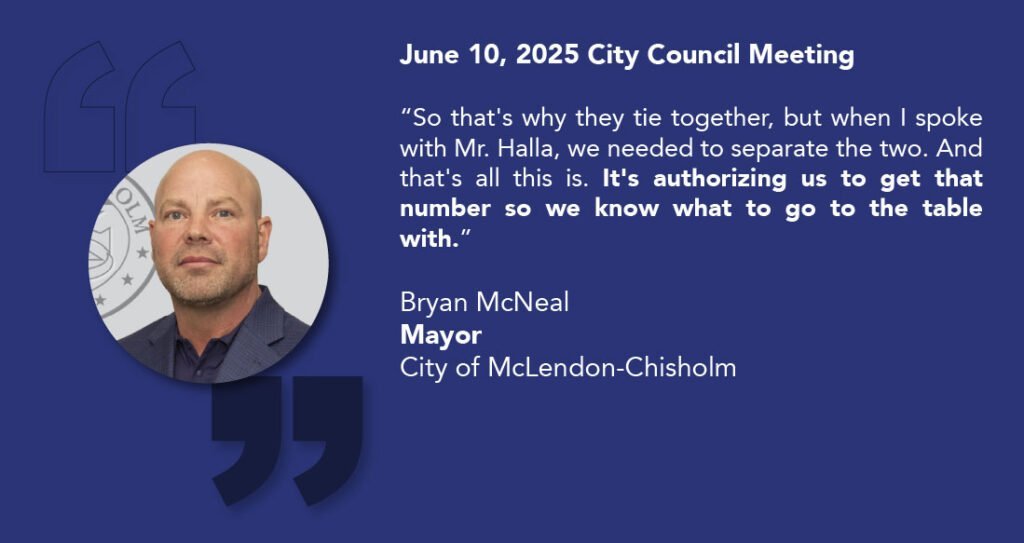
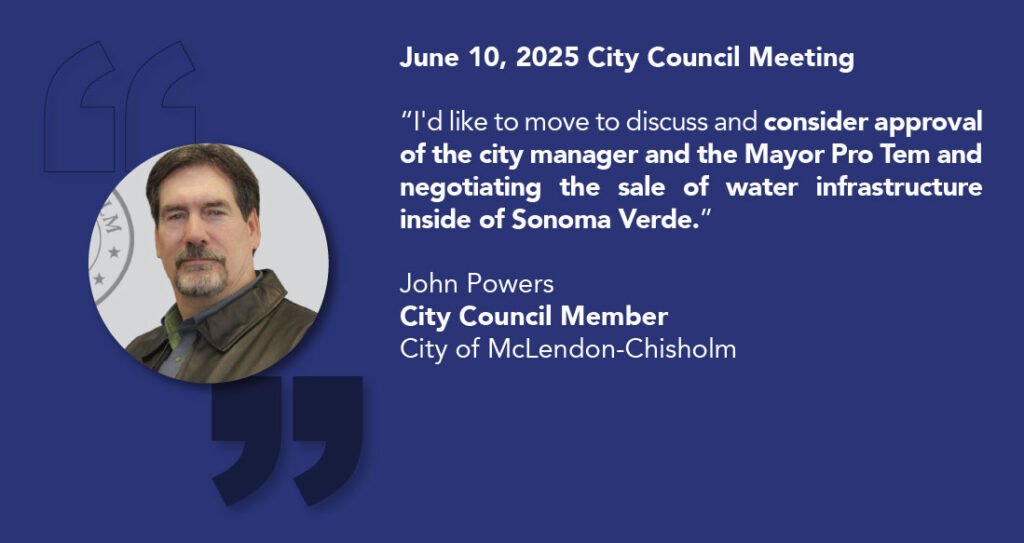
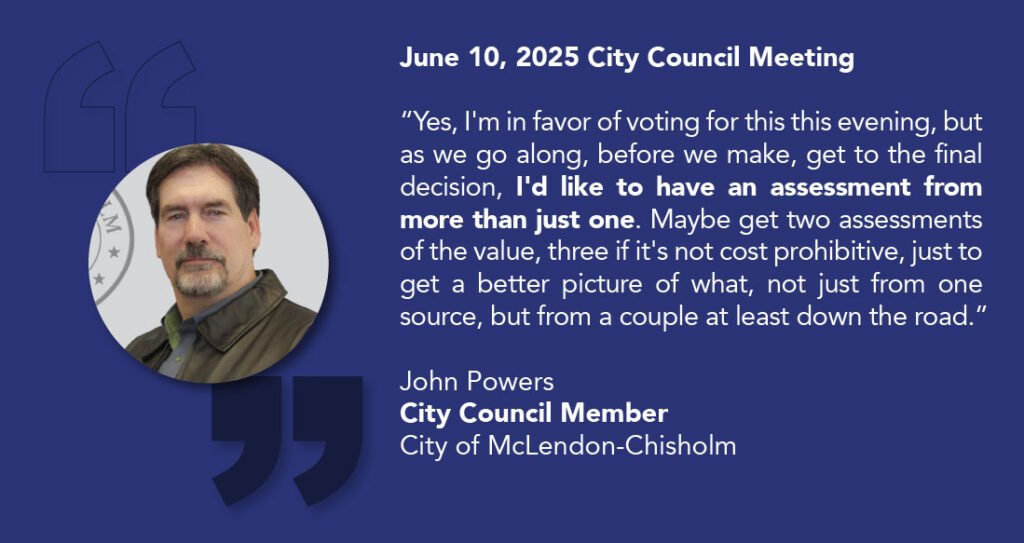
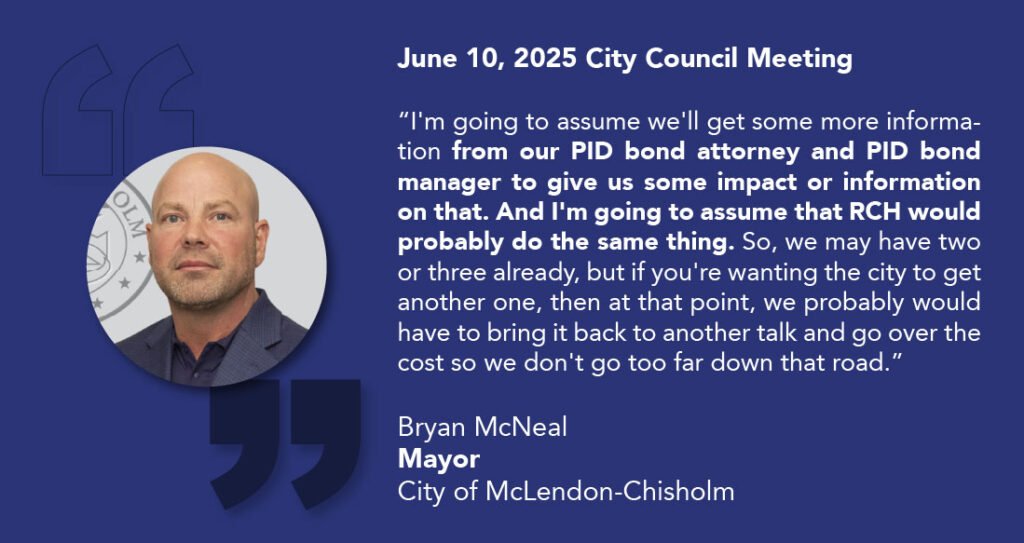
Council discussions and resolutions show that the sale of water infrastructure was not only discussed—but actively explored alongside ongoing legal and financial considerations.
June 10, 2025 City Council Agenda items and correspondence show that City Council:
- approving RCH Water Supply Corporation’s CCN expansion into Sonoma Verde
- authorizing negotiation of a potential sale of water infrastructure
- and evaluating the value of City-owned assets
These actions indicate that moving water service away from the City was not only discussed—it was actively pursued.
In addition, a July 23, 2025 letter signed by Mayor McNeal expressed support for RCH’s application with the Public Utility Commission to include the Sonoma Verde area in its service territory. As of March 25, 2026 the PUC’s Administrative Law Judge found RCH WSC’s application administratively incomplete and requiring supplemental recommendation from Commission Staff.
What remains unclear is how far the negotiation process between the City and RCH WSC progressed.
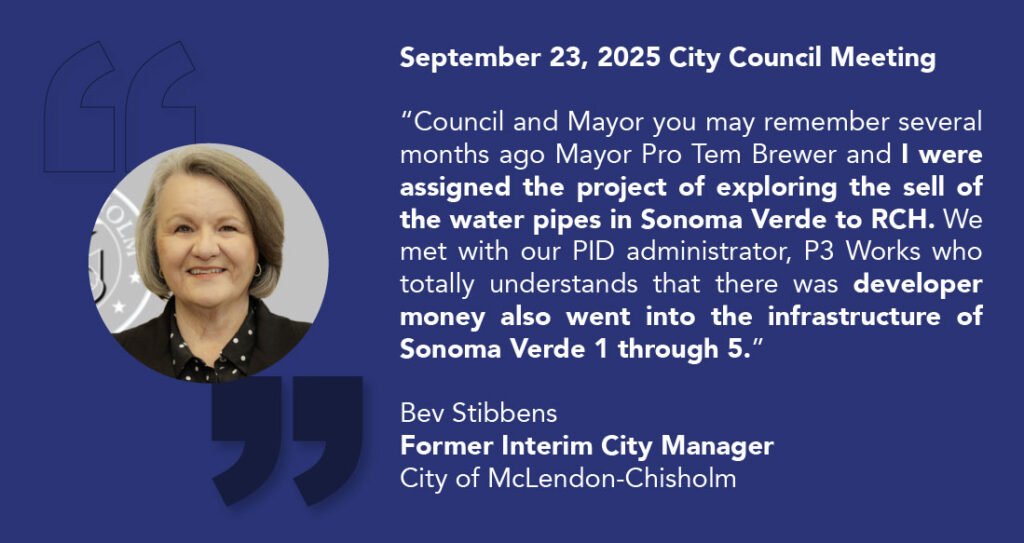
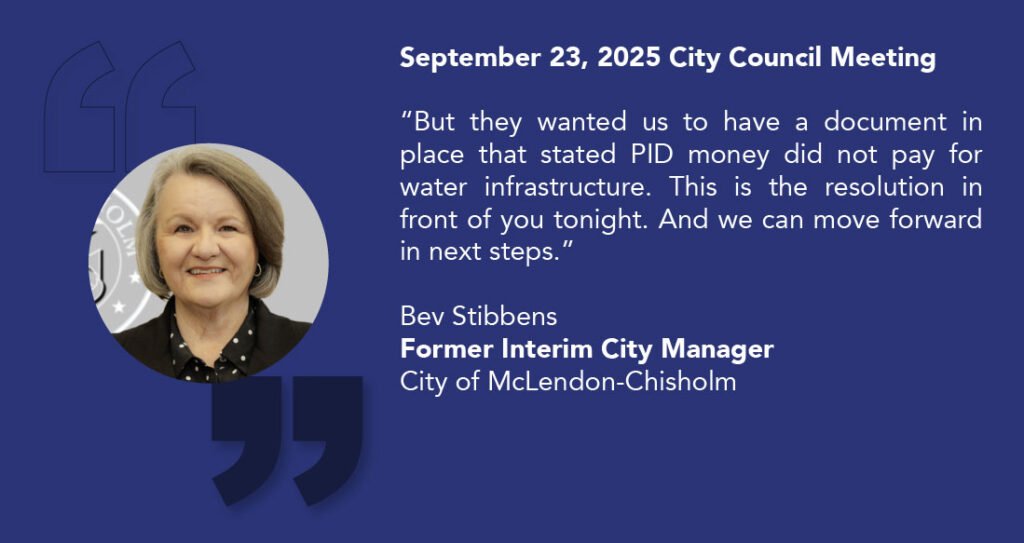
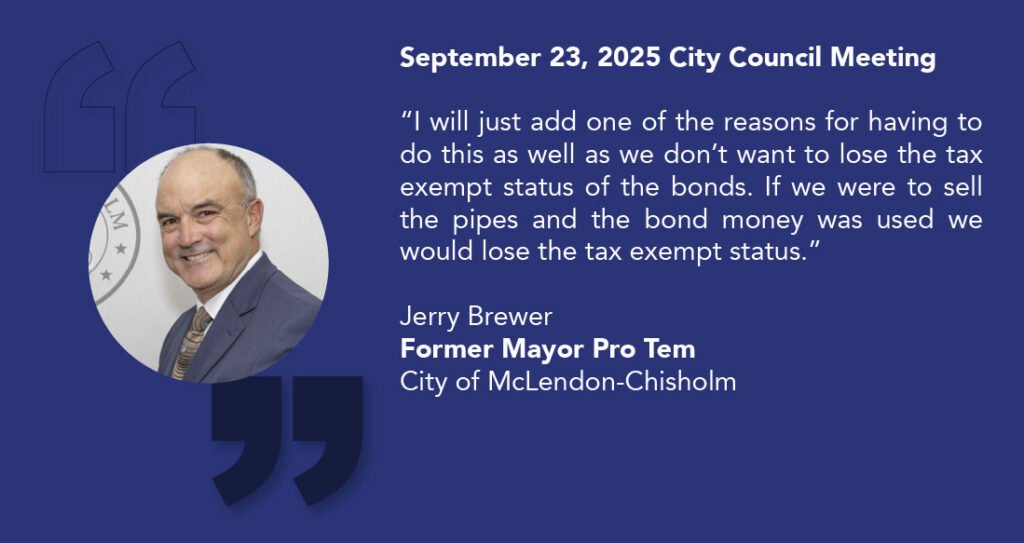
At the September 23, 2025 City Council meeting**, City leadership confirmed that the sale of Sonoma Verde water infrastructure to RCH was under active consideration.
Staff and council discussions addressed:
- the role of developer contributions and PID financing
- legal constraints tied to bond proceeds
- and the potential implications of transferring infrastructure
A resolution was passed unanimously to formalize those distinctions and allow the process to move forward.
This was not hypothetical—it was a documented policy direction supported by formal council action. And it occurred within a framework where the ability to sell those assets was not clearly established.
As part of follow-up reporting, the City’s PID administrator, P3 Works, was contacted to clarify statements suggesting that policy direction or guidance had been provided through that office. According to P3 Works, its role is administrative in nature and does not include advising on policy decisions. That responsibility typically falls to legal counsel.
P3 Works further indicated that it does not recall direct communication with Mayor Bryan McNeal regarding these matters and that any technical or structural questions related to the Service and Assessment Plan would have been addressed through coordination with the City’s legal team and City staff.
Public references to guidance or direction attributed to the PID administrator do not align with the administrator’s defined role. This should raise questions where City guidance originated.
Records confirm that City’s bond counsel, including Chris Settle of McCall, Parkhurst & Horton LLP, serves as legal counsel on PID-related matters—not as part of the P3 Works PID administration itself.
Further verification is ongoing to determine whether legal counsel formally advised the City on the actions presented in council agendas, and whether any such guidance was communicated to City leadership as described in public statements.
This includes reviewing whether communications referenced in public posts—specifically claims that legal or administrative guidance was provided to City officials—can be substantiated through documented records.
**Video Timestamp for 8.3 Resolution restricting the use of proceeds of bonds issued to finance public improvements in the Sonoma Verde Public Improvement District: 2:06:05
The Water Chronicles: A Documented Timeline of Decisions
For those seeking a clearer understanding of how these decisions unfolded, a 14-page timeline titled Excerpts from the McLendon-Chisholm Water Chronicles compiles key meetings, agreements, and actions from 2022 through 2024. Rather than isolated moments, the record reflects a sequence of decisions that shaped the City’s relationship with RCH Water Supply Corporation, as well as its infrastructure and financial direction.
When viewed in full, these documented events begin to diverge from the simplified narratives presented publicly. Statements made in meetings, on social platforms, and in community discussions do not consistently align with what is reflected in official records, contracts, and filings.
This is precisely why The Water Chronicles has been introduced.
Not to revisit opinions—but to establish, in order, what was documented, what was proposed, and what was ultimately carried out.
At its core, this is not a debate about ownership.
It is a question of whether the public is being given the full picture.
When residents are told, “Period. Hard stop,” it is worth pausing.
Because the public record—contracts, financial plans, meeting transcripts, and official correspondence—does not support a conclusion that simple.
When the record and the narrative do not align, the record is where the truth is found.
Subscribe for updates. Readers are also welcome to share respectful thoughts in the comments or reach out by email.