
In every election cycle, voters are told the same thing: this is the moment that matters.
But what happens after the signs come down, the mailers are tossed aside, and the candidates take office?
That’s when leadership is tested—not in campaign promises, but in conduct.
And increasingly, across our local communities, that conduct is raising important questions.
A Pattern Too Familiar to Ignore


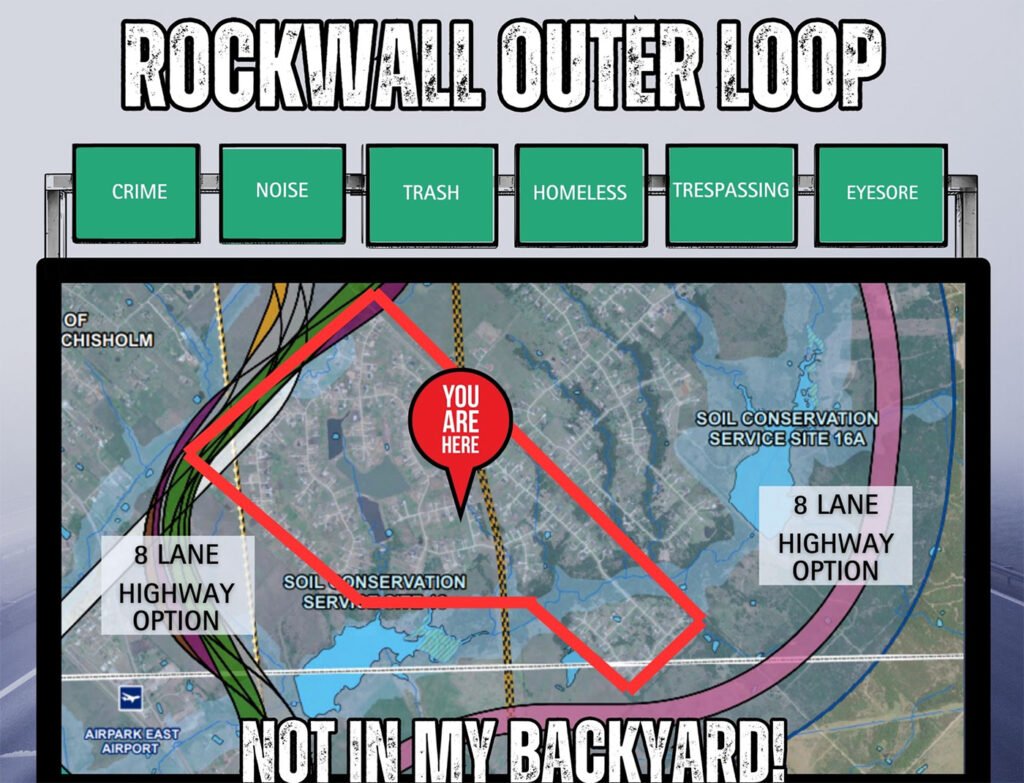
Over the past several months, residents have watched a series of events unfold that go far beyond routine political disagreement.
We’ve seen:
- Allegations of officials recording private conversations involving colleagues and staff
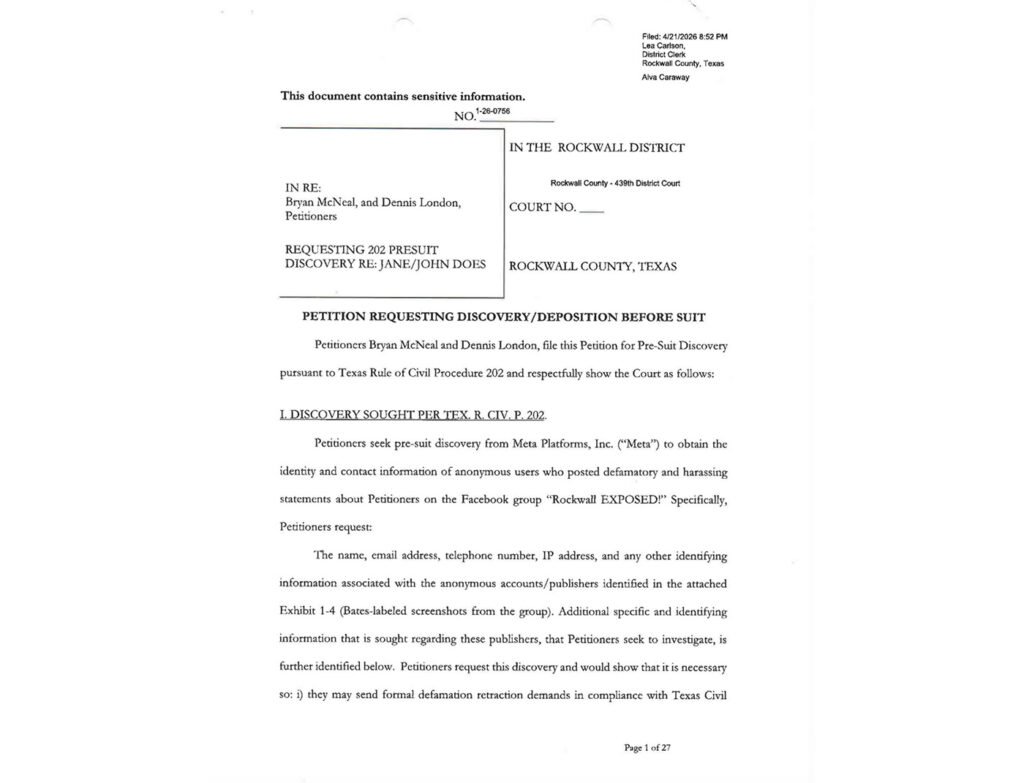
- Escalating tensions spilling into public accusations and legal disputes
- Recall efforts driven by fractures within local leadership
- Concerns surrounding decision-making processes, including claims of “walking quorums”
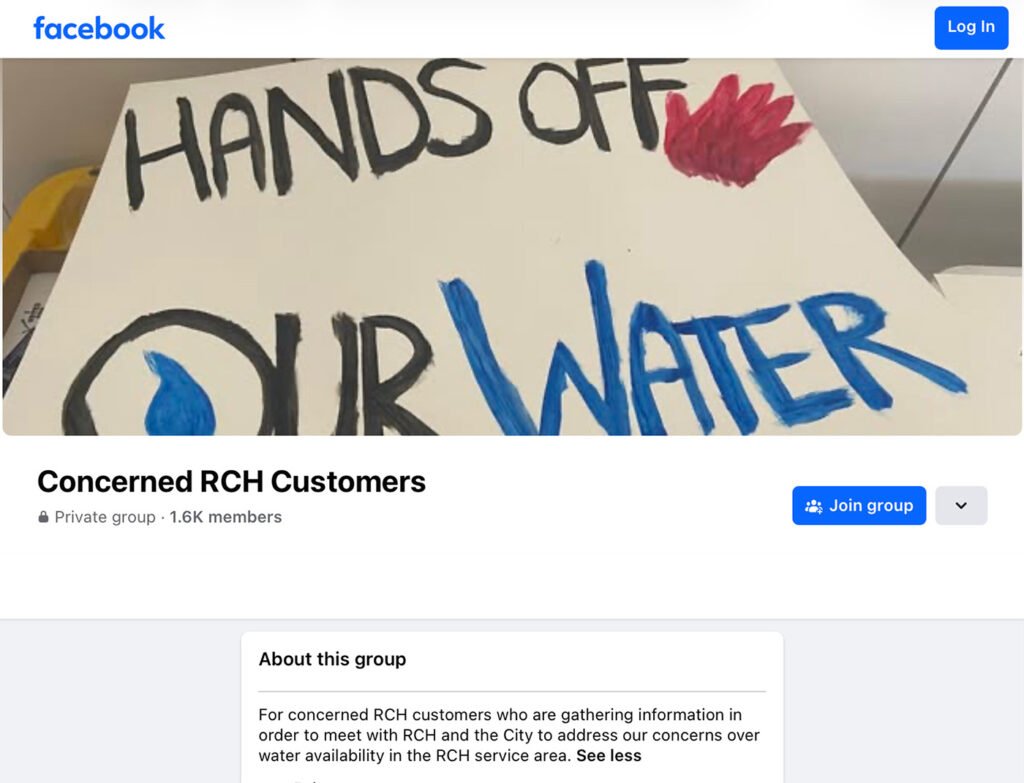
- Frustration from residents who feel targeted, dismissed, or pulled into political crossfire
At the county level, even development decisions—such as preliminary plat considerations—have sparked debate about whether governance is being guided by policy or personal positions.
These are not isolated incidents. They have begun to surface across city councils as well.
Residents have raised questions about how decisions are being discussed and shaped outside of public meetings.
They form a pattern. And when patterns emerge, they begin to shape expectations.
The Standard We Should Expect
What stands out most isn’t just disagreement—it’s the tone.
Community members are no longer simply debating ideas.
They’re questioning integrity, intent, and accountability. Some call for unity. Others call for removal.
Many are simply exhausted.
And when everyday citizens begin to disengage or lose trust entirely, the damage extends far beyond any one election. Leadership is not about control. It is not about retaliation. And it is not about leveraging authority to settle disputes.
Strong leadership requires:
- Discipline in decision-making
- Respect for process and transparency
- Accountability to the public—not just political allies
- The ability to handle disagreement without escalating conflict
These are not partisan ideals. They are foundational expectations.
Elections Reflect More Than Candidates
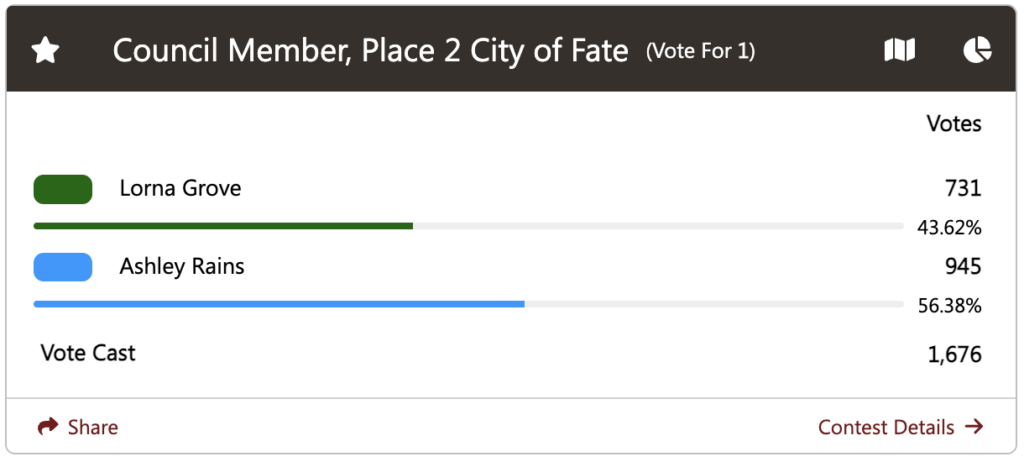
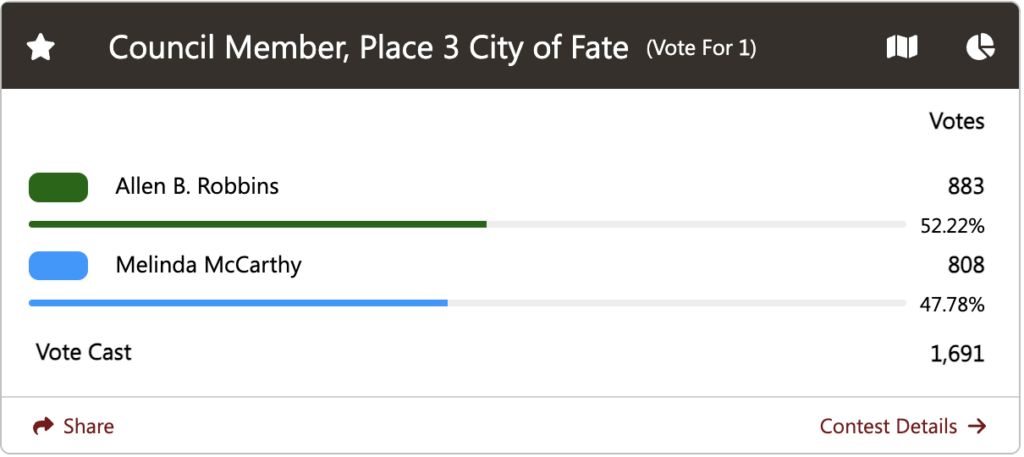
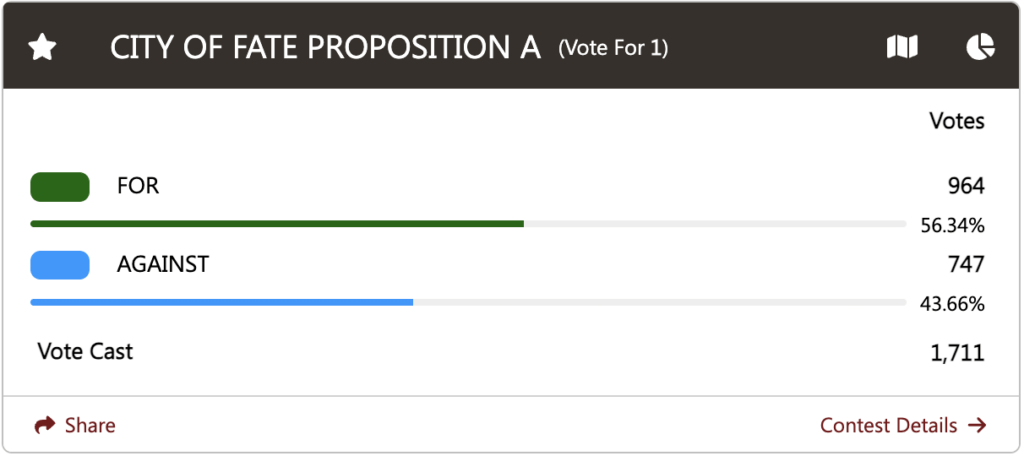
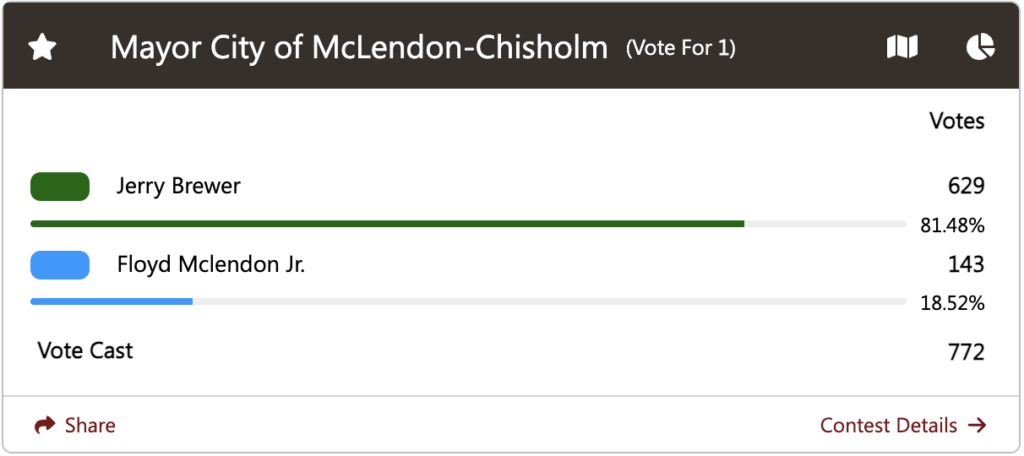
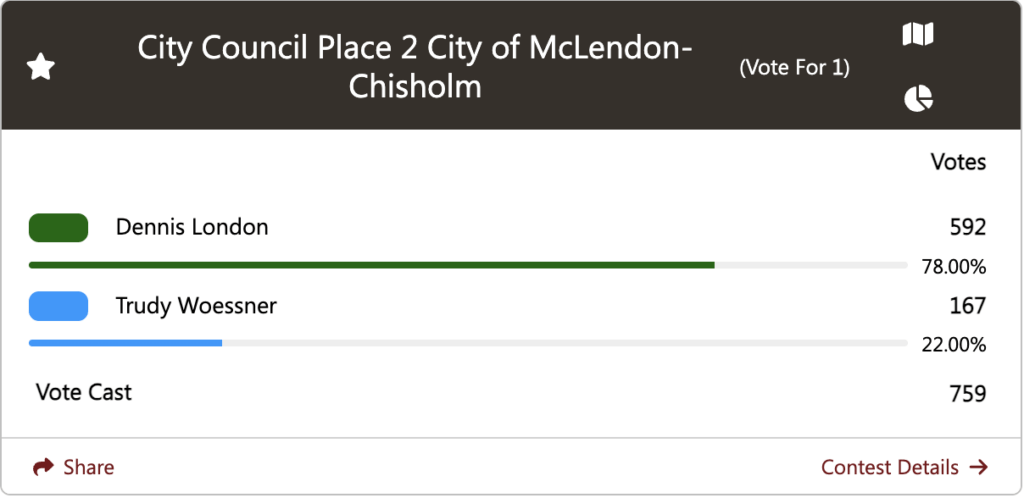
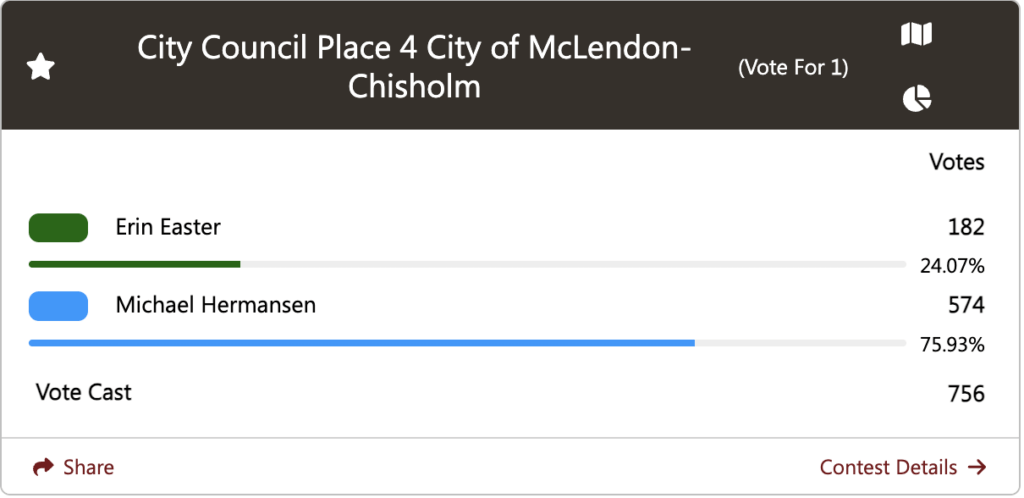
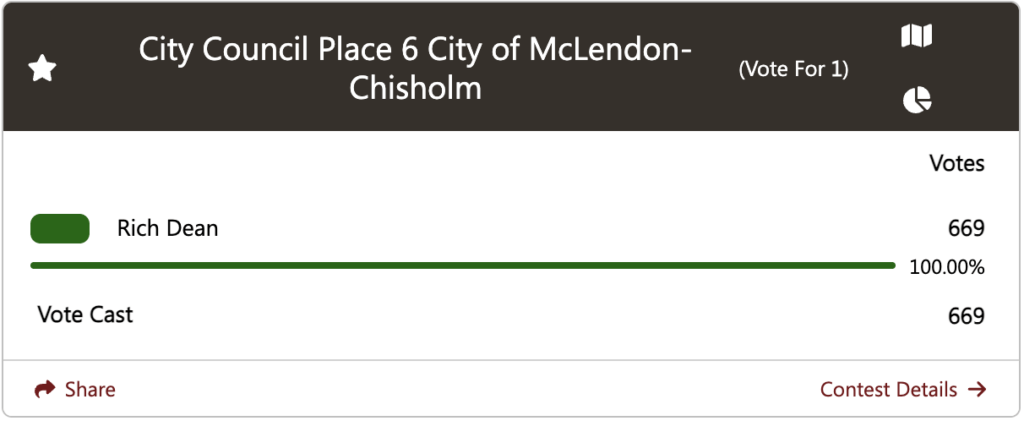
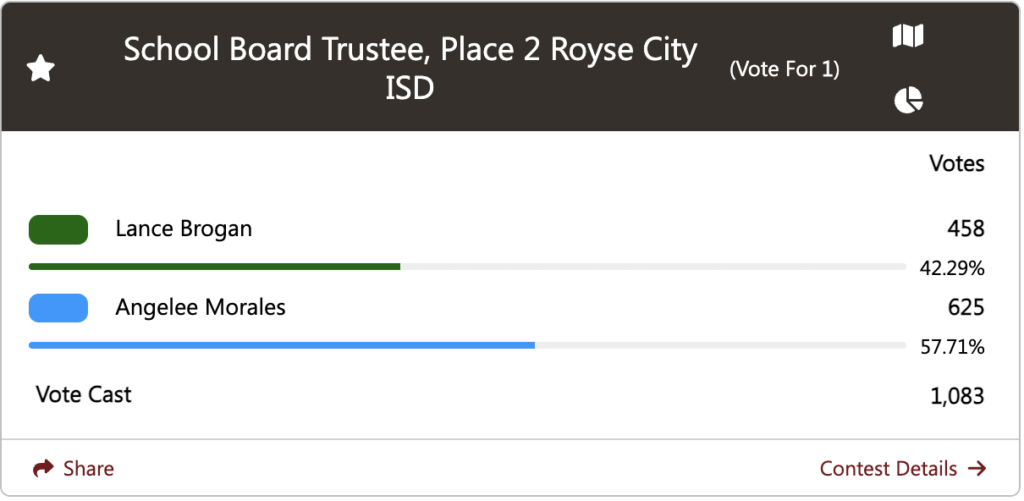
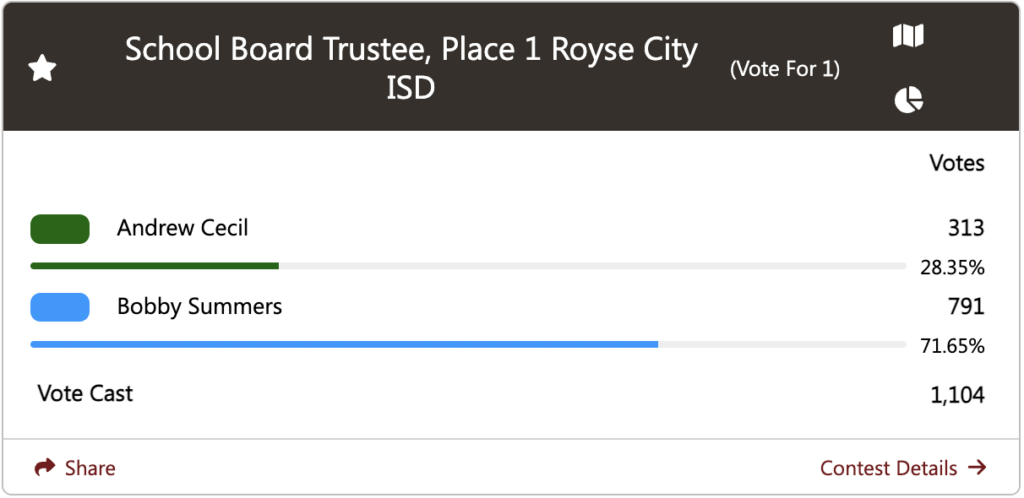
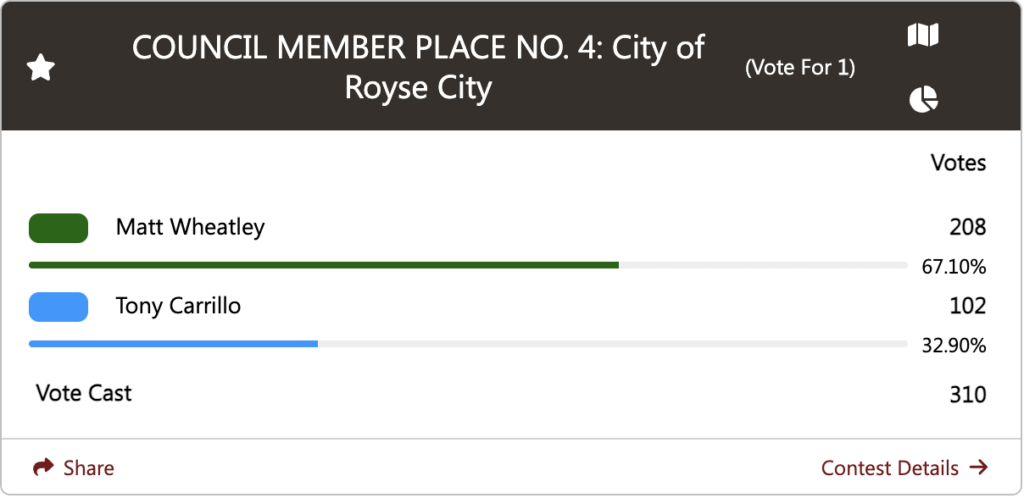
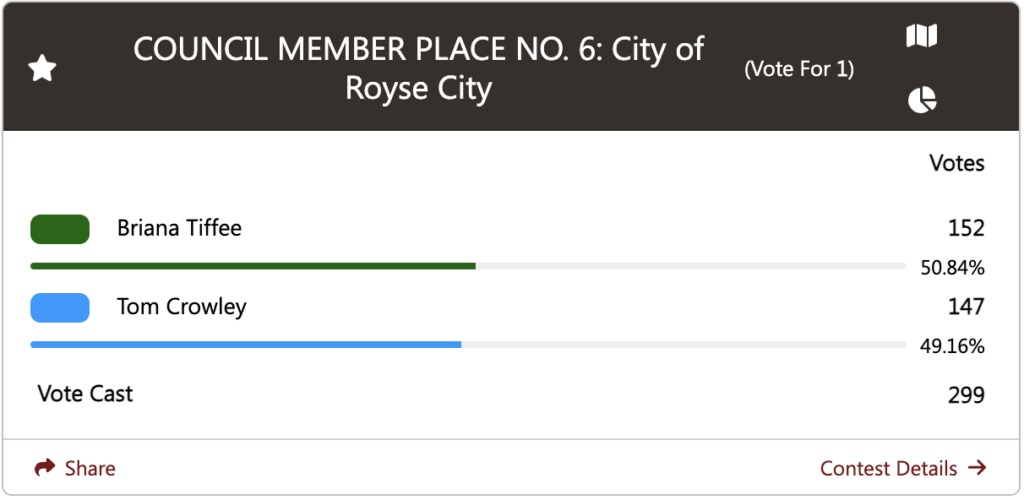
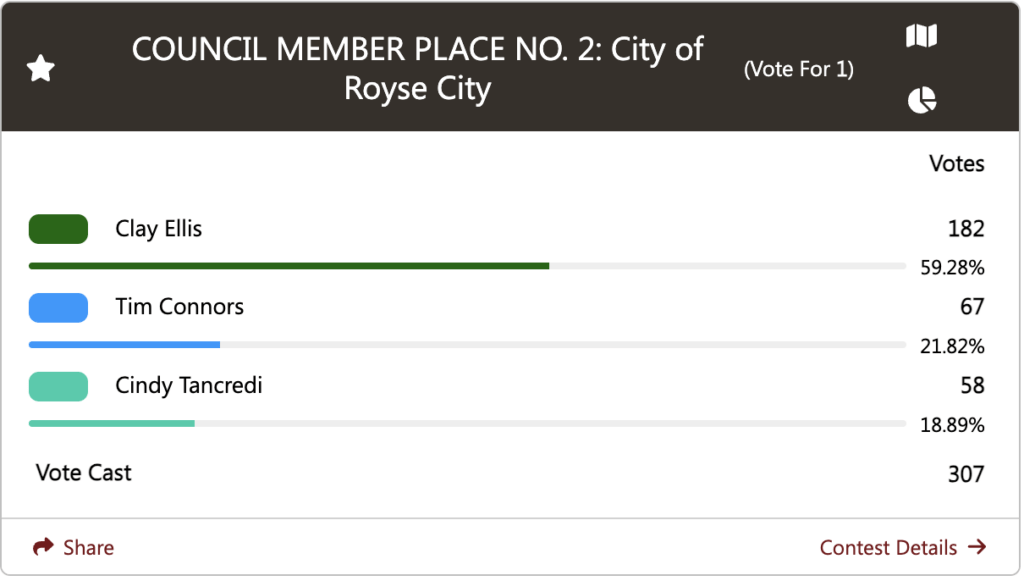
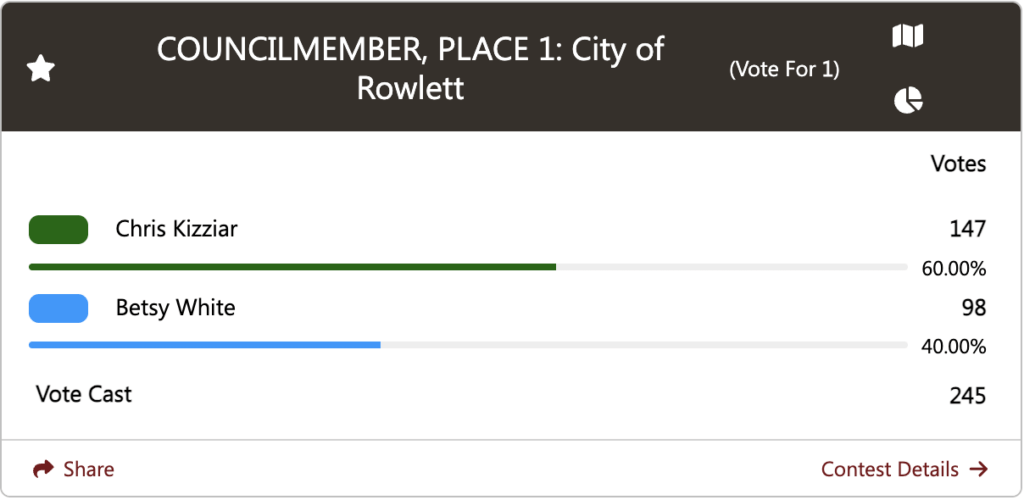
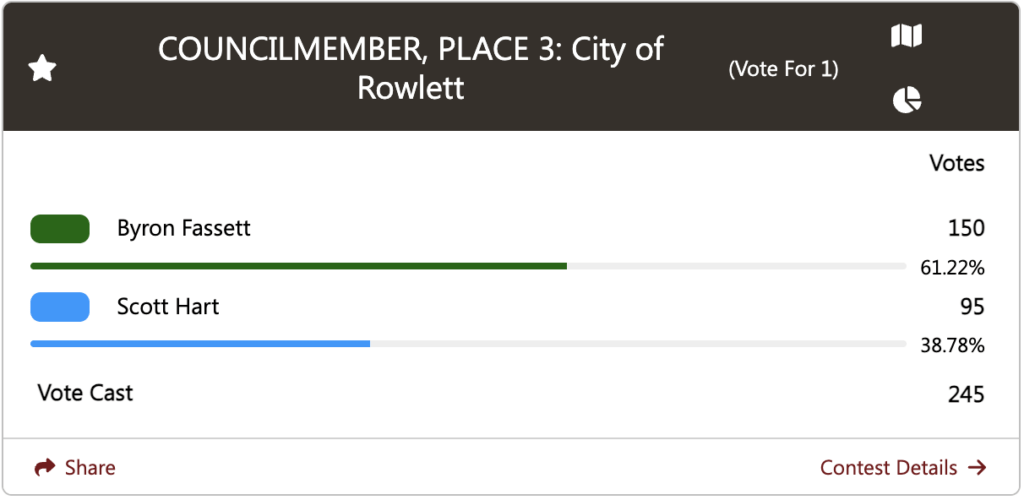
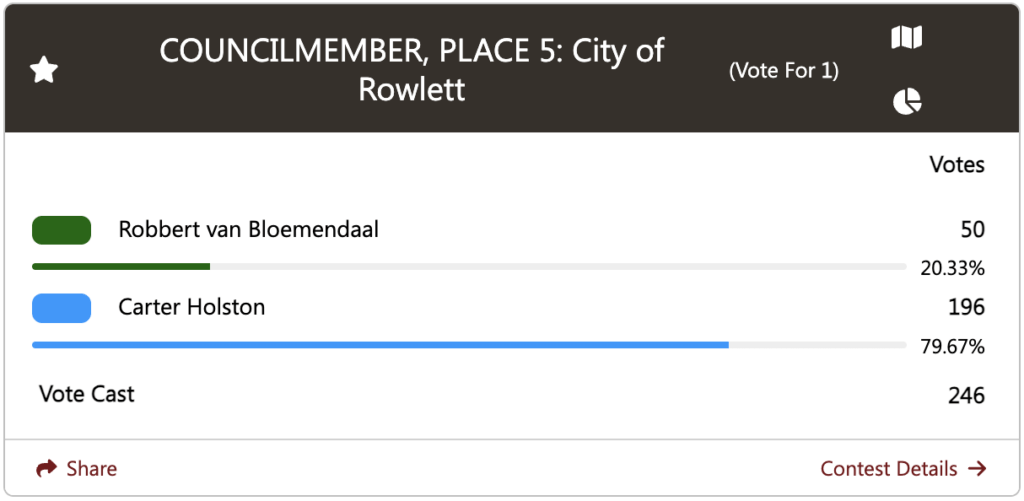
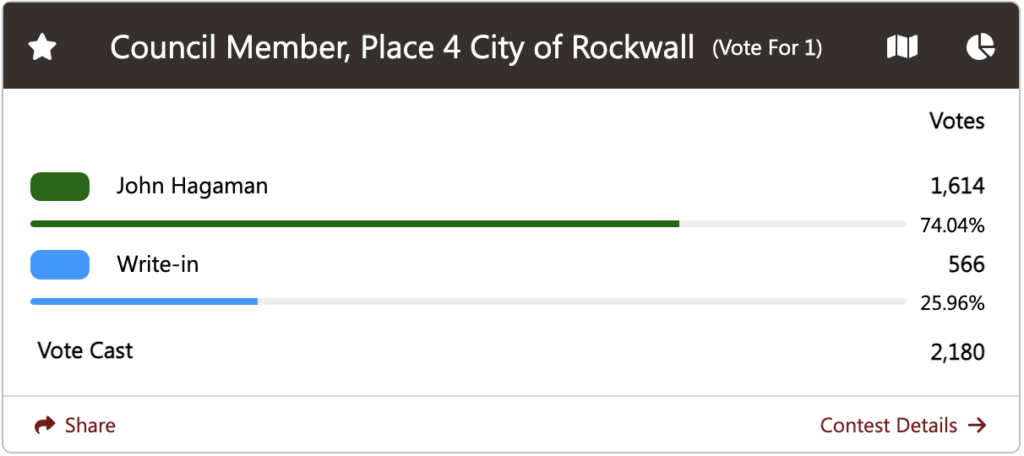
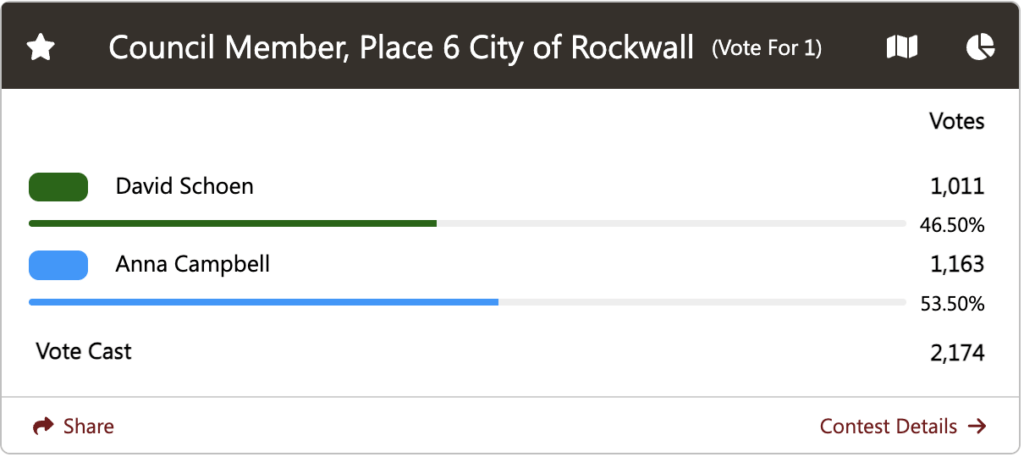
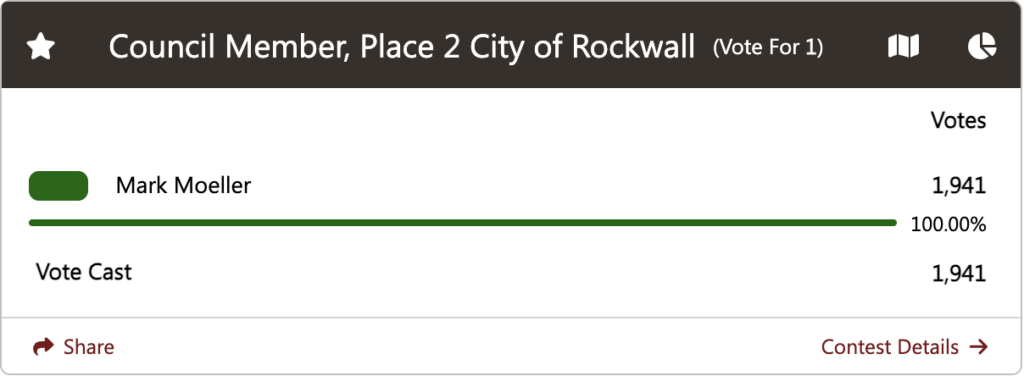
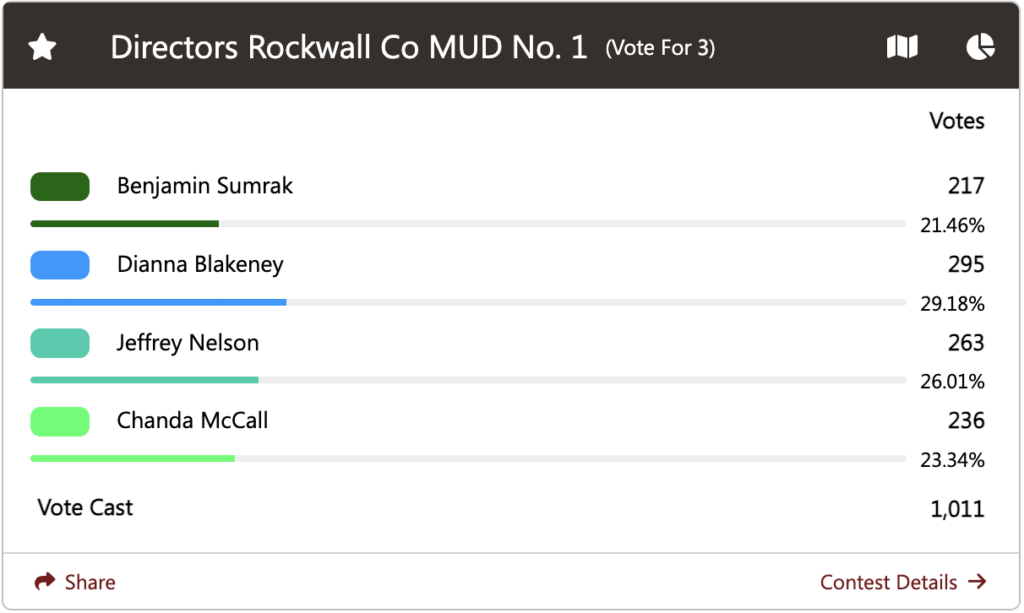
Source: Rockwall County Elections | Official Election Results
Population figures are approximate and based on recent census estimates.
In multiple local races, outcomes were determined by only a few hundred votes.
When placed alongside population figures, the contrast becomes difficult to ignore:
- Rockwall: 50,000+ residents
- Fate: 31,000+ residents
- Royse City: 30,000+ residents
- McLendon-Chisholm: 6,000+ residents
In several of these communities, total votes cast, in individual races ranged from just a few hundred to, at most, a couple thousand.
That gap matters.
Because when participation is limited, decisions are not shaped by the full community—but by the portion that shows up.
This year’s McLendon-Chisholm mayoral race offers a clear example.
With 629 votes cast for the winning candidate and 143 for the opponent, the outcome was decided by a margin—not representative of the broader community.
In a community of more than 6,000 residents, that level of participation raises important questions about representation.
Elections are not only a reflection of candidates—they are a reflection of engagement.
It Begins Here at Home
When residents begin to question why development patterns are shifting—why outcomes no longer reflect the vision outlined in a comprehensive plan—it often traces back to leadership decisions. Leadership determines whether that vision is followed—or gradually reshaped over time through decision-making.
And those decisions are not made in isolation.
They are influenced by who is elected, who is engaged, and who is paying attention.
Recent reporting has also highlighted how public narratives and candidate backgrounds can influence voter perception.
That is why vetting matters.
Not just during campaign season—but before a ballot is cast.
Local government is where leadership is most visible—and where its impact is most immediate.
It affects neighborhoods, infrastructure, public services, and the overall quality of life.
Which means the standard should be higher, not lower.
This is not about choosing sides.
It’s about choosing leadership that reflects discipline, accountability, and respect for the role entrusted to them.
Because when leadership fails, communities don’t just notice.
They pay the price.
The question is not just who holds office.
It is whether the community is paying close enough attention to ensure leadership reflects its values—before decisions are made, not after.
Because when participation is low, the outcome isn’t just an election result.
It’s a reflection of who chose to be involved—and who chose not to.
If you would like to stay informed on continued reporting and local developments, you may subscribe for updates. Thoughtful, respectful discussion is always welcome in the comments or by email.