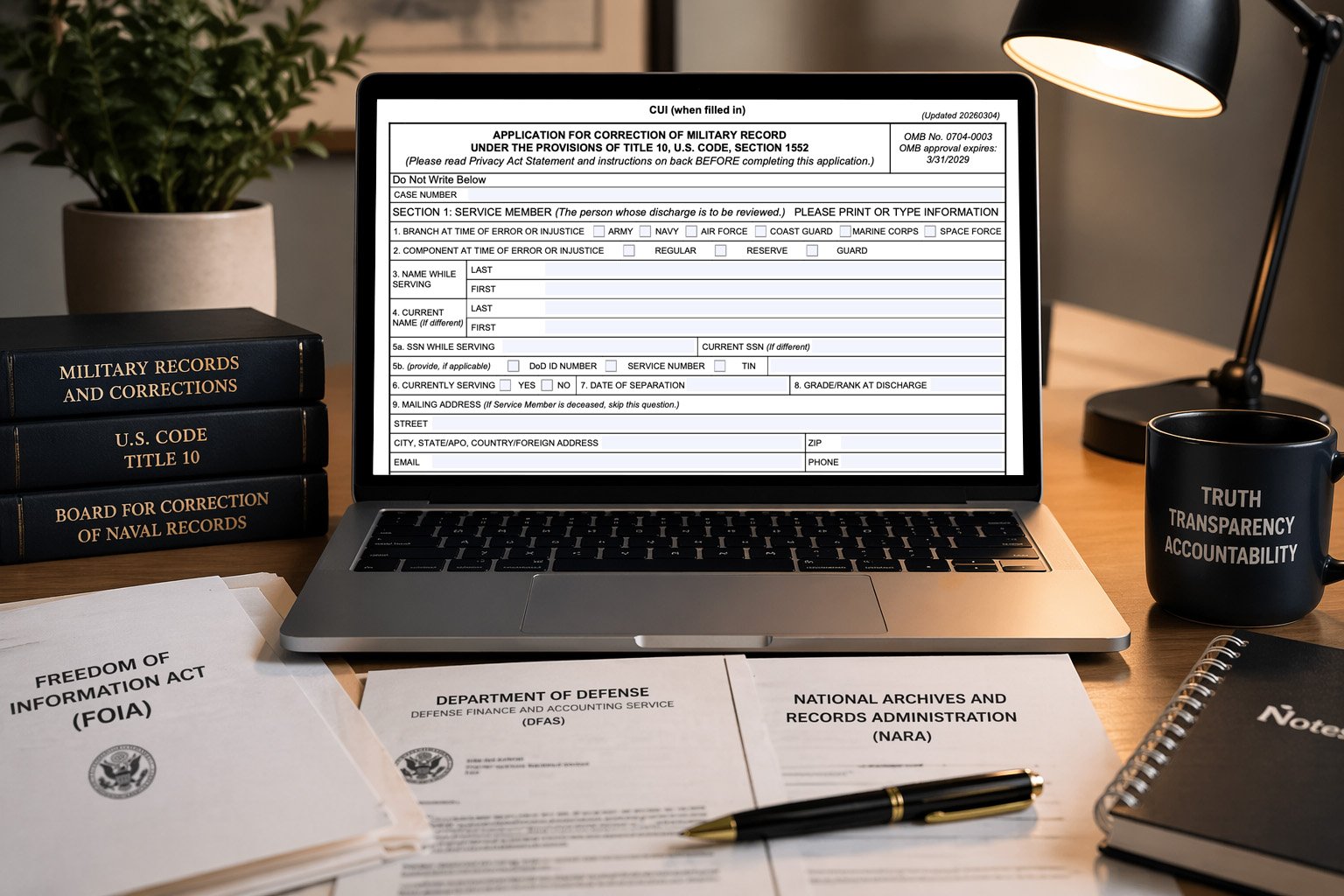

Following the publication of federal records obtained through Freedom of Information Act (FOIA) requests, which provided a documented view of Bryan McNeal’s military history, additional discussion has emerged regarding how those records are interpreted and what documentation is typically used to verify military service.
Bryan Patrick McNeal currently serves as Mayor of McLendon-Chisholm, adding public relevance to the records that were made available for review.
In that report, official responses from federal agencies and releasable service records were presented for public review.
Readers can review the full report here: “FOIA Documents Detail Bryan-McNeals Military History”
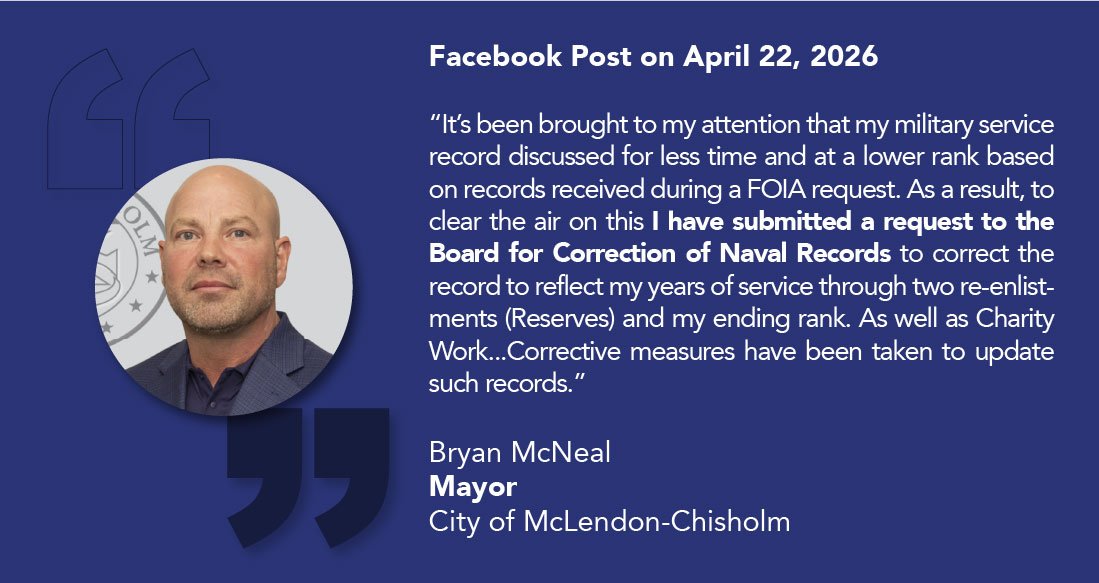
After that publication, McNeal shared a social media statement indicating that he has submitted a request to the Board for Correction of Naval Records (BCNR) to review aspects of his military record.
In response, retired United States Marine Corps Master Sergeant James P. Riffenburg reviewed the available materials and provided observations regarding the types of documentation typically associated with military service and the process of requesting corrections to official records.
The following is a statement provided by James P. Riffenburg, Master Sergeant, United States Marine Corps (Ret.).
Noted. A few observations for those following along.
After 24 hours of silence and repeated requests to produce basic documentation — a DD-214, a retired military ID card, a retirement certificate from the Commandant of the Marine Corps, or any documentation from DFAS confirming receipt of military retired pay — what has been offered is a partially completed application form submitted to the Board for Correction of Naval Records (BCNR).
Let’s be precise about what that is and what it is not.
The BCNR is a legitimate administrative body that reviews requests to correct military records when a service member believes an error or injustice has occurred. Filing an application with the BCNR is not evidence of military service. It is not a correction of a military record. It is a request — submitted by anyone, about anything — that will be reviewed by a board at some future date, with no guaranteed outcome. If ever filed. The form itself proves nothing except that the form was filled out.
More importantly — and this deserves to be read carefully — the post states that the record needs to be corrected “to reflect my years of service through two re-enlistments (Reserves) and my ending rank.”
Read that again.
If the official federal record — produced by NARA NPRC in response to a lawful FOIA request — accurately reflected a retirement at the rank of Gunnery Sergeant after the service duration publicly claimed, there would be nothing to correct. Retired Marines do not need to petition the BCNR to establish that they are retired. DFAS establishes that. The Marine Corps Total Force System establishes that. A retired ID card establishes that. A retirement certificate signed by the Commandant of the Marine Corps establishes that.
Every Marine who has ever retired knows exactly what those documents are. They don’t forget them. They don’t misplace them. They don’t need a federal board to create them retroactively.
The FOIA responses from NARA NPRC and DFAS were not a blog post. They were official responses from two independent agencies of the United States government. DFAS — the agency that issues military retirement pay — confirmed that no retired pay has ever been awarded, listed, or received. NPRC confirmed a final rank of Corporal (E-4) and a separation status of DISCHARGED.
Those findings do not get corrected by filling out a form. They get corrected by presenting documentation — the same documentation that has been requested repeatedly and has not been produced.
A form filed with the BCNR is not that documentation. It is, at best, a promise to seek documentation at some point in the future. At worst, it is something else entirely.
The requests remain open. A DD-214 reflecting retirement as a Gunnery Sergeant. A retired military ID card. A retirement certificate signed by the Commandant of the Marine Corps. Documentation from DFAS confirming receipt of retired pay. A trail of reenlistment certificates, promotion warrants, and transfer orders consistent with the service duration and rank publicly claimed.
These kinds of validated documents help resolve this matter. A BCNR application form does not.
What the post does confirm — in his own words — is that the official federal record does not currently reflect the military identity he has publicly presented for over a decade. We did not say that. He did.
As with any matter involving official records, readers are encouraged to review the available documentation and any future updates as they become available.
If you would like to stay informed on ongoing reporting and local developments, you may subscribe for updates. Thoughtful, respectful discussion is always welcome in the comments or by email.