
After sitting down with Superintendent Dr. Amy Anderson and her leadership team, I took a closer look at the voter-approved bond program, the unfinished high school, changing enrollment projections and what the district has learned along the way.
How does a school district receive voter approval for an $863 million bond program and still find itself unable to finish a new high school on the original schedule?
That was one of the questions I brought to the Ernest Epps Educational Service Center in Royse City on Thursday, October 8.
I sat down with Royse City ISD Superintendent Dr. Amy Anderson, Chief Financial and Operations Officer Dr. Faith Ann Cheek, Chief Communications Officer April Soderquist and Chief of Student Services and Strategic Initiatives Dr. Shelley Garrett.
The team came prepared to walk me through the district’s history, from the growth projections that shaped its early planning to the 2023 bond program and the financial challenges that followed. We discussed what voters approved, why the original schedule changed, the concerns families have raised and what happens next.

There was plenty to unpack.
For homeowners wondering where their tax dollars are going, parents concerned about crowded schools and students waiting for a new campus, the answers aren’t quite as simple as saying the district has the money or doesn’t.
Some of the bond money has already been borrowed and spent. Hundreds of millions more remain authorized but have not yet been borrowed.
And there are difficult decisions ahead about when—and how—to finish what was started.
From an August 2027 Opening to an Uncertain Timeline
When Royse City ISD announced the name of its second high school in July 2023 families were given a clear opening date.
August 2027.
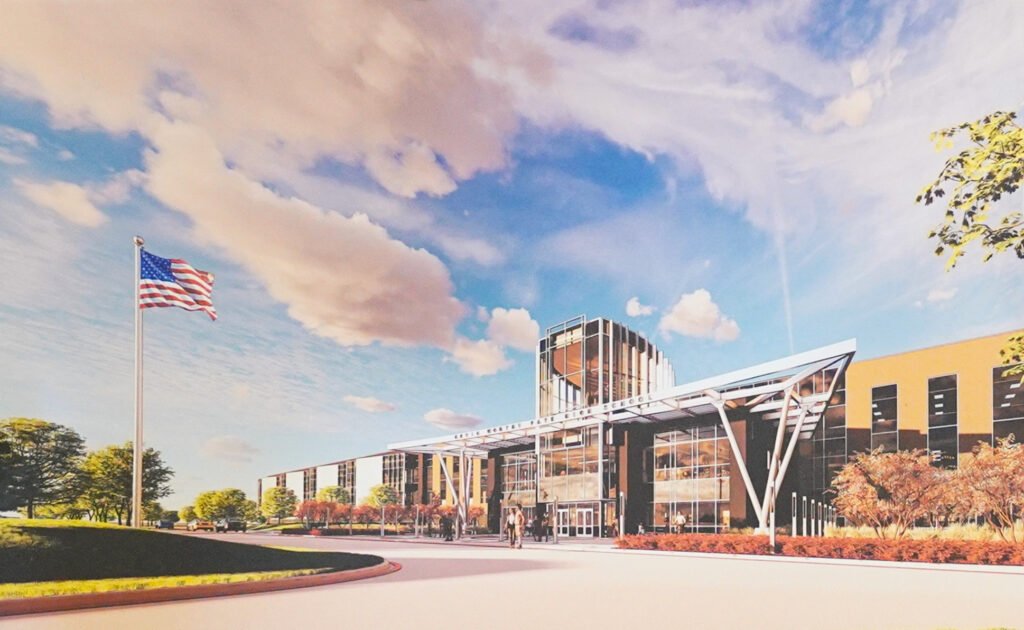
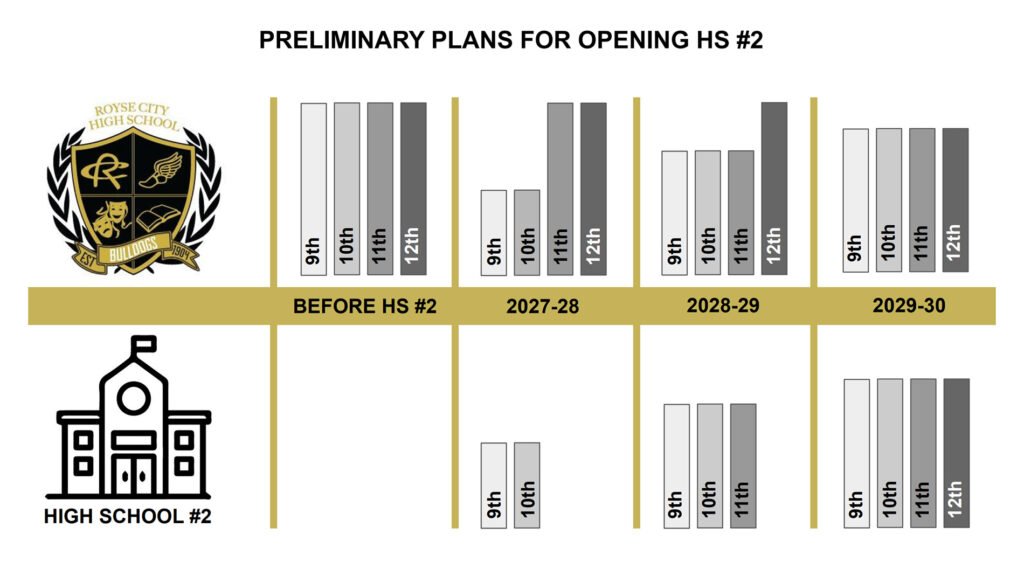
The district’s announcement explained that Kevin Worthy Fate High School would initially welcome freshmen and sophomores, eventually growing into a four-year high school by the 2029–30 school year.
The plans included career and technical education programs, fine arts, agricultural facilities and athletics. The new campus was expected to provide students with opportunities similar to those available at Royse City High School.
For families with children approaching high school that was more than a construction date. It was something they could plan around.

But the construction schedule began changing.
In March 2025, the district announced that some Bond 2023 projects, including Magness Middle School, would be placed on hold because of financial constraints tied to changes in taxable property values. At that point, construction at Worthy Fate High School was still moving forward.
By December 2025, however, district leaders were reconsidering how and when the new high school could open. Trustees reviewed three possible approaches: delaying the opening, completing the campus in phases or temporarily using part of the building for middle school students.
Then came a more definitive update.
At the March 5, 2026, board work session, the district reported that no portion of Worthy Fate High School would be completed in 2027.
As of October 2026, there is no confirmed opening date.
So what happened between the original announcement and today?
The answer involves slower-than-expected enrollment growth, changes in Texas property tax law and a financial reality that isn’t always obvious when voters approve a school bond: authorizing the money and having the ability to borrow it are two different things.
When the Growth Forecast Changed
Growth was happening quickly. New neighborhoods were taking shape, families were moving into the area and the district was preparing for thousands of additional students.
The 2023 bond program was developed with input from a steering committee that included students, parents, community members, business owners and school employees.
On May 6, 2023, voters approved two propositions totaling $863 million.
The largest, Proposition A, authorized approximately $849.8 million for school construction and other district improvements. Those plans included a second high school, additional elementary and middle schools, an early childhood center, renovations, technology, transportation facilities and land for future campuses.
Proposition B authorized another $13.2 million for stadium improvements.
Both passed with strong voter support. Proposition A received 67.11% approval, while Proposition B received 62.46%.
The program was built around an important expectation: continued growth in residential and commercial property values would help support the borrowing needed to complete the projects without increasing the district’s tax rate.
That promise concerned the district’s tax rate, not necessarily an individual homeowner’s tax bill, which can still change with taxable property values and exemptions.
But the growth projections began changing.
During our conversation, Anderson explained that the district is now taking a more conservative approach to enrollment projections than the one reflected in its earlier bond planning.
When the 2023 bond was approved, the district anticipated 11,910 students for the 2026–27 school year. An updated forecast prepared in late 2025 reduced that estimate to 10,266.
As of October 5, 2026, the district reported 10,309 students—much closer to the revised forecast.
Looking further ahead, the original projections anticipated 16,140 students by the 2030–31 school year. The updated forecast lowered that number to 12,553.

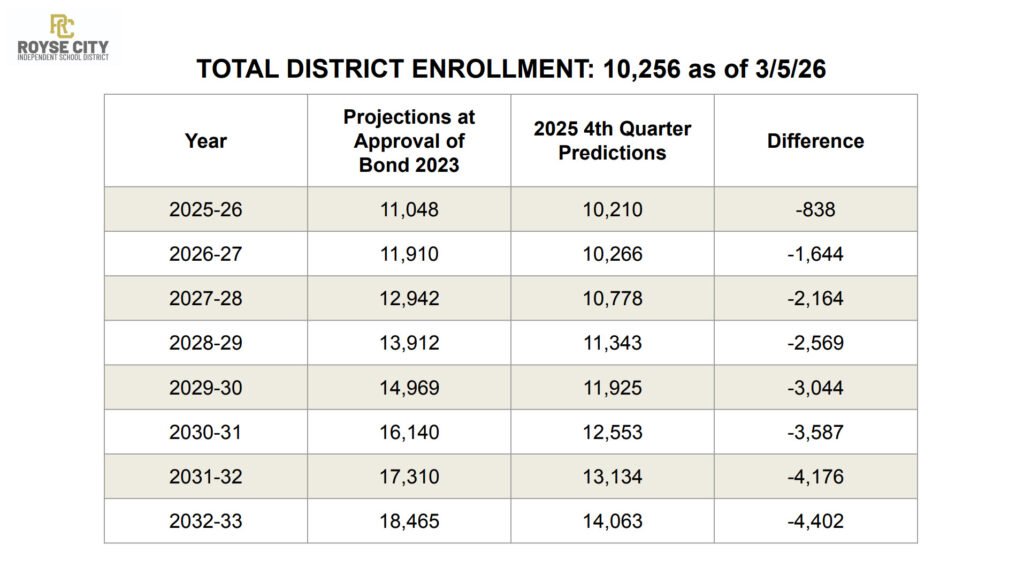
Royse City ISD is still growing. Just not at the pace originally anticipated.
The housing market tells a similar story. According to demographic information presented to the board in March, new single-family home closings within the district declined from 1,591 in 2022 to 826 in 2025.
That doesn’t mean the need for future schools has disappeared. It means the district must reconsider when those schools will be needed and how their construction fits within its financial capacity.
Anderson also described her working relationship with Royse City Manager Carl Alsabrook and Mayor Janet Nichol. Communication about development activity and building permits helps the district keep a closer watch on what is actually happening in the community.
A subdivision on a development map is one thing.
Families moving into completed houses, with children ready to enroll, are another.
How Property Tax Relief Changed the Construction Timeline
Here’s where school financing gets tricky, particularly, for homeowners who remember voting for the bond.
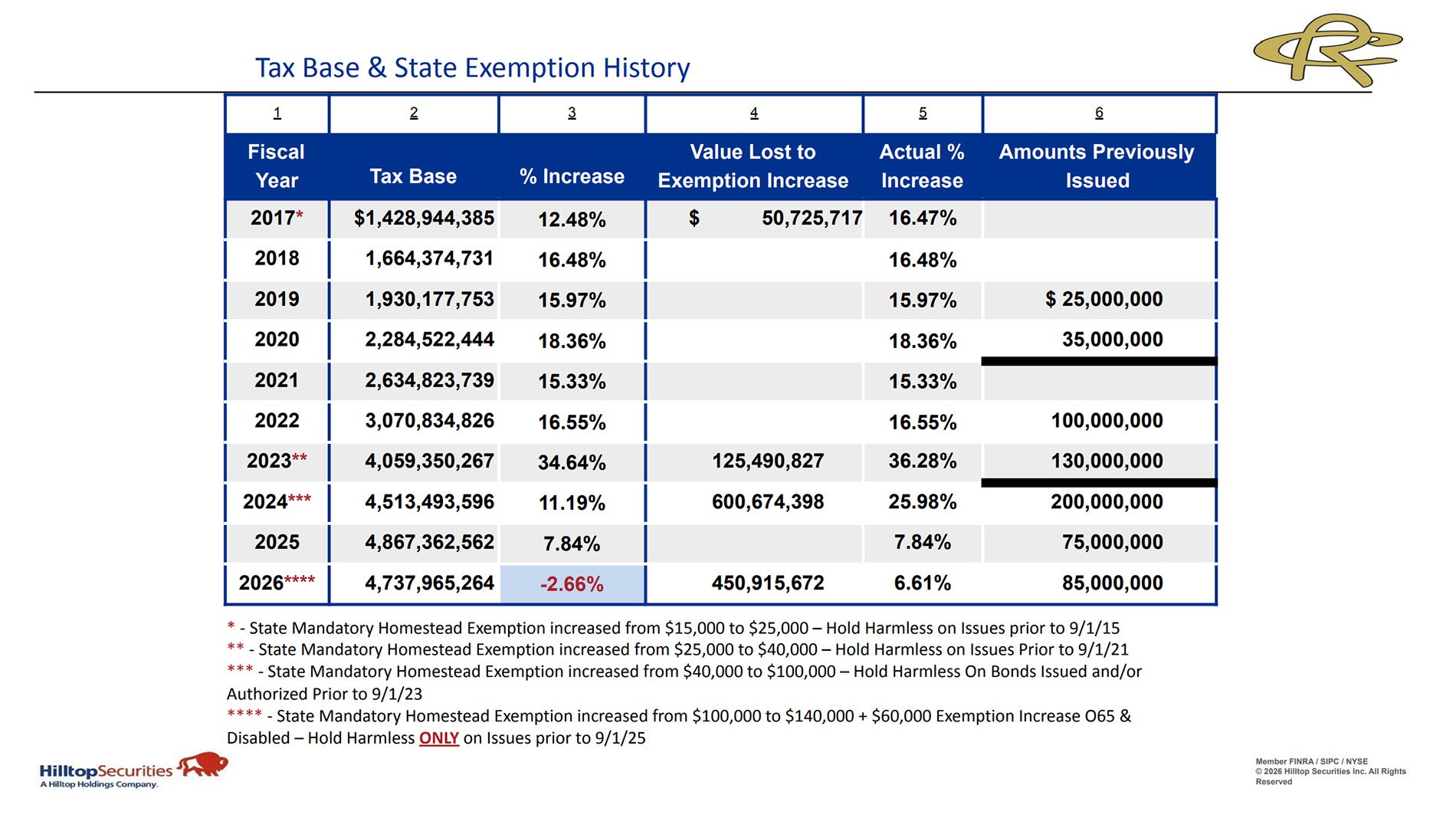
In 2023, Texas voters approved increasing the general school district homestead exemption from $40,000 to $100,000. Another increase, approved in November 2025, raised the exemption to $140,000.
For eligible homeowners, that means a larger portion of their home’s value is excluded when school property taxes are calculated.
But there’s another side to that calculation.
School districts rely on taxable property values to help determine how much debt they can support. When exemptions reduce those values, the district’s ability to borrow additional money can be affected.
During the March 2026 board presentation, Hilltop Securities, the district’s financial advisor, reported that Royse City ISD’s taxable property base had reached approximately $4.87 billion in 2025 but was projected to decline to $4.74 billion in 2026.
That’s a projected decrease of 2.66%, rather than the continued growth the district had originally anticipated.

Anderson explained that the district reached out to the Texas Education Agency (TEA) and state representatives about how changes in state law were affecting its construction plans.
There was another complication. The state provided certain protections for school bonds issued or authorized before the 2023 exemption changes. But according to the district’s financial advisors, those protections did not extend in the same way to bonds issued after September 1, 2025, under the newer legislation.
In other words, the district’s financial circumstances changed even though voters had already approved the construction program.
With existing debt to repay, interest rates to consider and less taxable value than anticipated, Royse City ISD could no longer rely on the borrowing schedule that supported its original construction timeline.
So Where Is the $863 Million?
The first thing to understand is that voter approval didn’t put $863 million into a district bank account.
According to Royse City ISD’s October 2026 Bond 2023 Update, the district has issued $360 million of the $863 million voters authorized.
Another $503 million remains authorized but unissued.
When voters approve a school bond, they give the district permission to borrow money for specific projects. Those bonds are generally sold in stages as construction progresses and financial conditions allow.
The October report shows how much has been borrowed, how much has been spent and what remains.

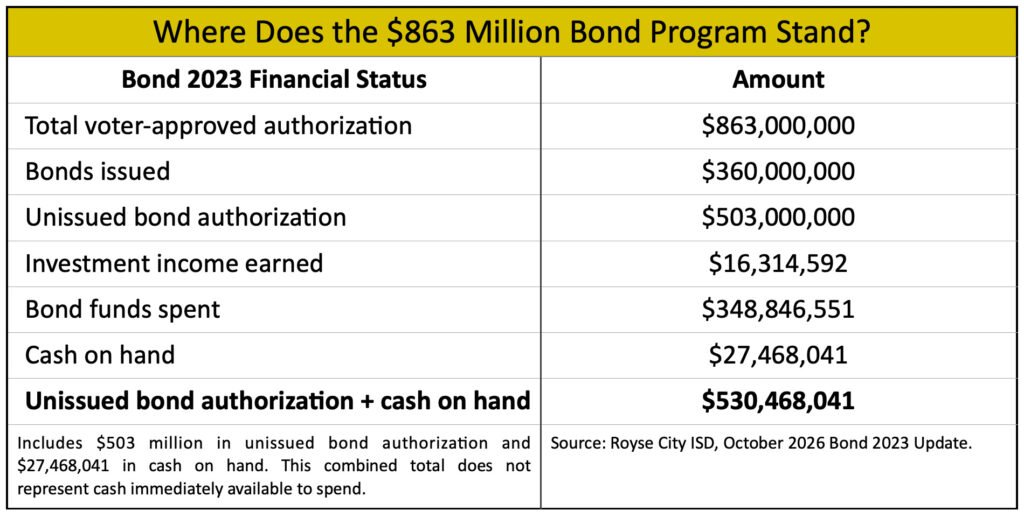
When the $503 million in unissued authorization is combined with approximately $27.5 million in cash on hand, the district reports a combined total of $530,468,041. Most of that amount, however, represents bonds that have not yet been issued.
What about Worthy Fate High School itself?
The October report lists a $368.9 million project budget, with approximately $242.4 million spent and $126.5 million remaining in its project budget.
That remaining budget represents planned project funding, not cash already available to finish construction.
It’s also important to distinguish construction financing from the district’s regular operating budget. Bond proceeds are restricted to approved capital projects, while operating funds support expenses such as employee salaries, classroom programs and daily school operations.
Those are different financial responsibilities and challenges in one budget don’t necessarily explain adjustments in the other.
Why Not Just Open Part of Worthy Fate High School?
It sounds like a reasonable solution. Why not finish the classrooms first and let students move in while construction continues elsewhere?
The district has explored that possibility.
In December 2025, trustees reviewed three approaches: delaying the opening until more of the campus could be completed, opening the instructional portion in phases or temporarily using part of the building for middle school students.
Some of those options depended on the district being able to issue at least $35 million in additional bonds in 2026.

Opening a school involves more than having classrooms ready.
During our conversation, Anderson discussed feedback from students about the importance of having access to their classes, activities and facilities throughout the school day.
Consider a student taking agricultural science courses, participating in athletics or attending a fine arts program.
If one campus has the classrooms but another has the equipment, practice space or specialized facilities, that student could end up traveling between two locations.
Now factor in class periods, transportation, extracurricular activities and the time spent getting from one campus to another.
What initially sounds like a simple solution becomes considerably more complicated.
According to Anderson, some students preferred waiting for a more complete campus rather than spending part of their school day moving between locations.
Parents may understandably want the new high school opened as soon as possible. Students also have a stake in what their school day will look like once they get there.
The district must weigh those concerns alongside the cost of completing enough facilities to make a partial opening practical.
What Happens to a Building That Sits Unfinished?
I also wanted to know what was happening to Worthy Fate High School while its construction schedule remains uncertain.
An unfinished building raises reasonable questions about protecting the work already completed, particularly as the weather changes.
Anderson explained that the district and its construction partners are addressing those concerns, including efforts to seal openings around pipes and other infrastructure to prevent pests from entering.
The property remains an active construction site where hard hats are required. She also described preparations to protect the building as colder weather approaches.
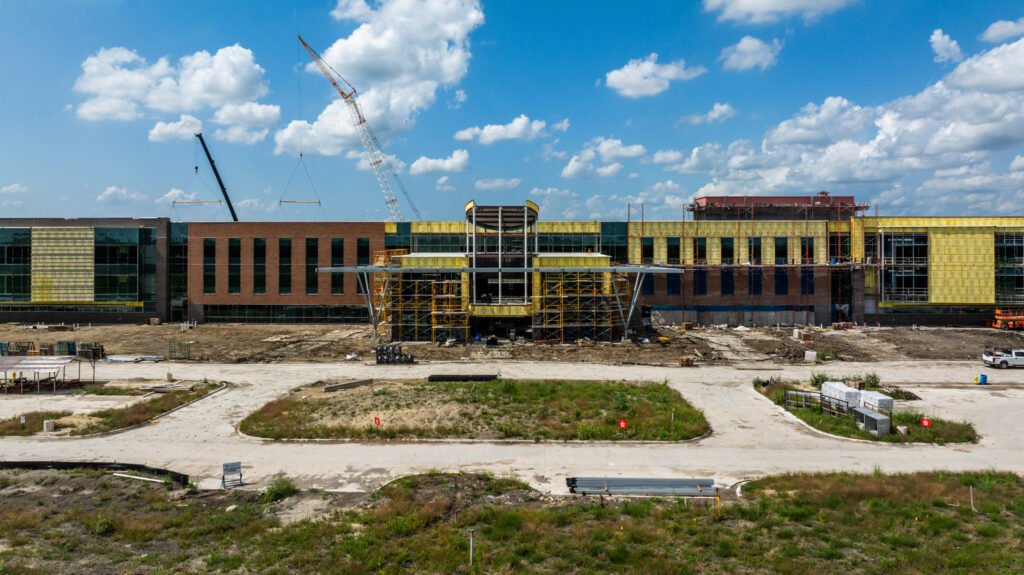
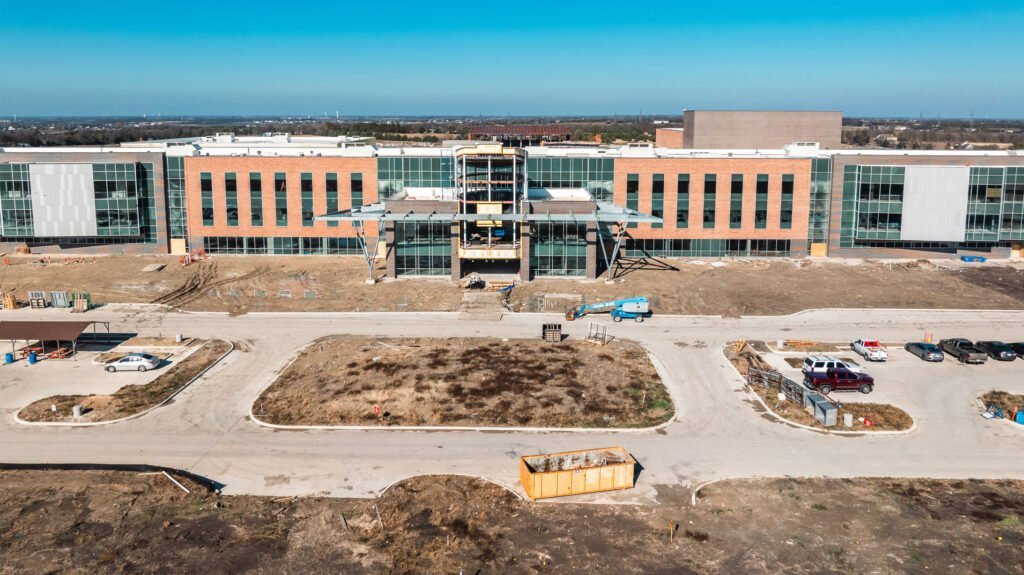
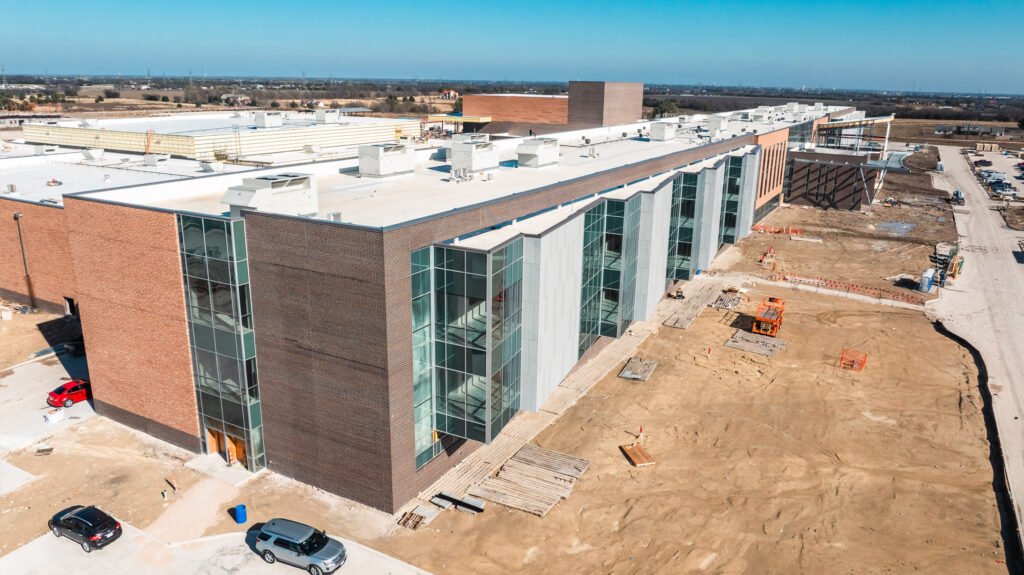
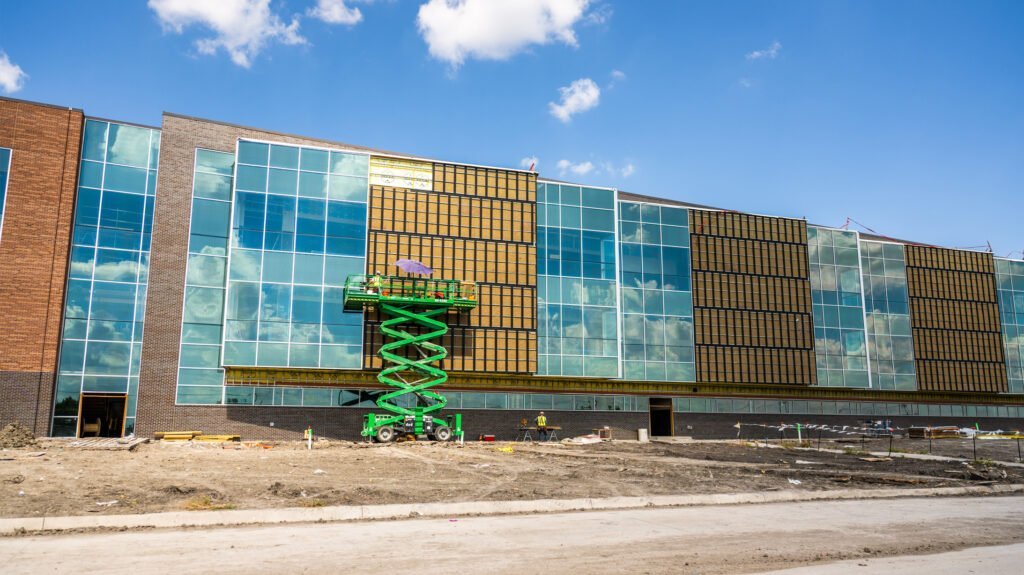
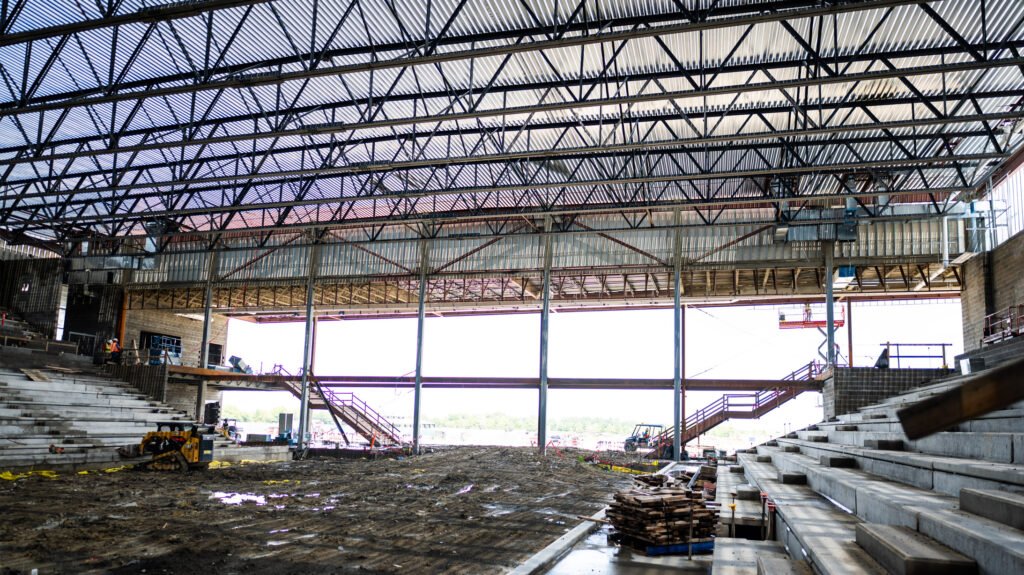
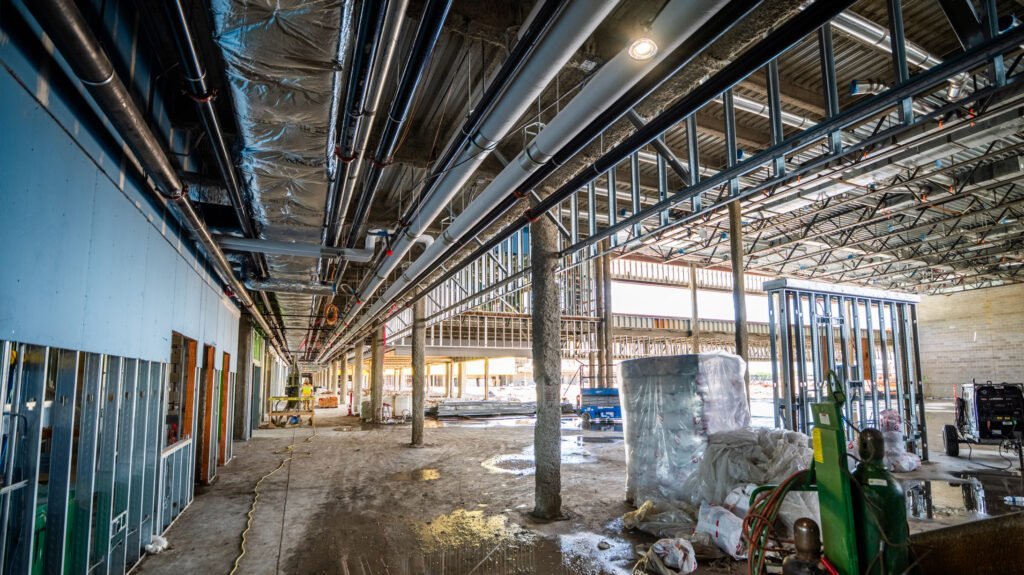
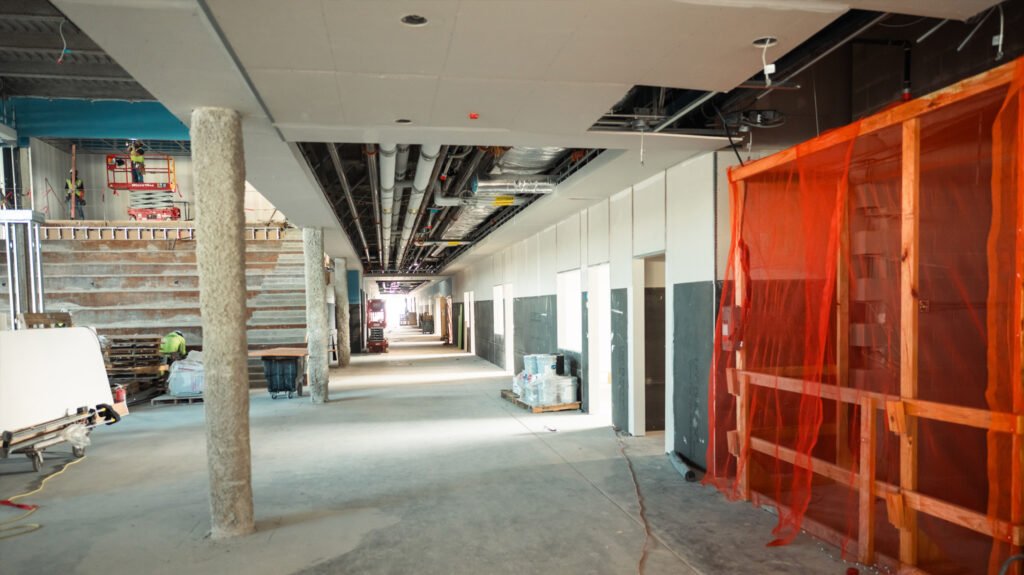
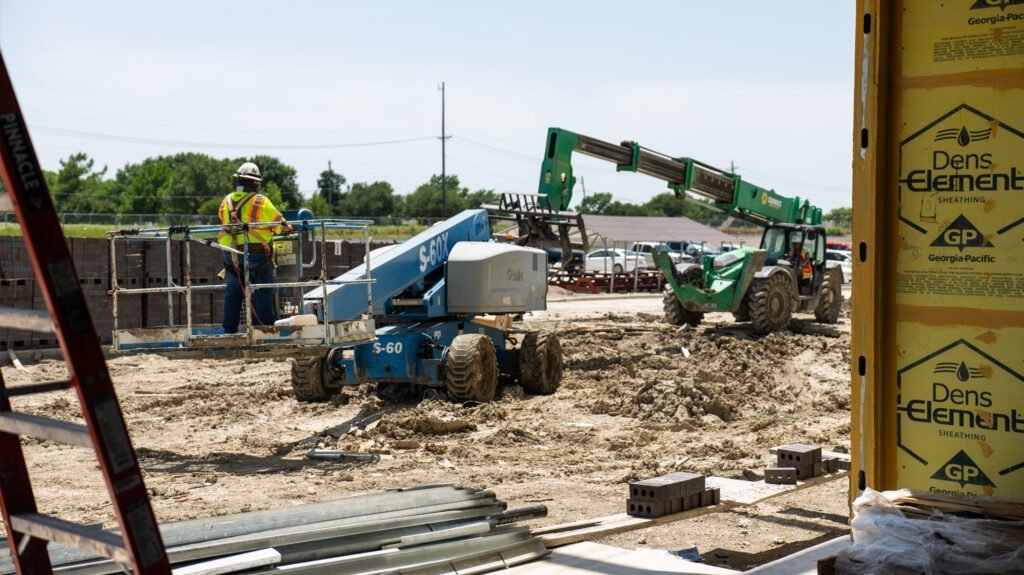
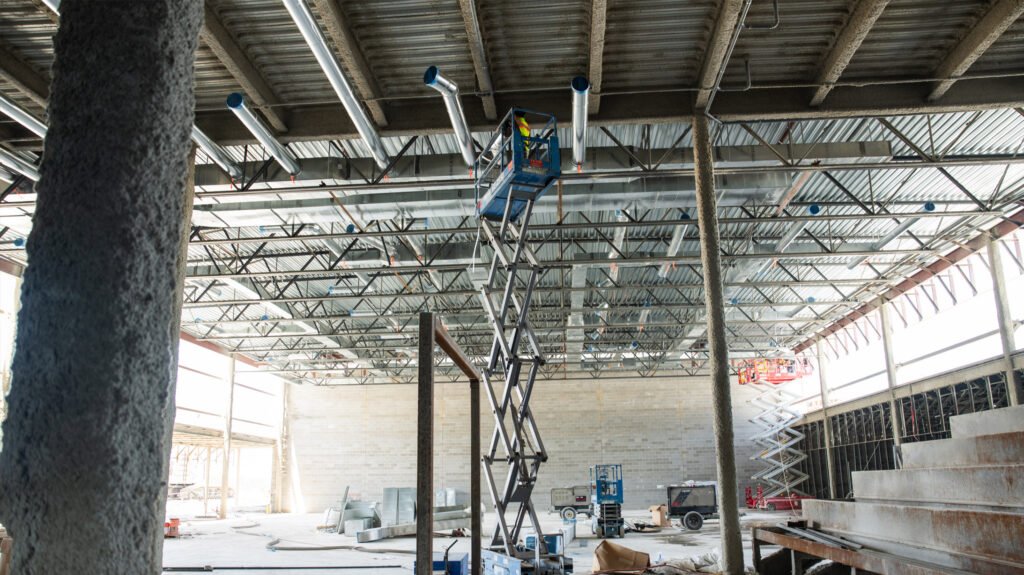
Construction progress and site views of Kevin Worthy Fate High School. Photos provided by Royse City ISD in October 2026.
While the district works to protect the investment already made at Worthy Fate High School, administrators are also looking for ways to make better use of their existing campuses.
Earlier in the school year, concerns circulated on social media about crowded hallways at Royse City High School.
During our interview, the leadership team explained that the school’s new principal evaluated the situation and adjusted class release procedures to improve movement between classes.
The team also noted that students were getting accustomed to their schedules and finding their classrooms at the beginning of the school year. According to district leaders, the adjustments helped ease the congestion.
It’s a relatively small example compared with a multimillion-dollar construction project, but it illustrates another part of managing a growing district: not every challenge requires waiting for a new building to open.
Sometimes the immediate answer is changing how the existing campus operates.
Lessons Learned—and Questions Still Worth Asking
Beyond the construction delays, Anderson and her team acknowledged the need for more cautious financial planning.
MoakCasey, a school finance consulting firm, has been working with the district to examine its financial position and the assumptions behind its budgets.
At the May 11, 2026, board meeting, the firm presented a financial status update that included a section titled Lessons Learned.
The recommendations were straightforward: use realistic revenue estimates, monitor finances regularly and understand changes in state education funding laws before incorporating them into future budgets.
In other words, don’t build tomorrow’s budget around money you only hope will arrive.
The importance of those practices became especially clear in August 2026, when the district identified an error involving a qualifying property tax refund amount used in its state funding projections.
The figure entered in August 2025 was approximately $1.34 million. The correct amount was $128,653.
At the October 5 board meeting, MoakCasey’s analysis indicated that corrected state funding projections were approximately $1.05 million below the amount previously budgeted. The final funding impact remains subject to additional state calculations.
That issue is separate from the construction bond program, but it raises questions about financial oversight and the importance of catching errors early.
During our interview, district leaders also described practical ways they’re examining expenses. One example involved professional conferences, with priority potentially going to employees who haven’t previously had the opportunity to attend while others remain on campus to cover responsibilities.
These aren’t necessarily dramatic changes. They’re examples of the more careful spending approach the administration described.
What also stood out to me was the team’s willingness to discuss uncomfortable questions.
Anderson emphasized that community engagement shouldn’t be limited to people who agree with the district’s decisions. Parents, employees, students and residents who have challenged those decisions also have a place in the conversation.
Being willing to answer questions is a good starting point. Following through with accurate information, realistic projections and decisions the public can understand is what builds lasting trust.
The district provides updates through its board meetings and Bond 2023 FAQs, and Anderson’s team expressed a willingness to keep those conversations going.
The next test will be whether the lessons identified in these financial reviews are reflected in future budgets, construction decisions and public updates.
So When Will Worthy Fate High School Open?
For now, there is no confirmed opening date.
The district expects to reassess its borrowing capacity in spring 2027, when financial advisors will evaluate whether additional bonds can be issued and what construction work could move forward.
That assessment will help determine the options available to the Board of Trustees, including whether a portion of the campus can eventually open before the entire project is completed.
Spring 2027 is a decision point. Not a promised opening date.
And Worthy Fate High School isn’t the only project awaiting decisions. The district must also consider the remaining campuses and facilities approved through Bond 2023 as growth and financial conditions evolve.
After spending the morning with Anderson and her team, I left with a clearer understanding of the challenges they’re navigating and the adjustments already underway.
What I didn’t leave with was an opening date.
That’s the unanswered question for families who expected their children to attend Worthy Fate High School in August 2027.
And it’s one the district will need to keep answering as new financial information becomes available.
For now, the most meaningful measure of progress won’t simply be how much construction has been completed. It will be whether Royse City ISD can turn its revised financial plans into a dependable timeline for the students and families waiting on the other side of those doors.