
There is something fascinating about opening a book called Rockwall: Then & Now years after it was published and realizing that its “now” has already become another chapter of the past.
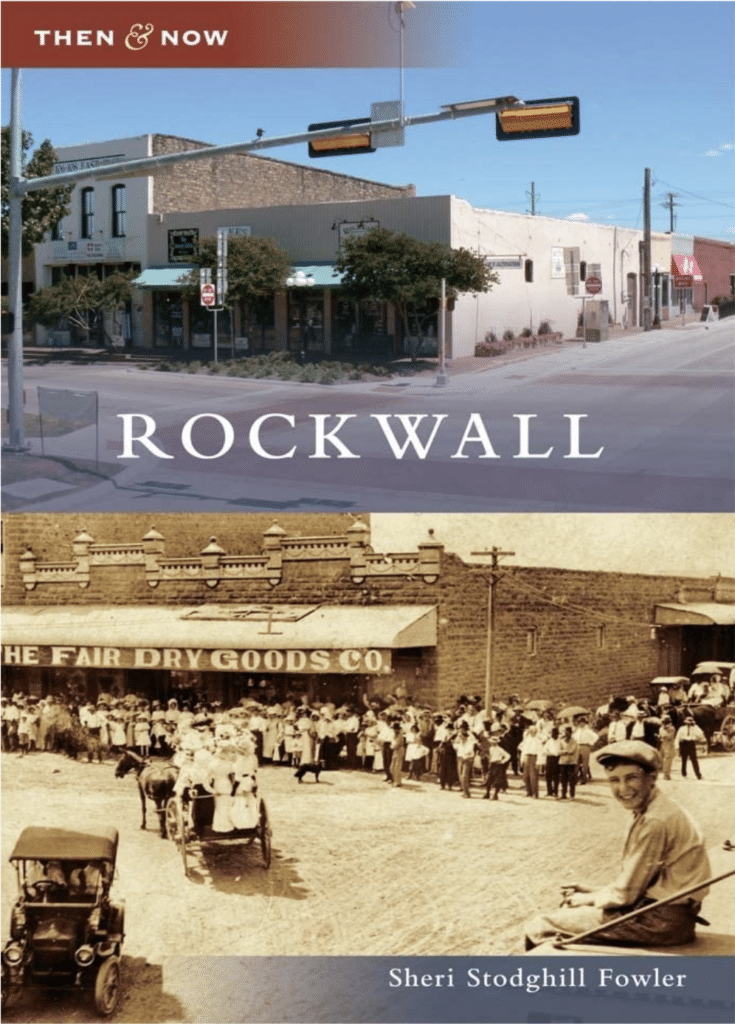
That is what happened when I picked up Sheri Stodghill Fowler’s book and started flipping through photographs of downtown Rockwall.
Fowler takes readers through a downtown shaped by the arrival of the railroad, fires and rebuilding, wooden storefronts giving way to brick, and generations of banks, hardware stores, hotels, restaurants and shops.
Some of the names immediately caught my attention.
There was Farmer’s National Bank. M.H. McKoy’s hardware business once served customers downtown. And at 202 E. Rusk, Cunningham’s Rexall Drug became known for its soda fountain and as a gathering place for Rockwall High students in the 1950s.
Today, we know that last address as Zanata.
And that is what makes Fowler’s book so much fun to revisit.
As an Amazon Associate, this post may contain affiliate links that at no additional cost to you, I may earn a small commission.
The photograph that stopped me first was the downtown streetscape on the cover.
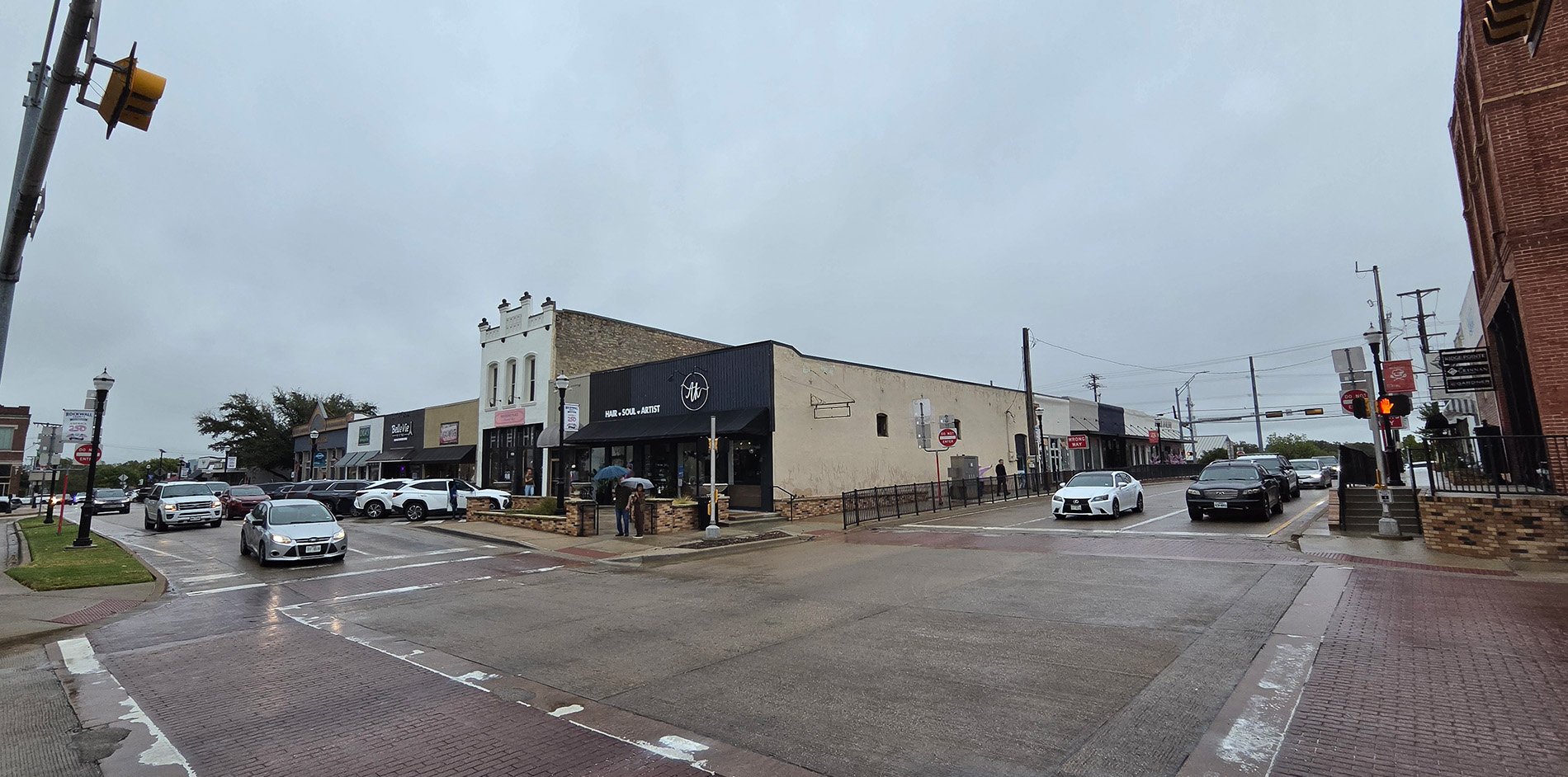
So on a rainy Oct. 3 morning, I went downtown with my phone and stood near that same intersection. The pavement was slick, umbrellas were open and cars moved steadily through the square.
The buildings were familiar.
What does Fowler’s “Now” look like in 2026?
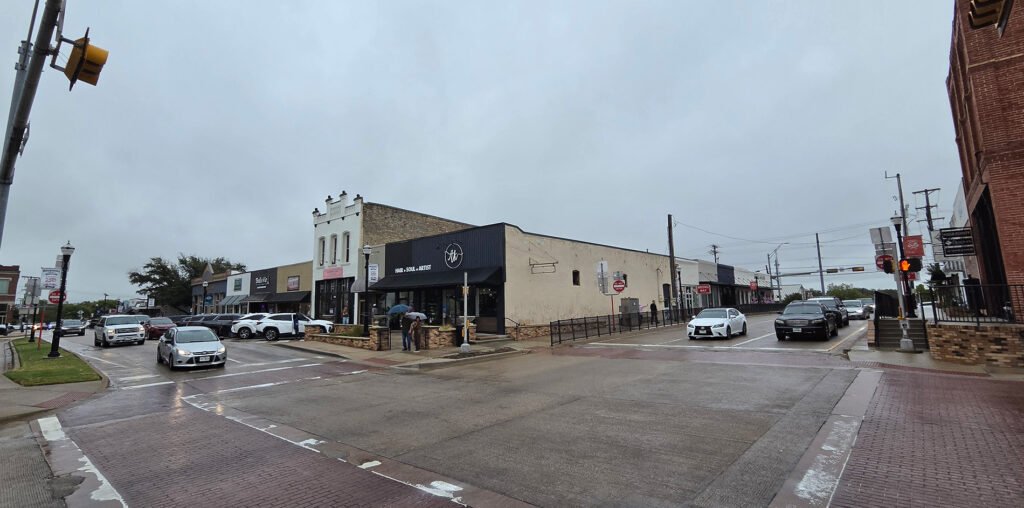
Some buildings remain remarkably recognizable. Others have been remodeled, repurposed or lost. Businesses have come and gone.
An old bank still carries clues to its former life. A drugstore and soda-fountain gathering place is now a restaurant.
Around the historic courthouse, people still gather beneath the trees for Rockwall’s annual Farmers Market. And a distinctive historic church is preparing for another chapter of its own.
That was enough to send me walking farther, photographing what downtown looks like right now.
But before we begin that walk, Fowler deserves some recognition for doing something that becomes more valuable with every passing year:
She stopped long enough to document what was there.
A Local History Project Worth Celebrating
Rockwall: Then & Now is more than a collection of old photographs. It is the result of someone deciding that Rockwall’s everyday buildings, businesses and stories were worth documenting before more of them disappeared.
Fowler’s acknowledgments show how collaborative that effort became. Families searched personal photo albums. Residents helped identify people and places. The Rockwall County Historical Foundation opened its photographic collection, and Fowler noted that images gathered independently for the book would also become part of the foundation’s archive.
For Fowler, the interest was personal. She wrote about inheriting a love of Rockwall County history from a family whose roots here stretched back seven generations.
But what I appreciate most is that she did something with that interest.
She gathered photographs, asked questions and tracked down the stories behind buildings people may have passed every day without wondering what had occupied them before.
Years later, even Fowler’s “current” photographs have become historical records of a Rockwall that has changed again.
That is what sent me back downtown with my own camera.
The courthouse still stands. Historic brick buildings remain. But the signs above the doors have changed. Former banks, drugstores and longtime shops now house restaurants, boutiques, real estate offices and professional businesses.
I wanted to capture this version of downtown Rockwall — the one we are walking past right now.
The Buildings Remain. The Names Change.
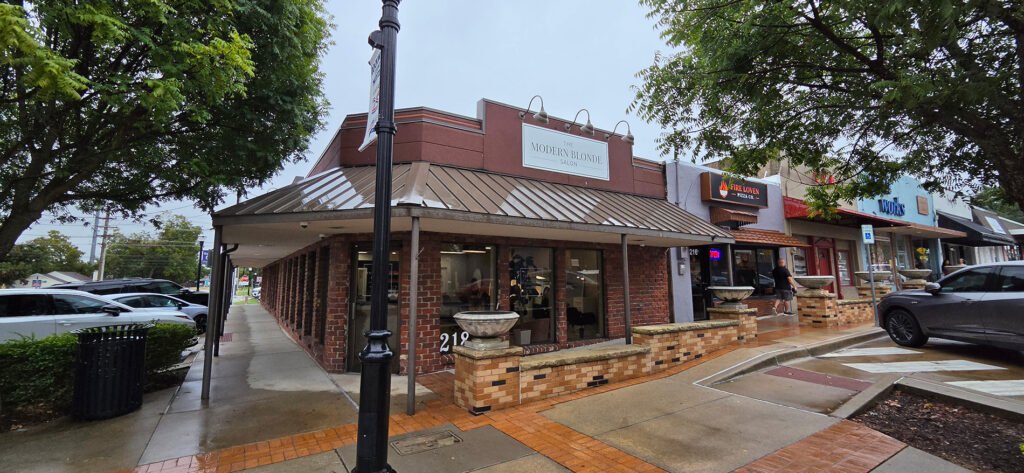
Walking these blocks with Fowler’s book in mind, one thing becomes obvious pretty quickly: downtown Rockwall’s story is not simply about old buildings disappearing and new ones taking their place.
Behind these storefronts are people trying to make a living — locally owned and family-run businesses, service providers, restaurants and retailers taking a chance on a downtown location and hoping people walk through the door.
Along this stretch of Rusk Street today, that mix includes The Modern Blonde Salon, Fire Loven Pizza Co., Quilt Works, professional offices and retailers selling clothing and items for the home.
I remember the corner now occupied by The Modern Blonde Salon as a photography business, and before that a clothing store and a trophy and awards shop — all within roughly the last decade. The space now occupied by Fire Loven Pizza Co. was once a donut shop.
The City of Rockwall has also reshaped the streetscape with planters, public art and sidewalk improvements designed to make downtown more walkable and inviting.
That kind of change can feel ordinary when it happens one storefront at a time.
Give it enough years, though, and it becomes history.
101 South Goliad: One Corner, Many Lives
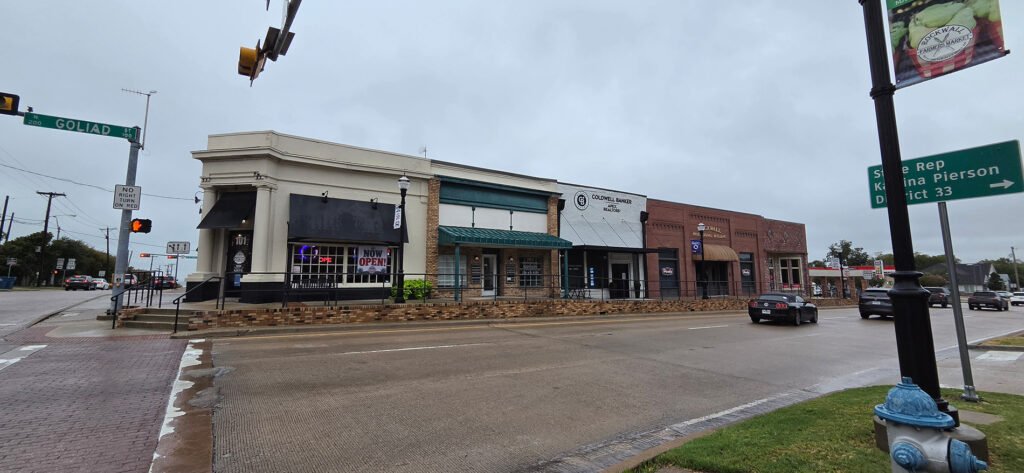
If these walls could keep a business directory, 101 South Goliad would have quite a list.
Fowler’s book shows that Goliad Street has been changing identities for generations. Nearby 103–105 N. Goliad once included a photographer and the Oriental Hotel, followed later by the Yellow Jacket Grill and Bar-B-Q.
Fowler traces the building to before 1900, when downtown Rockwall was still developing into the commercial center generations would come to recognize. Through the years, the building housed businesses ranging from dry goods and millinery to a bank, Texas Power & Light, a funeral home and insurance offices.
One architectural clue has managed to stick around through all of it: that distinctive angled entrance.
It is easy to drive past a detail like that today without thinking much about it. But once Fowler points it out, you start noticing how an old building can change occupations over and over again without completely losing its identity.
More than a century later this block is still working.
Today, you will find Coldwell Banker Apex Realtors, a chiropractic office and other professional businesses operating from the Rockwall Professional Building, including Hanby. And on the corner, Agaveros has recently opened, adding another place to eat downtown.
Every new restaurant, shop or professional office represents somebody investing money, signing a lease, hiring people and trying to build a livelihood. Historic downtowns cannot survive on architecture alone. They need businesses willing to move into these old spaces and customers willing to walk through their doors.
And there is something fitting about a building that once welcomed customers looking for dry goods, banking services or electricity still being used for commerce more than a century later.
The Old Bank Building Still Means Business
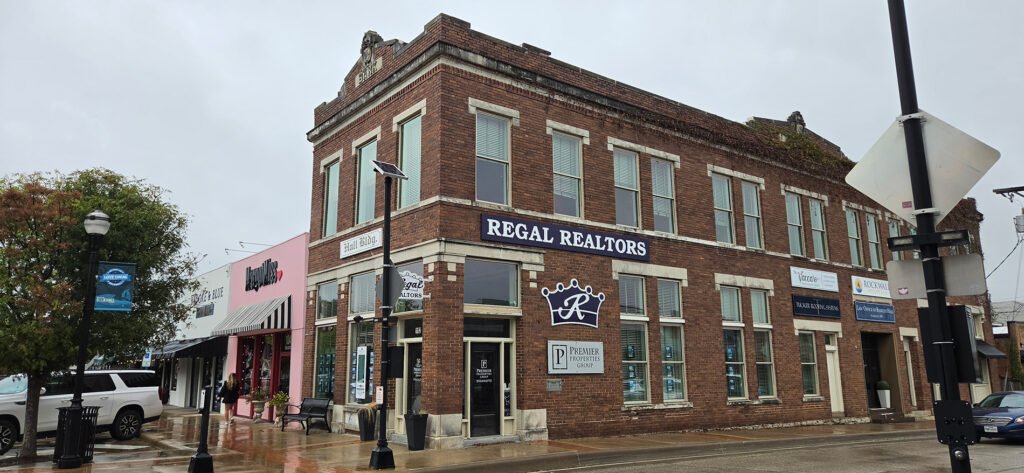
Sometimes the best clues to downtown Rockwall’s past are still written right into the building.
You just have to look up.
At the corner of San Jacinto and Rusk, the word “BANK” remains worked into the upper façade even though customers are no longer walking through the doors to make a deposit.
Fowler identifies this location as Farmer’s National Bank at 102 N. San Jacinto. The building standing there today was erected in 1916, after an earlier bank building was removed.
And banking was only part of the commerce along this stretch.
Next door at 104 N. San Jacinto, Fowler documents M.H. McKoy’s hardware business, where customers could buy farm implements and carriages. Look closely at the upper exterior today and you can still spot a reminder of that earlier hardware-store identity.
More than a century later, the block remains in business.
The former bank building now houses Regal Realtors, Tucker Roofing Systems and other professional offices.
The services may be different, but this corner is still doing what downtown Rockwall was built to do: commerce.
Around the Historic Courthouse Square
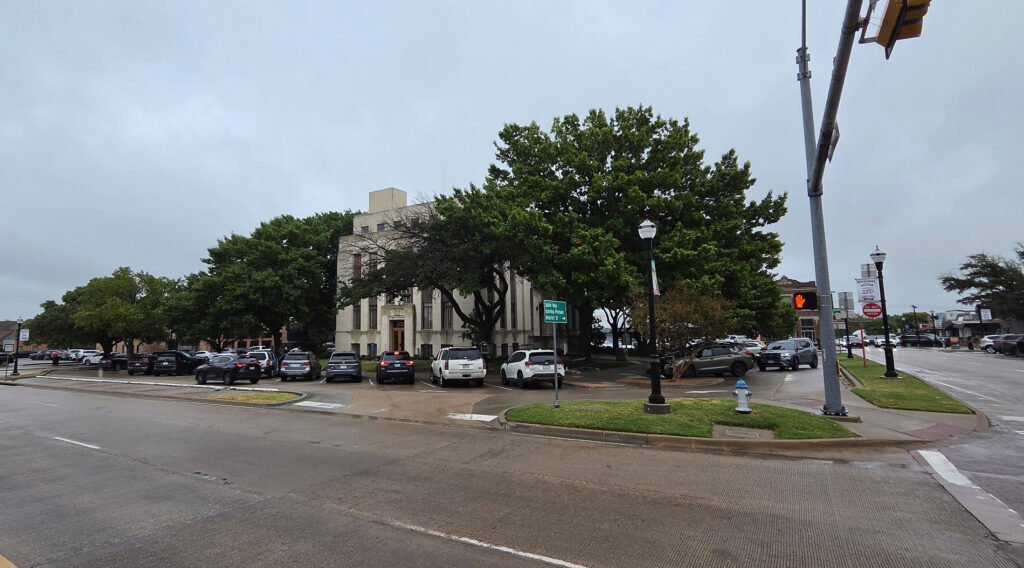
There is no mistaking the building at the center of the square.
With its strong vertical lines, limestone exterior and geometric detailing, the historic Rockwall County courthouse is a striking example of Art Deco/Moderne architecture. Designed by architects Voelcker and Dixon, it replaced an earlier sandstone courthouse.
The Texas Historical Commission points to its limestone pilasters, vertical window bays and carved entrance details as defining features of the Moderne design.
Fowler adds another layer to the story. The upper floor once housed the Rockwall County jail, which remained in use until 1988. The cells are still there, and County officials have approved minor improvements intended to make the fourth-floor jail area more accessible to visitors.
The square itself has long been a gathering place. Fowler recalls homecomings, pep rallies, visits from Santa and even crowds gathering for election results.
Today, the courthouse grounds feel more park-like, with mature trees, shrubs, walking paths, benches, a small library book house and public installations encouraging people to stay awhile.
And the courthouse has even had a turn on the big screen.
Scenes for the crime drama Bomb City were filmed inside, including in the third-floor courtroom. Then Rockwall County Commissioner Dennis Bailey made a cameo appearance as the judge presiding over the murder trial.
The Rockwall County Commissioners Court still meets on the third floor twice each month.
And then you turn around.
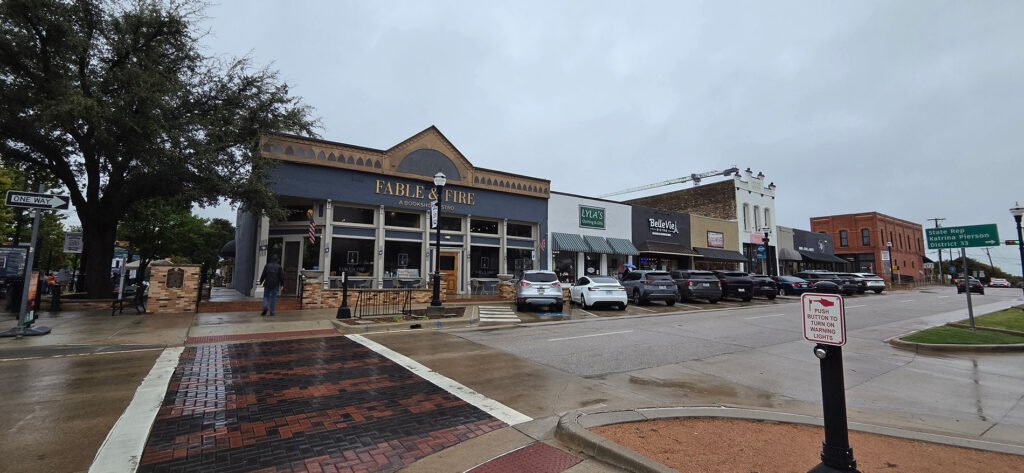
Facing the courthouse is another part of downtown’s story.
Today, this stretch of Rusk includes Fable & Fire, Lyla’s Clothing, BelleVie Bistro, Groovy’s and Providence Bridal, along with other shops and services.
And goodness, these storefronts have seen some businesses come and go.
Someone opens a boutique. Someone tries a restaurant. Someone signs a lease, remodels a storefront and hopes enough people walk through the door to make it work.
What stays remarkably consistent is the street itself.
The courthouse still looks across Rusk at a row of businesses filled with people trying to make a living, just as downtown merchants were doing generations ago.
Another Corner, Another Chapter
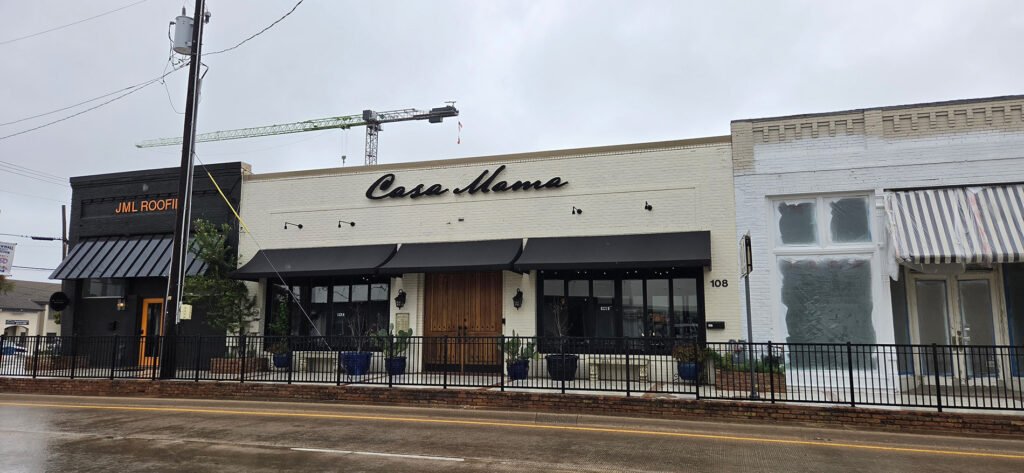
Today, Casa Mama occupies 108 S. Goliad, with locally owned JML Roofing Solutions next door at 110 S. Goliad.
But I remember 108 S. Goliad differently.
It was Restaurant Ava.
And Ava was special.
Chefs Randall Copeland and Nathan Tate opened the restaurant in 2009, serving contemporary American cuisine built around local farmers and seasonal ingredients. It earned attention well beyond Rockwall, with Dallas food writers making the drive east specifically to eat there.
For me, Ava became one of the first places I wanted to take someone visiting Rockwall — or even just passing through. It was the kind of restaurant that made you think, yes, we have something here worth showing off.
Then came a heartbreaking ending.
Copeland died unexpectedly in April 2013 at only 39. Ava closed after four years, and he was remembered not only for his cooking but for supporting local farmers, charities and the North Texas restaurant community.
Today, another restaurant welcomes diners through that same address.
A Mural That Became History, Too
The wall beside JML Roofing also carried a more recent piece of downtown history.
Rockwall’s Art Commission selected the south wall at 110 S. Goliad for a mural celebrating the city’s history and welcoming people into downtown.
It did not age quietly.
By 2019, the Rockwall Art Commission was already discussing repairs to damaged portions of the mural.
Even something created specifically to celebrate history can eventually become part of the history itself.
Where Rockwall Gathered — and Still Does
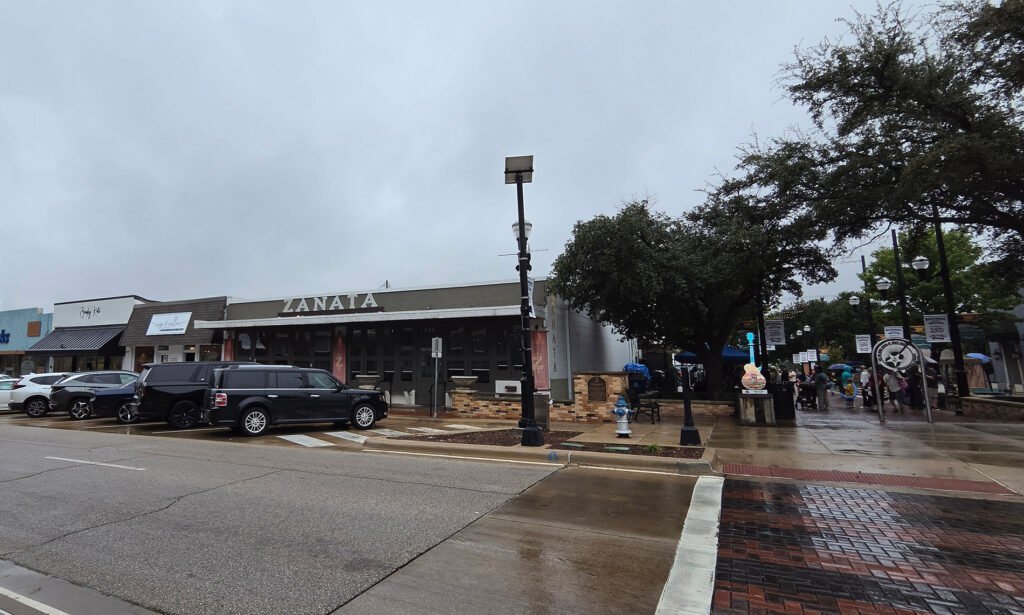
At 202 E. Rusk, Fowler documents Cunningham’s Rexall Drug, whose soda fountain became a popular gathering place for Rockwall High School students in the 1950s.
Today, that address is Zanata.
It is one of my favorite downtown restaurants and I have a particular weakness for the roasted halibut.
The location works especially well during the San Jacinto Plaza Music Series. Order dinner to go, grab one of the café-style tables outside or bring your own chairs and settle in for an evening of live music just steps from the restaurant.
People eat, listen, visit with friends and wander between the businesses surrounding the plaza.
That connection between Cunningham’s Rexall and Zanata is one of the reasons Fowler’s book is so enjoyable to revisit. The businesses she documented were not landmarks to the people using them at the time. They were simply where people ate, shopped, ran errands and saw someone they knew.
Only later do those everyday places become part of a town’s story.
A Historic Church Waiting for Its Next Chapter
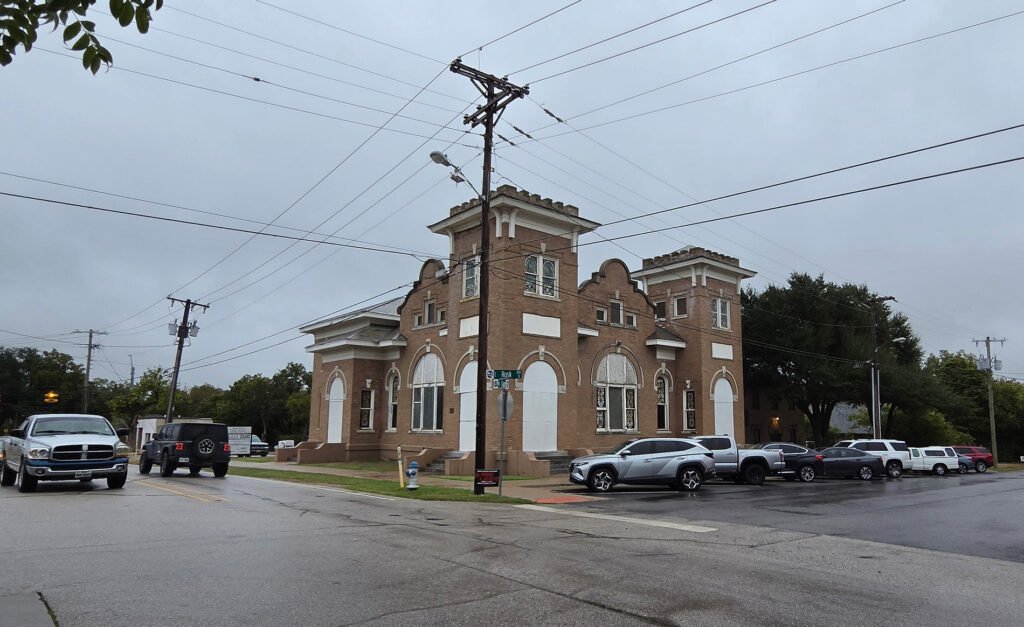
One building on this walk is not simply about who occupied it before.
Its next chapter is still being written.
The historic First Methodist Church at 303 E. Rusk was completed in 1913 after Reverend F.F. Wheeler and the congregation renewed an earlier fundraising effort to build a new sanctuary. Church members donated stained-glass windows as memorials, and the congregation worshipped here until moving to another location in 1981.
Greenville architect George Lindsey designed the church in the Mission Revival style, with twin towers, Roman-arched openings, brick and stone construction and a recessed central façade. Its National Register nomination describes it as the only original Mission Revival building remaining in Rockwall’s historic downtown. It was added to the National Register of Historic Places in 2007.
Now, another transformation is underway.
The City of Rockwall purchased the property in 2025 with plans to preserve its historic character while exploring a community-focused future use. Historic preservation and cultural arts groups are expected to help shape that vision.
The purchase is being funded with Hotel Occupancy Tax revenues, not residential property taxes, using funds designated for eligible tourism, arts and historic-preservation purposes.
For now, the towers, brickwork and stained glass remain while Rockwall decides what comes next.
That makes 2026 an especially interesting moment to photograph it.
Today Will Eventually Become “Then”
Sheri Stodghill Fowler could not have known exactly what would happen to the downtown she photographed.
That is part of what makes Rockwall: Then & Now so much fun to revisit.
Her “now” is no longer now.
A bank is filled with professional offices. A drugstore soda fountain is now one of my favorite restaurants. Restaurant Ava, a place I once proudly took visitors, has become part of my own Rockwall memory. New names continue appearing above old storefronts.
And yet, walk downtown with Fowler’s photographs in mind and you can still find the clues.
Look up and BANK is still written into the façade. Notice an angled doorway that has survived generations of businesses. Sit down for dinner at an address where teenagers once gathered for sodas.
That is what this walk reminded me:
History does not always announce itself while it is happening.
Sometimes it is the restaurant you miss, the shop you remember or the building you have driven past hundreds of times without wondering what came before.
My photographs from Oct. 3, 2026 capture one more version of downtown Rockwall.
Someday, these will be the old photographs too.
What do you remember?
Was there a downtown restaurant, shop or business you loved that is no longer here? Do you remember what occupied one of these storefronts before the names we see today?
Share your memories in the comments below or contact me. You may know another piece of Rockwall history worth preserving.